Catégorie : libertés

Les libertés et la répression à Cuba

  • My grandfather chewed tobacco, biting down on it and moistening it with his saliva in an obsessive ritual that continued throughout the day. He also had a pipe, to which he added the coarse-cut tobacco he prepared himself, which he smoked only after meals. He belonged to the generation that grew up watching the most famous Hollywood stars smoking on the big screen and he imitated them from his seat in the movie theater. My grandfather didn’t look anything like a Humphrey Bogart with his irresistibly gallant cigarettes in Casablanca; nor a Marlon Brando enveloped in nicotine-filled smoke and sensuality. Because, unlike those glamorous men, Basilio Eliseo was a surly islander with calloused hands incapable of writing a full sentence. But he did share, with such famous characters, the enjoyment of a good cigar. The aroma that emanated — I can almost smell it now — was a mixture of sweat and nicotine, which hung in the air for hours after he’d left.

    For Cubans, who still enjoy Havana cigars, it has become difficult to satisfy this preference. The market that operates in convertible pesos has absorbed most of a production that now trades at stratospheric prices in specialized luxury stores. Before the astonished eyes of passersby, whose monthly salaries barely exceed twenty-five dollars, the windows display boxes of the Romeo y Julieta brand for the a year’s salary, or a single Cohiba for a month’s wages. The offering of puros for sale in national money, at a price accessible to locals, is practically extinct. In part because the astute traders of the illegal market have captured the supply; they change the bands and sell them to the tourists as higher quality products. But also because the State has lost interest in selling to their own citizens a product they prefer to export, in order to earn juicier profits.

    However, beyond commercial or even medical considerations, the truth is that the image of the old Cuban man with a puro between his lips is becoming a thing of promotional posters and commercial advertising. Neither a retiree nor an active professional — whatever their specialty — can afford to buy quality cigars at a price that bears some relation to their legal income. Thus, a national product has become an international one, a symbol of Cuban identity transformed into a trophy for visiting foreigners. Except for the growers who reserve some leaves for their and their family’s own consumption, ever fewer compatriots can choose this type of « smoke. » And it is not about defending, now, a habit harmful to the lungs and prejudicial to the pocketbook; but about recognizing that the so-called Havana cigar is no longer a product for those who live on the island, contrary to what many foreigners believe. The picture of my grandfather Elisha chewing the leaves or tamping the shredded tobacco into his pipe, is just that… an image full of anachronisms from those long ago days.

    Read more here:
    A Box of Cigars Cost a Year’s Salary in Cuba
  • la-pelicula-de-ana

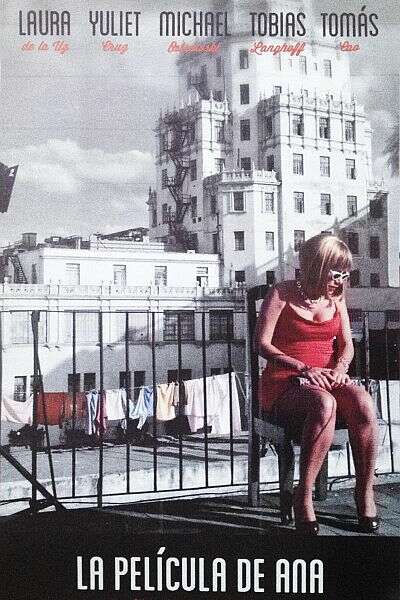
    « Nobody does anything for free any more, » says a character in a comedy we enjoyed on our movie listings earlier this year. Directed by Daniel Diaz Torres, La Pel

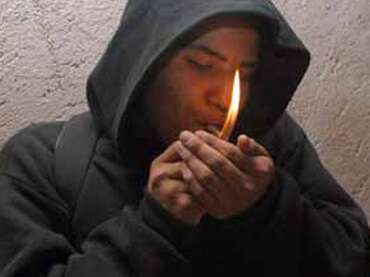
  • I had pretty aggressive keratitis in my left eye. It was the result of poor hygiene in the dorm and successive conjunctivitis that was poorly treated. I was prescribed a complex treatment but after a month of drops I was not noticing any improvement. My eyes burned when I looked at white-painted walls and things in bright sunlight. The rows of books blurred and seeing my own nails was impossible. Yanet, the girl who slept in the opposite bunk, told me what was going on. « They steal your medicine to take it themselves — it gives them a tremendous high — and then they refill the bottle with something else, » she said in a whisper facing the showers. So I started watching my locker every night and saw that it was true. The medicine that was meant to cure me some of my classmates in the dorm mixed with a little water and… no wonder my cornea didn’t heal.

    Blue elephants, clay roads, arms stretching to the horizon. Escape, fly, jump out the window without getting hurt… to the very abyss, were the sensations pursued by so many teenagers far from their parents, living under the few ethical values conveyed to us by the teachers. Some nights the boys went to the sports area and made an infusion from trumpet flowers — belladonna — the poor people’s drug, they said. At the end of my sophomore year powders to inhale and « grass » also started to appear in that high school in the countryside. They were brought in mostly by the students living in the slum neighborhood of El Romerilla. There were giggles in the morning classes after they ingested it, far away looks staring right through the blackboard, and heightened libidos with all those « life attractions. » With regular doses your stomach no longer burns or feels hunger, some of my already « hooked » classmates told me. Fortunately, I was never tempted.

    On leaving high school, I knew that outside the walls of that place the same situation repeated itself, but on a larger scale. In my neighborhood of San Leopoldo, I learned to recognize the half-open eyelids of the « hooked, » the weakness and the pale skin of the inveterate consumer, and the aggressive attitudes of some who, after taking a hit, thought they were kings of the world. When the 21st century arrived the offerings in the market-for-escape grew: melca, marijuana, coke — this latter is currently 50 convertible pesos a gram* — EPO pills, pink and green Parkisinol, crack, poppers and every kind of psychotropic. The buyers are from varied social strata, but for the most part they are looking to escape, to have a good time, get out of the rut, leave behind the daily suffocation. They inhale, drink, smoke and then you see them dancing all night at a disco. After the euphoria wears off they fall asleep in front of the television screen where Raul Castro is assuring us that, « there are no drugs in Cuba. »

    *Translator’s note: More than $50 U.S. in a country where a doctor earns the equivalent of about $20 a month.

    Original post:
    Raul Castro Claims ‘There Are No Drugs in Cuba’

  • Imagen tomada de www.informador.com.mx/

    J’avais une kératite assez agressive dans l’œil gauche, résultat du manque d’hygiène du dortoir et d’une série de conjonctivites mal soignées. On me prescrivit un traitement complet, mais après un mois de collyres il n’y avait toujours aucune amélioration. Les yeux me brulaient si je regardais les murs peints en blanc et les zones où se projetait la lumière du soleil. Les lignes de mes cahiers paraissaient floues et il m’était impossible de regarder mes propres ongles. Yanet, la fille qui dormait dans le lit en face du mien me raconta ce qui se passait. « Elles te volent l’homatropine et la prennent pour elles, ça les fait bien planer et ensuite elles remplissent le flacon avec autre chose », me chuchota-t-elle devant les douches. J’entrepris donc de surveiller chaque soir mon casier et je pus vérifier que c’était vrai. Le médicament qui devait me soigner, certaines de mes collègues de chambre le consommaient mélangé à un peu d’eau… pas étonnant que ma cornée ne guérisse pas.

    Des éléphants bleus, des routes en pâte à modeler, des bras qui s’allongeaient jusqu’à l’horizon. S’échapper, voler, sauter par la fenêtre sans se faire mal… jusqu’au fond de l’abîme, voilà les sensations que recherchaient nombre de ces adolescentes éloignées de leurs parents, et qui vivaient sur les faibles valeurs éthiques que leur transmettaient leurs professeurs. Certains soirs les garçons faisaient sur le terrain de sport une infusion de belladone connue sous le nom de « cloche », la drogue du pauvre disaient-ils. A la fin de ma classe de seconde dans ce lycée à la campagne, ont commencé à entrer les poudres à inhaler et « l’herbe » en petits paquets. Ce sont principalement les étudiants qui habitaient le quartier très pauvre d’El Romerillo qui les apportaient. Des gloussements dans les classes le lendemain matin, des regards qui s’évadaient au-delà du tableau noir, et la libido exacerbée par tous ces « encouragements à vivre ». Avec des prises régulières on ne sent plus les affres de la faim dans l’estomac me confirmaient certaines amies déjà « accros ». Par chance je ne me suis jamais laissé tenter.

    A la sortie du lycée j’ai su qu’en dehors de ses murs on retrouvait la même situation mais à plus grande échelle. Dans mon quartier de San Leopoldo j’ai appris à reconnaître les paupières à moitié ouvertes des « addicts », la maigreur et la peau blafarde du consommateur invétéré et l’attitude agressive de certains qui après s’être « shootés » se croyaient les rois du monde. Avec l’arrivée des années deux mille les offres se sont accrues sur le marché des produits d’évasion : melca, marijuana, coke –cette dernière est actuellement à quelques 50 pesos convertibles le gramme- pastilles d’EPO ; parkisinol rouge et vert, crack, Popper et tous types de psychotropes. Les acheteurs viennent de milieux sociaux divers, mais dans la majorité ils cherchent à s’échapper, à passer un bon moment, à sortir de la routine, à laisser derrière eux l’asphyxie quotidienne. Ils inhalent, boivent, fument et ensuite on les voit danser toute la nuit dans une discothèque. L’euphorie passée ils s’endorment devant ce même écran de télévision où Raoul Castro affirme « qu’à Cuba il n’y a pas de drogue. »

    Traduit par Jean-Claude Marouby

    More:
    Il n’y a pas de drogue à Cuba ?

  • The Cuban leader was in Chile for a few days, for the Summit of the Community of Latin American and Caribbean States (CELAC) and the European Union. Since assuming the highest office in the nation in 2008, questions have surrounded Raul Castro’s few trips abroad. This time the controversy ranged from cheering people to critics demanding the General be put on trial. Despite such an attack, the younger brother of the Commander-in-Chief was handed the presidency of this regional organization. Many believe that CELAC will lose prestige by having as its visible head, for a year, a president who was not democratically elected at the ballot box. However, it is also true that this position will force him to demonstrate a more respectful spirit towards Human Rights.

    Undoubtedly, the country chairing CELAC will be watched more closely during this year. What appears to be a political victory of the Raul regime, could become an element of great pressure on his management. The economic and migratory relaxations that have occurred in recent years on the Island will be evaluated with more severity at a time when Cuba leads the Latin American and Caribbean bloc. The Cuban government’s non-ratification of the United Nations Covenants on Civil, Political and Economic Rights will now appear unforgivable. All eyes from the continent will be focused on our country. There is no honor but that it brings a cost in responsibility, no merit without commitment from he who receives it. Perhaps, in the last five years of his mandate Raul Castro will behave like the reformer he so often claims to be. Now, with the presence of his brother fading and that of Hugo Chavez also losing ground, he will be taking his first steps alone.

    Read More:
    Raul Castro’s Presidency of CELAC Focuses Eyes on Cuba

  • telesur

    Une antenne “du tonnerre” dépasse de la fenêtre, mais c’est juste  une façade, un simulacre. Le signal télé vient en réalité d’un câble qui traverse plusieurs toits en terrasse et une rue. La connexion illégale procure à plusieurs familles une sélection de dessins animés, de feuilletons et de musique pour quelques pesos convertibles par mois. Seul le propriétaire de la parabole peut décider à tout moment ce que l’on peut voir. Avec le contrôle à distance entre les mains, il a le pouvoir de changer le canal et décider à quoi auront accès les clients de son réseau. Il élude les sujets politiques pour ne pas avoir de problèmes et il privilégie les reality shows. Le résultat final est une télévision qui permet de s’évader, d’échapper au quotidien, un concentré de peu de valeur culturelle et beaucoup de divertissements.

    A partir de ce dimanche TeleSUR, la chaîne vénézuélienne par satellite se positionne en concurrent de ce parangon de l’entreprise indépendante. Pendant des années les Cubains ont seulement eu accès à trois heures différées de la programmation de cette chaîne multinationale. Désormais nous bénéficierons de 13 heures et 30 minutes de ses émissions en direct, avec des contenus allant de l’information à l’éducation ; de la chronique rouge à la retransmission de compétitions sportives professionnelles. Une nouveauté, qui ne sera sans doute pas exempte d’une forte dose d’idéologie. TeleSUR s’apparente à la production de notre Institut Cubain de Radio et de Télévision en ce qu’il propage le postulat : les pays de l’ALBA sont aussi proches du paradis que le reste du monde l’est de l’enfer.

    Heureusement notre choix n’est pas limité à ces deux options. L’antenne parabolique « filtrée » ou l’accès partiel à TeleSUR ne sont pas –actuellement- nos seules possibilités. Depuis plusieurs mois s’est développée sur le marché alternatif, l’offre de bouquets réunissant documentaires et séries. Une télévision à la demande, une programmation au goût de chacun distribuée sur des supports numériques tels que disques durs ou clés USB. Si la production nationale ne s’élargit ni se diversifie, elle perdra une partie de son audience face à ces nouveaux compétiteurs et elle finira en une accumulation de programmes pris ou piratés sur d’autres télévisions, une superposition de matériaux audiovisuels sans personnalité propre ni attractivité.

    Traduit par Jean-Claude Marouby

  •  

    die_plaza

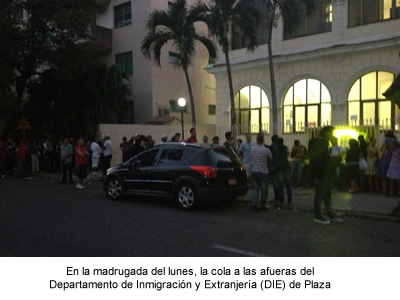
    El Sexto a dit qu’il ferait un graffiti sur ma valise ; une voisine m’a offert une amulette pour le voyage, et un de mes amis a noté sa pointure pour que je lui rapporte une paire de chaussures. Ils me disent au revoir même si je ne pars pas encore. Je ne dispose même pas de la date du vol. Mais quelque chose a changé pour moi depuis le 14 janvier dernier, jour où est entrée en vigueur la Réforme Migratoire annoncée en octobre dernier. Après avoir attendu pendant 24 heures autour du Département de l’Immigration Etrangère (DIE), j’ai su qu’on allait enfin m’envoyer un nouveau passeport. Après vingt « cartes blanches » refusées en moins de cinq ans, j’avoue que j’étais plus sceptique que confiante. Encore maintenant je croirai seulement que je l’ai obtenu quand je serai dans l’avion en train de décoller.

    Nous arrivons au terme d’une longue bataille à laquelle beaucoup ont contribué. Un long parcours pour réclamer que l’entrée et la sortie de notre pays soient un droit inaliénable, et non une autorisation de faveur. Bien que les flexibilités apportées par le Décret-Loi N° 302 restent insuffisantes, elles n’auraient pas été obtenues si nous étions restés les bras croisés. Elles ne sont pas le fruit d’un geste magnanime mais le résultat des critiques systématiques portées contre l’absurde régime migratoire.

    C’est pourquoi j’ai l’intention de continuer à « repousser les limites » de la réforme, de vérifier par moi-même jusqu’où va vraiment la volonté de changement. Pour franchir les frontières nationales je ne ferai aucune concession. Si la Yoani Sanchez que je suis ne peut pas voyager, je n’ai pas l’intention de me métamorphoser en une autre personne pour y arriver. Une fois à l’étranger je ne cacherai pas mon opinion pour qu’ils me laissent ressortir une autre fois ou pour plaire à certains, et je ne resterai pas non plus silencieuse sur les raisons pour lesquelles ils peuvent me refuser le retour. Je dirai ce que je pense de mon pays et de l’absence de liberté dont souffrent les cubains. Aucun passeport ne va fonctionner sur moi comme un bâillon, aucun voyage comme un leurre.

    Ces détails étant précisés, je prépare le programme de mon séjour en dehors de Cuba. J’espère pouvoir participer à de nombreuses manifestations qui me fassent progresser professionnellement et civiquement, répondre aux questions, clarifier certaines campagnes de diffamation menées contre moi… en mon absence. Je rendrai visite dans ces lieux où l’on m’a parfois invitée, mais auxquels la volonté de quelques uns  ne m’a pas permis d’aller; je naviguerai comme une obsédée sur internet et je reviendrai escalader certaines montagnes que je n’ai pas revues depuis presque dix ans. Mais ce qui m’excite le plus, c’est que je vais connaître beaucoup d’entre vous, mes lecteurs. Je ressens déjà les premiers symptômes de cette anxiété : l’estomac serré que provoque l’approche de l’inconnu et les réveils brutaux en plein nuit à se demander à quoi ressemblent vos visages, vos voix. Et moi ? Est-ce que je serai comme vous m’avez imaginée ?

    Traduit par Jean-Claude Marouby

  • The Cuban health authorities have admitted the existence of a cholera outbreak that so far has affected fifty people in Havana. Ten days after being detected by clinical epidemiological surveillance system and with rumors already circulating through the city, the newspaper Granma published on Tuesday’s front page an « Informative Note to the Population » where they « announced » the existence of the disease in the Cuban capital, while advising that the transmission of the disease is declining as a result of the measures taken.

    Several independent journalists had already warned about the disease and the death of at least one person, which the Ministry of Public Health has not yet acknowledged. Also some foreign correspondents broadcast the news in recent days, leaving the national press little chance of continuing to hide the situation.

    Before the official media confirmed the outbreak, sanitary measures were already visible in public places, especially those where great numbers of people gather. In the bus and railway terminals, and in polyclinics, schools and taxi stations extraordinary hygiene measures were established, including placing containers on the floor with disinfectants and bactericides to clean the soles of shoes. Also in workplaces and schools they have recommended having chlorinated water for washing hands.

    According to reports in the official media, the transmission originated from a food distributor who carried the disease, caught during earlier outbreaks in the eastern provinces.

    Since early last week we have seen unusual purchases of bottles of mineral water and liquid antibacterial products, available only in the stores that operate in hard currency, while the pharmacies ran out of the sodium hypochlorite used to disinfect drinking water. In the crowded Cerro municipality they ordered the temporary closure of food expeditor establishments, both those administered by the state as well those newly emerged since the expansion of self-employment.

    Protective measures proposed on TV are being taken very seriously and include the recommendation to avoid eating in the street. Families who until recently have been drinking directly from the tap, have begun to boil their water to avoid infection. The deteriorated state of the water network has made the complete eradication of cholera more difficult.

    Special irritation has been caused by the media blackout on the existence of the outbreak, which impeded the massive expansion of measures of protection. Many note that the delay in providing information was influenced by the intention to not affect international tourism, one of the locomotives of the Cuban economy. Another reason for so much secrecy might be to avoid the stigma of the appearance of a disease that tends to show up in very poor countries or those with poor healthcare systems.

    Read More:
    Havana Takes Measures to Control the Worst Outbreak of Cholera in Several Years