Catégorie : droits de l’homme

Situation des droits de l’homme à Cuba, répression et prisonniers politiques

  • Let’s go to Alamar! My mother would say and we would head out to visit some relatives who lived in that so-called « Siberia. » We arrived in an area of ugly, coarse buildings haphazardly tossed on the grass. We would play with other kids among these concrete boxes in the high grass that grew all around. It smelled of the sea, and also of boredom. It should have been the city of the New Man, but it was just a failed architectural experiment.

    Alamar, despite its urbanist failings, has been the hotbed of a vibrant and rebellious musical genre: hip-hop. Its amphitheater has hosted some of the most memorable alternative concerts in Island memory. Hard songs, composed with the words of daily life and the poetry of the street. Duels between opponents who, instead of throwing weapons or blows, launch words and rhymes. How did the stage for this « citizen laboratory » end up sheltering these lyrics of the rebellion? What happened with the victorious anthems that led to such corrosive verses of survival?

    What happened was that reality set in. Alamar was one of the areas of Havana hardest hit by the economic hardships of the Special Period. It saw thousands of its inhabitants leave during the 1994 Rafter Crisis, and suffered extremely long power cuts accompanied by robberies and other acts of violence. The Russian technicians left, the squatters made the empty homes they left their own, and the Chilean exiles who lived there, for the most part, returned to their own country.

    Then the immigrants from the eastern provinces arrived, illegal constructions extended on all sides, and the police declared that bedroom city a « danger zone. » A « people warehouse, » conceived for disciplined and mediocre people, demonstrated that when you play with the social or constructive alchemy, you rarely achieve the desired results.

    Amid the gray cement, the tiny rooms and the boredom, hip-hop has become the daily soundtrack. Alamar has its own rhythm. A cadence that hits the head like the waves that crash against its dogtooth coastline. Like the picks hitting the ground to lay the foundation of a quadrilateral and submissive future that never came.

    Link:
    Alamar and Hip-Hop: The Soundtrack of Cuba’s Reality (VIDEO)

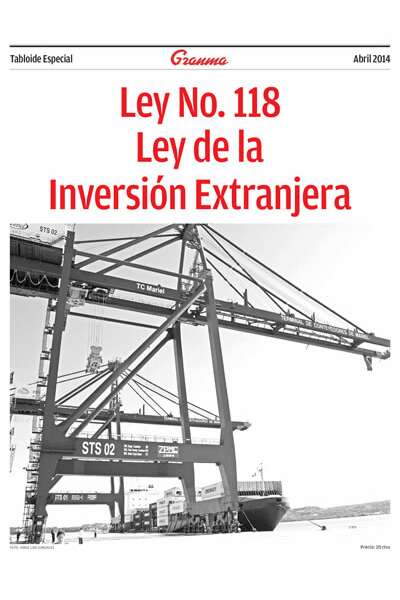
  • A gentleman with a beard and a shabby shirt reads the newspaper in a Reina Street doorway. « These people are re-inventing the wheel… » I can hear him say. The daily he has in his hands has a tabloid insert with the new Foreign Investment Law, recently voted on in the National Assembly. Unanimously approved, the controversial legislation comes at a time when the Cuban economy is in desperate need of foreign capital.

    The rush to get investment has not caused, however, greater flexibility in areas such as contracting for personnel. The recently approved law will maintain the state’s monopoly as the employing company. Only through this entity will a foreign business be able to contract for its workers. People trusted by the government will continue to rise to the top of the list it’s time to get hired.

    Thus, Raul Castro’s government guarantees that the workforce of foreign investors will be people the government trusts. If we understand that economic autonomy is an indispensable requisite to achieving political autonomy, we know very well that the General President is going to assure that the best salaries are going to go to the pockets of the proven faithful. In this way he maintains the ability to buy loyalty with privileges, which has characterized the Cuban model.

    However, ideological fidelity and working ability don’t always go hand-in-hand. New businesses with foreign capital will see their performance hampered — among other reasons — by not having access to the best available human capital. On this point it’s clear that the Foreign Investment Law can’t jump beyond its own shadow. It continues to be marked by the fear that individuals can make themselves independent — both with regard to wages and politics — from the state.

    Read More:
    Cuba’s New Law Lets in Foreign Capital, But Labor Must Be Contracted From the Government

  • The dialogue between the Venezuelan opposition and Nicolas Maduro is in full swing. Its critics are many, its most visible loser: the Cuban government. For a system that for more than half a century has disqualified and reprimanded its dissidents, this discussion table must present a sad acknowledgement of its own inabilities.

    Last Tuesday stunned Cuban viewers could watch a debate between the opposition forces in Venezuela and pro-government representatives. The controversial meeting was broadcast on TeleSur, which is characterized by its tendency to back the work of Chavism with its reporting. On this occasion, however, it was forced to also broadcast the concerns and arguments of the other side.

    The requirement that cameras and microphones would be present at the discussion proved to be a magnificent political move by Maduro’s adversaries. In this way the audience is engaged in the dialogue and it’s more difficult to publish distorted versions later. The participants on both sides were allowed ten minutes each, an exercise in synthesis that the Venezuelan president, clearly, couldn’t accomplish.

    For disinformed Cubans, the first thing that jumped out at us was the high level of the arguments the opposition brought to the table. Figures, statistics and concrete examples expressed within a framework of respect. The next day the most commonly heard comment in the streets of Havana was the popular phrase, « They swept the floor with Maduro. » A clear reference to the crushing critiques of his rivals. The government supporters, however, were notably timid, fearful, and offered a discourse plagued with slogans.

    There is no doubt, this discussion table has been a bitter pill to swallow for those who up until a few hours before were accusing their political opponents of being « fascists » and « enemies of the nation. » Venezuela will no longer be the same, although the negotiations end tomorrow and Nicolas Madura will once again take the microphone to hand out insults right and left. He acceded to a discussion and this marks a distance between the path followed by the Plaza of the Revolution and another that recently began for Miraflores.

    And in Cuba? Is this also possible?

    While the broadcast of the Venezuelan dialogue was airing, many of us asked ourselves if something similar could occur in our political scenario. Although the official press presents these conversations as a sign of strength on the part of Chavism, it has also kept enough distance so that we won’t get illusions of possible Cuban versions.

    It is less chimeric to imagine Raul Castro getting on a plane and escaping the country than to project him sitting at a table with those he dubs counterrevolutionaries. For more than five decades, both he and his brother have been dedicated to demonizing dissident voices, such that now they are prevented from accepting a conversation with their critics. The danger posed by the impossibility of negotiations is that it leaves only the path to an overthrow, with its consequent trail of chaos and violence.

    However, not only do the Cuban regime’s principal figures show reluctance before any negotiating table. The better part of the Island’s opposition doesn’t want to hear it spoken of. Before this double rejection, the agenda of a chimeric meeting fails to take shape. The opposition parties haven’t yet come together on a project for the country that can be coherently defended in any negotiation and look like a viable alternative. We members of the emerging civil society have reasons to feel concerned. Are the politicians now operating illegally in the country prepared to sustain a debate and capable of convincing an audience? Could they represent us with dignity when the time comes?

    The answer to this question will only be known once the opportunity arises. Until now the Cuban political dissidence has concentrated more on tearing down than on elaborating foundational strategies; the greater part of their energy has been directed to opposing the governing Party rather than on persuading their potential followers within the population. Given the limitations on disseminating their programs and the numerous material restrictions they suffer, these groups have not been able to carry their message to a significant number of Cubans. It is not entirely their responsibility, but they should be aware that these deficiencies hinder them.

    If tomorrow the table for a dialogue was set, it would be unlikely that we would hear a speech from the Cuban opposition as well articulated as that achieved by their Venezuelan colleagues. However, although negotiation isn’t a current possibility, no one should be exempted from preparing for it. Cuba needs for the people before those possible microphones to be those who best represent the interests of the nation, its worries, its dreams. They may speak for us, the citizens, but please, do so coherently, without verbal violence and with arguments that convince us.

    See the original post:
    The Venezuelan Dialogue From a Cuban Point of View

  • Happy Blog-Birthday, Generation Y!

    At seven I had an incomplete smile. I was losing my baby teeth and also I read every sign I came across in the street. It was a time of learning and scraped knees from falls during games. Today, I once again blow out the same number of candles on an imaginary cake. This time it isn’t for me, but for the virtual creature that was born on April 9, 2007, and which in this time has experienced dentition, fevers, laughs and stumbles.

    Generation Y is celebrating its birthday with almost one thousand published posts, about a million and a half comments, several friends lost, and others gained.

    In this time, I have never suffered the horror of a blank page. Rather I feel that neither time nor Internet connectivity have sufficed to tell all that the Cuban reality has offered to my eyes. This blog now has a life of its own. It breathes in its readers and has a parallel existence where I can’t reach it, hide it, protect it. It has stood the tests of my initial fear, official demonization, the distrust of many, technological collapses and even the survival instinct that more than once told me to abandon it. Here it is with the bruises and experience of its seven years.

    A new era will begin soon. Generation Y will move to its new home within a digital, collective and modern press. On the next birthday cake there will be other faces to include in the photo. Let’s blow out the candles for them now!


    My blog, GENERATION Y, has moved: READ IT HERE.

    Read me and other Cuban bloggers on TRANSLATING CUBA.

    And here is a link to my blog IN OTHER LANGUAGES.

    Continued here:
    Happy 7th Birthday to My Blog, Generation Y


  • Home page of the site Apretaste!

    Tatania wants to sell a stroller, Humberto is interested in some sneakers, and the retired woman on the corner is offering a mahogany desk. Individual barter and buying-selling alleviates the shortages in state markets. So it’s become common to see walls plastered with ads offering houses for sale or the services of someone who repairs furniture. The classified sites on the Internet also trade in anything you can imagine, from an illegal satellite dish to birdseed.

    Despite the poor connectivity, Craigslist-style sites are very popular on the island. Some of them have developed strategies to reach Cuban readers, such as the distribution of classifieds via email. This is the case with Apretaste!, which offers the service of sending and receiving information via email for users on our « Island of the Disconnected. » Winner of a hackathon held in Miami this February, the site has great potential and boasts a simple design that loads quickly.

    Visiting Apretaste!, I remember a phrase I always repeat when I encounter something hard. « Creativity is the capacity to open a window when the door is closed, » I tell myself, like a mantra in complex situations. And this classified portal is a diminutive and promising window that has opened in the iron wall of disconnection. A breath of air flows through it.

    I hope that one day Tatiana, Humberto, and the retired lady on the corner can not only use the powers of Apretaste! through email, but also enter it on the web, click, enter a phrase into its simple search engine and find, in this way, whatever they need.


    My blog, GENERATION Y, has moved: READ IT HERE.

    Read me and other Cuban bloggers on TRANSLATING CUBA.

    And here is a link to my blog IN OTHER LANGUAGES.

    Taken from:
    Apretaste! A Craigslist for the Island of the Disconnected


  • Photo: Silvia Corbelle

    The whole neighborhood called him by the peculiar last name he’d inherited from his Basque grandfather. Vertical for ideological reasons, he always made it clear that he was « a man of the cause. » Meeting after meeting, report after report, complaint after complaint, few exceeded him in offering proofs of faith in the system. He was also characterized by his severe face against the protestors and the hugs he gave to those who shared his ideology. And so it was, until a week ago.

    The family tree bore fruit and the combative man just managed to get his Spanish passport.* In his Communist Party nucleus they told him to choose: foreign nationality or continuing to be a member of that organization. Faithful, but not stupid, he chose the first. As of a few days ago he premiered his new life without red card or statutes. He has already started to wink at some of the dissidents in the neighborhood. « You know you can always count on me, » he blurted out at someone who, until recently, he’d always kept a watch over.

    It’s a curious party organization that brags about exercising internationalist solidarity, but doesn’t want dual nationality communists in its ranks. At least such narrow-mindedness is helping to convert certain extremists into « meek foreigners. » Given the speed with which they change, one wonders if they previously believed in what they were doing, or were simply opportunists. Perhaps in preferring an EU passport they are just choosing a different mask, a new tone for their chameleon skins.

    *Translator’s note: Spain’s Law of Historical Memory set a limited period during which Cubans who could prove a Spanish grandparent qualified for Spanish citizenship.


    My blog, GENERATION Y, has moved: READ IT HERE.

    Read me and other Cuban bloggers on TRANSLATING CUBA.

    And here is a link to my blog IN OTHER LANGUAGES.

    See the article here:
    Militant Cuban Communist Trades Ideology for a Spanish Passport in the Blink of An Eye

  • 2014-03-27-coffeeseller2.jpg
    Photo: MJ Porter

    The day started with a certain nightmarish atmosphere. The little sip of morning coffee was missing, because the seller with a thermos and paper cups wasn’t on the corner. So she dragged her feet to the bus stop, while keeping an eye out for a collective taxi. Nothing. Not even an old Chevrolet came down the avenue, nor was there one of those ingenuous station wagons that can fit up to twelve people anywhere in sight. After an hour’s wait she managed to climb on the bus, irritated that she didn’t even have a little paper cone of peanuts to calm the hunger pangs emanating from her stomach.

    At work that day she couldn’t do much. The director didn’t make it in because the woman who cares for her daughter was absent. The same thing happened with the administrator; her Russian-made Lada blew a tire and the tire-repair guy in her neighborhood closed early. At the lunch break the food trays were so empty they barely weighed a thing. The guy with the cart selling vegetables and tubers, with which they stretch the lunch menu, didn’t come by. The head of public relations had a nervous breakdown because he couldn’t print the photos he needed for a visa. The door of the nearest studio had a sign saying « Not Open Today, » so his travel plans were ruined.

    She decided to walk home to avoid having to wait. Her son asked if there was something to snack on, but the bread delivery man, with his sharp cry, hadn’t shown up. Nor were the pizza kiosks open, and a raid on the farmers market had left all the stands empty. For dinner she cooked the little she found and washed the dishes with a rag from an old shirt, because there weren’t any vendors selling dish mops. On top of everything, the fan wouldn’t go on and the appliance repairman wasn’t in his workshop.

    She went to bed, in a pool of sweat, uncomfortable, hoping she would wake up to the return these figures who make her life possible: the self-employed, without whom her days are a sequence of deprivations and aggravations.


    My blog, GENERATION Y, has moved: READ IT HERE.

    Read me and other Cuban bloggers on TRANSLATING CUBA.

    And here is a link to my blog IN OTHER LANGUAGES.

    Read this article:
    Cuban Regime Ambivalent About Self-Employed, While the People Can’t Live Without Them


  • Photo: Silvia Corbelle

    The Congress of the Cuban Women’s Federation (FMC) ended a few days ago. At its closing ceremony, a man uttered the final words. But this wasn’t the only, nor the last, mistake of an antiquated organization marked by ideology.

    After listening to the sessions in the Palace of Conventions, I affirm my decision not to be « federated. » Why?

    Here are my reasons:

    • I reject the creation of an « eternal president » in the figure of Vilma Espin, Raul Castro’s deceased wife, because this whole display of perpetuity in a position seems to me, at the very least, ridiculous.
    • I don’t want to be part of an organization whose flag shows a uniformed individual. I am not a soldier, I don’t see myself represented in a gun-carrying militia member.
    • I don’t believe that a woman’s organization should have as its principles fidelity to an ideology, a party and a man.
    • I suspect that a part of the four million women who make up the FMC have entered its rank purely automatically, as a mandatory process that takes place when you turn fourteen.
    • I distrust a federation that benefits from the lack of freedom of association which prevents Cuban from creating other organizations.
    • I’m aware of the double standards of the FMC, which says it rejects violence against women but which has never condemned the acts of repudiation against the Ladies in White.
    • I consider inefficient the work of an organization that, in its 50 years of existence, hasn’t managed to place women in the positions of power where the decisions that affect the country are really made.
    • I’m tired of women being reduced, in these female congresses, to beings concerned with pots and pans, soldiers who are willing to offer up their children as cannon fodder or production parts… selfless, beautiful and obedient.
    • I am a woman of the 21st century, I carry my ovaries not with victimhood but with pride, and I can’t be a member of an organization that transmits the directives of power to women.
    • Of course, when it is legal to associate according to one’s beliefs, affinities, genders and many other points of similitude, I will be there with my progesterone and my demands for a true female federation.


    My blog, GENERATION Y, has moved: READ IT HERE.

    Read me and other Cuban bloggers on TRANSLATING CUBA.

    And here is a link to my blog IN OTHER LANGUAGES.

    Read the original post:
    Why I Won’t ‘Federate’ With the ‘Cuban Woman’s Federation’