Catégorie : droits de l’homme

Situation des droits de l’homme à Cuba, répression et prisonniers politiques

  • The unforeseen, situations that nobody predicted, are for politics like pepper on food. When it appears that all the possible variables of a scenario are on the table, an event sneaks in among them that changes everything. Such is the case with the diplomatic crisis generated by the arms transported from Cuba in a North Korean ship, discovered in the Panama Canal.

    After years of trying to clean up its act before international bodies, this incident sets Raul Castro’s government back decades, returning it to the era of the Cold War. There is no time left for the octogenarian politician to reverse the effect of such a a misguided operation. Between now and his announced retirement in 2018, there are not enough days to make people forget the bungling of those missiles hidden under a cargo of sugar. Someone else, in his position, would renounce or remove the Minister of the Armed Forces, but a play like that has no precedent in the Castro regime.

    On hearing about the trafficking in this arsenal of war, the question that immediately jumps to mind is how many times have operations like this been carried out without being discovered. The testimony and speculations about Cuba’s sending troops and arms to countries in conflict abound. It is symptomatic that on this occasion the contraband has been intercepted mid-journey, which raises a new question. Why in this case has it come to light? Clumsiness or intention? Bungling or being out of touch with the workings of the real world? The questions will be asked, but the answers are known only to a few.

    The truth is that these events confirm the denunciations of those who, for years, have documented the support of the Plaza of the Revolution for guerrillas, insurgents, destabilization groups, and governments sanctioned by international organizations. Wrapped in the halo of « proletarian internationalism, » the help offered in most cases was hidden with subterfuges, such as merchant ships transporting soldiers or military equipment on the sly. It was the era when the sharp eyes of the satellites didn’t track the planet with such precision, and the Soviet bear was there to pull the chestnuts out of the fire for its outstanding disciple in the Caribbean. A bygone and remote era.

    If Cuban political leaders believed they could still hide planes and missiles on a ship, send it through the Panama Canal and successfully arrive at a North Korean port, it is proof of their great disconnect from the reality of the world they live in. The statement issued by the Ministry of Foreign Affairs is also a part of this anachronism, attempting to explain the cargo as a shipment of « obsolete » military equipment off to be repaired in the country of the Kim dynasty.

    The justifications or falsehoods that were once effective, fall on the ears of the citizens of this third millennium like bedtime stories for unsuspecting children. Their naiveté was left behind in the 20th Century and it’s a good thing, because the leaders can’t fool us as easily as before. In fact, the performance of the Cuban authorities has displayed such stupidity that it suggests it was an operation prepared by the Castro regime itself, in order to be caught red-handed.

    Every time that relations between Havana and Washington seem headed for a rapprochement, some event generates an abyss between the two governments. The most famous example was the shooting down of the Brothers to the Rescue planes in February 1996.

    Could it be, on this occasion, that the orthodox within the power structure are dynamiting what they perceive to be Raul Castro’s weakness in trying to talk to the neighbor from the north? Or is it the General-President himself who has built this scandal to try to avoid getting to the negotiating table? The « conspiranoia » is infinite.

    However, there could be a simpler answer behind all this, as incredible as it seems: the Cuban leadership really believed that it could still continue playing with toy soldiers and ignoring the provisions of the United Nations, without being discovered. Holding power for too long makes those who exercise it into a species of autistics, disconnected from reality. So this could be one of the most chronic cases of political autism we now have in our global village.

    In the midst of the complex situation in Cuba, why would the government dare to undertake such a ridiculous operation? After so many efforts to appear before the international community as a country transitioning through a process of openings, where does this « sugar missile » piece fit? Well, it doesn’t fit!

    Evidently the relations between old ideological allies are still placed above pragmatic diplomatic strategies. Old comrades are still prioritized, although to the eyes of the world they are seen as a family dynasty, a recalcitrant violator of the human rights of their citizens, constantly threatening the rest of the planet with nuclear conflict. The fellow travelers support each other, so they have to violate the same UN resolutions to achieve it.

    Now that the boxes of missiles are discovered — the MIG-21 airplanes and the rocket batteries — it remains to be known how Raul Castro will get out of such a delicate situation. An apology would not be enough, because the government would still have to comply with some diplomatic sanction resulting from its actions. Acting the fool and reaffirming their « sovereign right » to send arms to be « repaired » in North Korea, will further isolate the island’s authorities at a time when economic support from abroad is urgently needed.

    The insolence will also conspire against a possible loosening of the European Common Position, and against the easing of the American embargo. To reply with a barrage of government attacks against the president of Panama won’t accomplish much, because this problem involves other nations who don’t appear willing to forget so easily.

    So, then, how does the Castro regime turn the page, minimize what happened, and present the world with a real posture of mea culpa and peaceful engagement? The only solution that remains is to announce political change, the opening so often demanded by its citizens and by international agencies and governments.

    The only thing they can do to overcome this huge mistake is to focus all attention on the total decriminalization of dissent in Cuba, the legalization of other political forces and the final dismantling of totalitarianism.

    See more here:
    Cuban Missiles to North Korea: Did Raul Castro Want to Get Caught?
  • The Congress of the Journalists Union of Cuba (UPEC) has just been contradicted. Barely a few days after that meeting of official reporters, reality has put them to the test… and they failed. Yesterday, the news that a freighter flying under the North Korean flag, coming from Havana and found with missiles and other military equipment in its hold, jumped to the first page of much of the world’s press. In Panama, where the arms were detected, the president of the country himself sent out a report via Twitter about what happened. Knowing that in this day and age it’s almost impossible to censor — from the national public — an event of such scope, we awoke this morning to a brief note from the Ministry of Foreign Relations. In an authoritarian tone it explained that the « obsolete » — but functional — armaments were being sent to the Korean peninsula for repairs. It did not clarify, however, why it was necessary to hide them in a cargo of sugar.

    At a time when newspapers are offering lessons that governments can’t get away with secrecy, the conformist role of the official Cuban press is, at the very least, painful. Meanwhile, in Spain several newspapers have challenged the governing party by publishing the declarations of its former treasurer; in the United States, the Snowden case fills the headlines, which demand explanations from the White House about the invasion of privacy of so many citizens. It is inconceivable that, this morning, Cuba’s Ministry of the Armed Forces and its colleagues in Foreign Relations are not being questioned by reporters calling them to account. Where are the journalists? Where are these professionals of the news and of words who should force governments to declare themselves, force politicians not to deceive us, force the military not to behave toward citizens as if we were children who can be constantly lied to?

    Where are the resolutions of the UPEC Congress, with their calls to remove obstacles, abolish silence, and engage in an informative labor more tied to reality? A brief note, clearly plagued with falsehoods, is not sufficient to explain the act of sending — secretly — arms to a country that the United Nations itself has warned others not to support with the technology of war. They will not convince us of their innocence by appealing to the antiquity of the armaments; things that produce horror never entirely expire. But, as journalists, the most important lesson to come out of this « crisis of the sugar missiles » is that we cannot settle for institutions that explain themselves in brief press releases, that cannot be questioned. They have to speak, they have to explain… a lot.

    Follow this link:
    The ‘Crisis of the Sugar Missiles’

  • 9152419424_dac84809ec_o

    I leaned against the window carefully. The glass had a crack running through it and with each jolt it seemed likely to shatter. A few minutes, a roadway traversed by collective taxis, an arithmetic exercise: count all the people on the street who were smiling. In the first stretch, between Rancho Boyeros Avenue and the Maravillas Cinema, none. One lady was showing her teeth not for joy but because of the sun, which made her eyes squint and her lips open. A teenager in a high school uniform shouted at another. I couldn’t hear because of the engine noise, but there was no joking in his words. Coming to the Plaza de Cuatro Caminos, a couple was locked in a kiss at the corner, but there was nothing playful about it. Rather it was a carnivorous kiss, devouring, predatory. A baby in a stroller looked close to laughing, but no, it was just a yawn. Coming to Fraternity Park, I was barely able to calculate some three laughs, including one from a cop who was mocking a boy in handcuffs being shoved into a patrol car.

    It’s an experiment I’ve carried out on several occasions, to see if we really are the smiling people so talked about in the stereotypes. In most cases, the number who express some level of happiness has not exceeded five in a trip varying between two to six miles. Clearly this doesn’t prove anything, unless it’s that in our daily circumstances laughter is not as abundant as they want us to believe. Still, we remain a people with a great deal of humor. But the jokes act more like the rescuing piece of driftwood that saves us from the shipwreck of depression, not as evidence of our happiness. We laugh to keep from crying, from hitting, from killing. We laugh to forget, escape, shut up. So when we see a comedy show that touches all the painful springs of our laughter, it’s as if the valves open and the whole of 10th of October Avenue starts to laugh, including the buildings, the street lamps and the traffic signals.

    Last Friday something like this happened at the « De doime son los cantantes » show, presented at the Karl Marx theater by the actor Osvaldo Doimeadios. A tribute also to the best of our vernacular theater, the comedian offered magisterial interpretations and monologues. From the economic hardships, the migratory reform, the excessive controls on the self-employed, to the corruption scandals associated with the fiber optic cable, these were some of the themes that most made us roar. We laugh at our problems and our miseries, we laugh at ourselves. After the distraction ended, the audience crowded into the hot aisles to exit. Outside, Primera Street was packed in the late night. I took a bus home and leaned against the window… no one was smiling. The humor had been left in the seats and on the stage, we had returned to our sober reality.

    See the article here:
    Humor as Exorcism: Cubans Laugh to Keep From Crying, Hitting, Killing

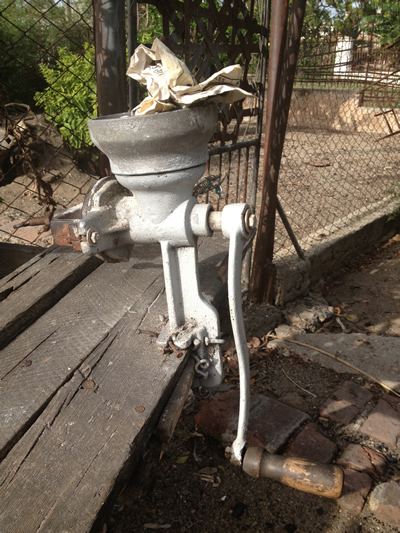
  • molinillo

    Le même jour où Marino Murillo passait à la télévision pour expliquer le potentiel de prospérité du modèle économique cubain, la secrétaire du Parti Communiste d’une commune de Pinar del Rio tenait une réunion d’urgence avec plusieurs paysans. L’assemblée était réunie dans le village de San Juan y Martinez et se focalisa sur l’état d’urgence agricole qui traverse le pays. Entre autres sujets la fonctionnaire exigea des coopératives de la zone, principalement vouées à la culture du tabac, qu’elles sèment davantage de céréales et de graines alimentaires. « Le pays connaît une crise alimentaire » assura-t-elle, sans que cela provoque la moindre réaction parmi ceux qui l’écoutaient car le cubain ordinaire n’a pas le souvenir de périodes autres que celles de crise, d’angoisse et de déchéance chronique. « Semez et ensuite vous récolterez… » s’empressa-t- de dire devant ceux qui avaient déjà entendu plus de promesses non tenues que de chants d’oiseaux.

    Au bout d’un moment l’assemblée prit une autre tournure et les participants commencèrent à prendre en main l’ordre du jour. Les plaintes se mirent alors à pleuvoir. Un producteur de fruits expliqua les entraves à la négociation d’un contrat direct avec l’usine La Conchita et la possibilité de commercialiser ainsi ses mangues et ses goyaves. Au lieu de ça il doit vendre la production à l’organisme d’Etat Acopia qui à son tour se charge d’alimenter l’industrie de pulpes et confitures. L’intermédiaire officiel existe toujours et se garde la plus grosse part du gâteau affirma l’agriculteur. Ainsi un rouleau de 400 mètres de grillage pour clôturer un terrain coûte quelques 80 pesos (3,30 USD) à une entreprise agricole d’Etat, alors que le paysan affilié à une coopérative peut arriver à payer pour la même quantité du même produit 600 pesos (25USD). Un sac de ciment, indispensable lors des travaux d’agrandissement d’une exploitation, a une valeur maximale de20 pesos (0,83 USD) pour la ferme d’Etat et de 120 pesos (5 USD, prix de détail pour la coopérative).

    Lorsque les relations de production deviennent une camisole de force pour le développement des forces productives, alors le changement de ces relations s’impose. C’est ce que stipulait une des conclusions marxistes que nous avons le plus étudiées en terminale et à l’université. Donc si l’on confronte les déclarations de Marino Murillo avec les témoignages de plusieurs paysans et le désastre agricole qui nous entoure, on ne peut que conclure que le modèle économique actuel ressemble à un baiser de la mort pour le développement et la prospérité de Cuba. Cela ne sert pas à grand-chose que les fonctionnaires nous disent que maintenant c’est bon : la prospérité et le progrès sont au coin de la rue. Si l’homme dans les champs est harcelé par l’absurdité, ceux qui établissent toutes ces restrictions doivent débarrasser la voie et céder le pas à d’autres qui seront plus efficaces.

    Traduction Jean-Claude Marouby

    More here:
    Les forces productives et leurs entraves

  • jmcturk

    Il y a à peine trois semaines nous étions plusieurs activistes cubains en visite à Stockholm pour participer au Forum Internet Freedom. Les  meilleurs moments de notre séjour là-bas n’ont pas seulement été les sessions des rencontres technologiques, mais aussi les activités parallèles en marge du programme. Particulièrement intéressante a été la visite de l’ONG ECPAT qui se focalise sur le combat contre la pornographie, la prostitution et le trafic d’enfants. Comme souvent, la présentation de ses travaux nous a conduits à nous interroger également sur l’occurrence de faits aussi condamnables dans le contexte cubain. La première chose qui nous a sauté aux yeux est l’absence sur cette île d’une entité ou ONG dédiée à ce sujet. Tout au moins autant que nous sachions, même si cela ne fait pas de doute, lors de l’Examen Périodique Universel de l’ONU, aucun groupe officiel ne s’est revendiqué défenseur des victimes des prédateurs sexuels.

    Si le mur du Malecon pouvait parler…il nous raconterait l’histoire de tous ces jeunes entre 16 et 18 ans qui offrent leur corps aux touristes pour quelques dollars. Bien que certains soient encore plus jeunes dans le commerce de la chair, c’est dans cette tranche d’âge que l’absence de protection judiciaire est totale car la loi en vigueur à Cuba les considère comme adultes. Ils restent ainsi en marge de toute statistique et des programmes de prévention et de protection que proposent en réponse les organismes internationaux comme l’UNICEF. Les cas d’adolescents violentés sexuellement par leur beau-père, leur frère aîné ou un parent proche abondent dans les villages cubains. Une fille de douze, treize ou quatorze ans, enceinte d’un adulte, est considérée comme quelque chose de normal, particulièrement dans les zones rurales du pays. Sans parler des relations charnelles entre professeurs et élèves de première et terminale qui font désormais partie de la norme de notre existence.

    Récemment le canadien  Jaime McTurk a été condamné à Toronto pour divers délits sexuels envers des enfants cubains, dont certains âgés de trois ans. L’histoire n’a pas été relatée dans les media nationaux même si le prédateur a été présent à 31 reprises dans notre pays entre2009 et 2012. Il n’est donc pas crédible que des autorités migratoires, aussi habiles à détecter si un cubain peut entrer ou non dans son propre pays et des officiers de douane entraînés à repérer un ordinateur ou un téléphone portables dans une valise, ne se soient pas rendu compte que quelque chose n’allait pas avec ce monsieur. Triste également que ceci étant un des maux qui minent notre société, on ne permette même pas aux parents inquiets de former un groupe de dénonciation citoyenne contre les pédophiles et d’apporter aussi un appui solidaire aux victimes de ces criminels. Parmi tous les sujets sociaux qu’aborde la société civile naissante de cette île, comme la dualité monétaire, les bas salaires, la nécessité de réformes politiques et partisanes, il est aussi urgent que nous nous saisissions aussi d’un problème aussi sensible. « Pas avec nos enfants ! » faut-il dire à tous ces prédateurs étrangers et nationaux.

    Traduit par Jean-Claude Marouby

    See the original article here:
    Pas avec nos enfants !

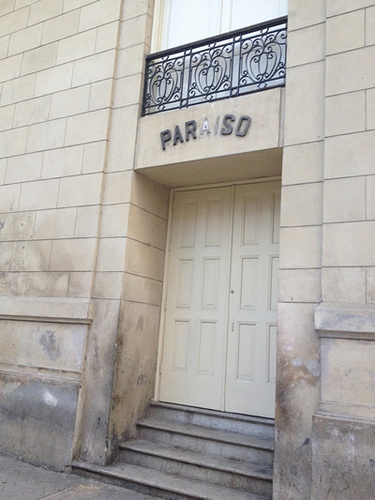
  • paraiso8968140647_76a650238a
    Photo: « Paradise »

    They’re no longer dressed in blue uniforms and some boys even show off their rebellious manes. Hair that no teacher will demand they cut — at least for the next few weeks — hair that will ultimately fall to the razor of Obligatory Military Service. They still look like students, but very soon many of them will be marching with rifles slung over their shoulders. They are young men who just, days ago, finished their school days at different high schools all over Cuba. The college entrance exams are long past and this week they’ve learned who will have a place in higher education.

    Just outside the schools, the lists of the accepted and unaccepted speak for themselves. José Miguel Pérez High school — in the Plaza of the Revolution municipality — could be a good example to explain the situation. This educational center is one of the best performing high schools in the capital. A situation partly due to the professional and economic composition of the neighborhood, which means many parents can afford after-school tutors (we refer to these as « dishtowels » — they clean things up). Despite these advantages, the end-of-year statistics for this school are more alarming than satisfying.

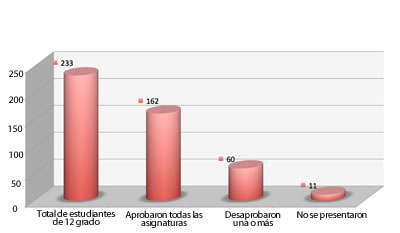
    Of 233 12th grade students in this high school, 222 took the entrance exams and only 162 managed to pass all tests. The rest will have to go to a second round, or content themselves with failure. The highest number of low marks was in Math, in which only 51 students achieved a score of between 90 and 100 points. In the applications for careers, teaching specialties are repeatedly put down as a back-up choice; « To guarantee getting a place, even if the tests don’t go well, » these potential teachers of tomorrow say, with a certain indecency.

    Statistics from José Miguel Pérez High School
    chart8968295055_5aca9ba76b
    Categories L to R: Total Students in Grade 12; Passed All Subjects; Failed One or More Subjects; Did Not Appear

    The beginning and end (?) of a mistake

    The young people who completed secondary school this year are the products of the educational experiments led off by the so-called Battle of Ideas. They are 17 and 18 today, so they started junior high as the « Emergent Teachers » program was gaining strength, a program that put hastily trained young people barely out of their teens — if that — at the front of the classroom. Today’s graduates were educated in classrooms where television and VCRs were the protagonists, for lack of sufficiently trained teachers. At the most difficult times they could count on receiving at least 60 percent of their classes from a screen. They also went through puberty at a time of rising ideological indoctrination. While it is true that this has always been inherent in teaching in Cuba over the past five decades in, its climax came after the Elian Gonzalez case. Fidel Castro took advantage of that event in the late nineties to impart a twist to the political discourse in all aspects of national life.

    Those who graduated from the twelfth grade a few weeks ago, are the first batch who did not have to go to boarding schools in the countryside. Encouraging news for the young people themselves and especially for their parents. However, the readjustment for teachers caused by the change forced many of them to rethink careers based on study, books and binders. The teachers who came from these schools in the countryside had to adapt to new conditions. Despite the difficulties of the former regime of internment, for the teachers these countryside schools were sites of direct contact with the farmers who sold or traded for agricultural products. One of the few incentives for working in such a place was being able to take some bananas, taro, pork or fruit to the city at a much cheaper price than in the markets of Havana. The loss of that little privilege discouraged some teachers from continuing on the path of teaching.

    Memorize or question?

    The countless hours lost in the classroom to teacher absenteeism is another of the hallmarks of recent graduates. To this we have to add the decline of the investigative character of science instruction, due to the deterioration or absence of chemistry, physics and biology labs. In many high schools chemistry experiments were practically canceled due to the shortages and fear that students would have access to the chemicals. Physical education, computer science and English were the biggest losers in the exodus of teachers to other areas of employment. High school education emphasized rote learning of dates, names, events, without progress in creating their own opinions, a spirit of asking questions, or the capacity of discernment. Graduates can hold in their heads the years and important days of our country’s history, but fail to form their own opinion about what it all means.

    The quality of handwriting, spelling and the correct use of Spanish also fell short as educational objectives. This coming September, university classrooms will see students with serious deficiencies in all three areas. But that does not mean that they will be faced with excessive demands or be unable to complete their programs of study. They will attend a University whose quality of teaching is far from that once exhibited in Cuba. In the 2013 ranking of Latin American universities, the University of Havana fell from position 54 to 81, another sign pointing to the urgent need to review the entire educational model. The educational level of the new entrants to higher education, has forced them to lower the bar.

    The tinkering with the alchemy of learning, the successive experiments marked more by the voluntarism than scientific analysis, the excessive presence of ideology in every subject, the encouragement of docile, rather than questioning, minds, students’ limited access to updated materials (read internet) and the educational fraud that flourishes where ethics is absent, are all undermining one of the main pillars of national identity: that which consists of knowledge, academics and teaching. But a problem can not be remedied unless we confess that it exists. So while they continue speaking in a triumphalist tone about Cuban education, it will continue to sink into mediocrity, into material and pedagogical deterioration.

    Excerpt from:
    Entrance Exams: An Assessment of Education in Cuba

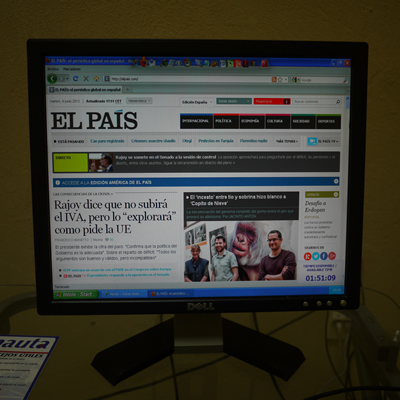
  • El Pais newspaper from a Nauta cybercafé
    Photo: I was able to access El Pais newspaper from a Nauta cybercafé

    In 1993 Fidel Castro found himself on the ropes with the economic crisis and accepted the circulation of the dollar in Cuban territory. Until then, possessing foreign currency could cost you several years in prison. « The enemy’s money » came to stay, although years later it would be replaced by substitute called the « convertible peso » or CUC. Among the most notable details of the decree that authorized the dual currency — the CUC and the Cuban peso — were the motives for doing so. The Official Gazette recognized that this measure « contributes positively to reducing the number of incidents characterized as punishable which will relieve and support the work of the police and the courts. That is, it would save work for prosecutors and judges if people were allowed to carry dollars. However, the key lay in the date chosen for the new law to take effect: August 13, the birthday of the Maximum Leader.

    Two decades have passed since that time and Cuban society is still gripped by monetary schizophrenia. Fidel Castro no longer holds the post of president but it seems that his brother is also given to mixing legal relaxations with the family calendar. On June 3 he commemorated not only the 82 years of his life, but he also put an end to a strategy of excessive control of Internet access. Just a few hours from the end of this day, the 118 cybercafés with public connections to the web opened. A somewhat bitter birthday gift for the General, who had been delaying however possible the conversion of Cubans into internauts. Most likely this small step toward information flexibility will also happen with the legalization of the dollar: it will not be reversed.

    Since this morning, Tuesday, the new public Internet sites began to operate with Internet and Intranet service. At a cost of 4.50 convertible pesos, a little more than $4.50 US, the user can access cyberspace for one hour. You can also choose to surf the national intranet for 0.60 CUC, or access « .cu » email only for 1.50 CUC an hour. In various tests performed — undetected, so far — none of the pages considered political were censored. With a minimum connection speed of 512 KBPS, the interface that welcomes the user as soon as the computer is turned on is called Nauta. Although all the workings and installed programs run on Microsoft Windows.

    On opening day Internet portals accessible from the new locations included those such as El Nuevo Herald, news sites in the style of Diario de Cuba, and several blogs critical of the government written from the Island. The high cost of the service, in a country where the average monthly wage is around 17 dollars, seems to be the key constraint. This contradicts the deputy minister of communications who recently declared that « it will not be the market that regulates access to knowledge in our country. » To date, those who have hard currency — authorized to circulate by the former president — will be able to afford entry to social networks, to classified ad sites, and the tempting employment or scholarship sites where you can register to try to emigrate.

    Curiously both measures — the legalization of the dollar and this timid opening to the Internet — have been the fruit more of pressure than the government’s desire for openness. To allow Cubans to possess convertible currency was a decision taken in the face of evidence that in the informal market the so-called « greens » circulated every day more strongly at the end of the eighties and the beginning of the nineties. A similar situation happens now with the information that flows from the vast World Wide Web. Pirate connections to the web on one side and the advance of the clandestine webs of audiovisual distribution on the other, confirm the futility of stemming the tide of kilobytes.

    The first users who tried the cybercafés this morning were surprised at the speed of the connection, but lamented the excessive costs. Several official reporters hovered around the tables of a local center in the Vedado neighborhood trying to capture snapshots of Havanans throwing themselves en masse on the keyboards. Instead, they found a few cautious clients sizing up the limits of the new service. Each one had to show their ID card and sign a contract before seating themselves in front of a computer screen. A contract that clarified that the service should not be used for « actions that can be considered (…) harmful or detrimental to public security. » A sword of Damocles that could be interpreted also from political and ideological considerations.

    From birthday to birthday, so go changes in Cuba. Twenty years ago it was the dollar… today the Internet.

    View article:
    20 Years Later: From the Dollar to the Internet

  • UK_Cuba

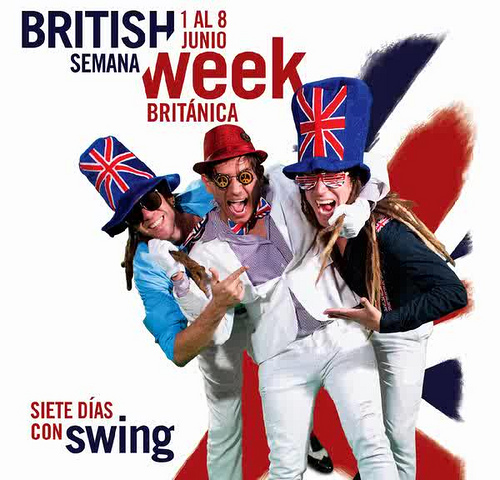
    Londres est à La Havane. Pendant cette semaine de la culture britannique que le pays célèbre depuis le premier juin, même le climat s’est mis en phase avec celui de cette île lointaine. Ciel gris, bruine tenace, brume au lever du soleil. Il ne manque plus que  la silhouette de Sherlock Holmes apparaissant furtivement au coin de la rue ou le magicien qui frapperait à la porte avec son bâton. Nous avons de la musique de qualité et une affiche inhabituelle dans les salles de cinéma. Depuis mardi dernier le programme de projection comprend le documentaire « Sugarman » -lauréat de l’oscar 2013- et aussi le film biographique « Marley » sur la vie du fameux chanteur et compositeur de reggae. La sélection de dessins animés pour enfants et adolescents, va probablement attirer un large public en cette période de vacances scolaires.

    J’ai pu apprécier une partie de la programmation, pas seulement pour moi mais en pensant à beaucoup d’autres également. Particulièrement à ces jeunes cubains qui il y a trente ou quarante ans écoutaient en cachette un groupe anglais, celui qu’aujourd’hui les media officiels diffusent partout. Les couleurs vives et le dessin de l’affiche de cette « semaine britannique » m’ont rappelé l’iconographie du chapelier fou « d’Alice au pays des Merveilles » et aussi les aventures sympathiques du « Sous-marin Jaune ». C’est pourquoi nous sommes plusieurs à y avoir vu un hommage à ces « Beatles-maniaques » alors fustigés. Le plus réconfortant de ces journées reste cependant cette petite fenêtre ouverte sur l’étranger qu’elles sont devenues et le souffle d’air frais qu’elles nous apportent. Ce cadeau que représente le sentiment que la culture fait paraître l’Atlantique moins large, les années passées plus courtes et ce qui est perdu récupérable.

    Traduction Jean-Claude Marouby

    View original post here:
    Libres à La Havane,Gandalf et Elton John