Catégorie : droits de l’homme

Situation des droits de l’homme à Cuba, répression et prisonniers politiques


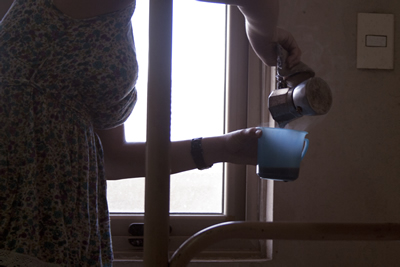
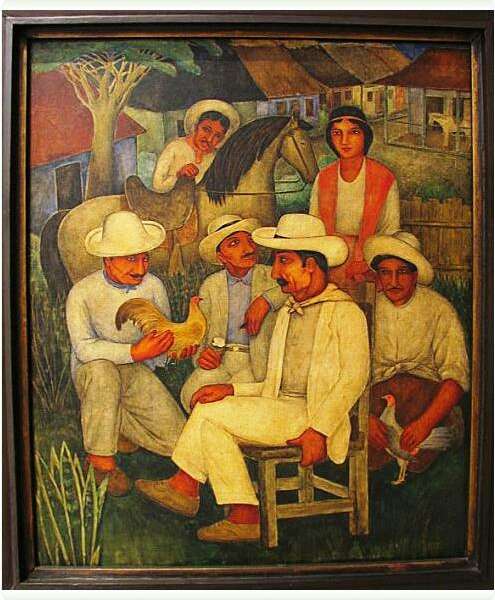
  • Guajiros (peasants), Eduardo Abela

    The composition is almost circular, compact. The eyes follow a spiral line that starts on the shoe of the man seated in the foreground and ends at the rooster held by another. There is peace, vestiges of good conversation, and in the background a village of wood and palm leaf huts. Six Cuban peasants have been represented in this painting by Abela, as well known as it is plagiarized. Their faces are tanned by the sun and vaguely indigenous. They are magnetic, irresistible. Our gaze takes us to the details of their clothing. « Dressed to the nines, » impeccable sombreros, long sleeves, perhaps with the fabric starched for the occasion.

    Infected by the familiarity of the painting, I go to the countryside, put myself in the furrows where so many times I have picked tobacco, beans, garlic… I go in search of that original exemplar of Cubanness that is rural man. However, under the scorching sun of August, instead of « Abela’s guajiros, » I find people dressed in military garb. Olive-green pants, shirts that lost their epaulettes long ago, old berets from some battle that never happened. They don the uniforms of the Armed Forces or the Ministry of the Interior to face the rigors of the fields. They don’t have many choices.

    In the informal market it’s easier to buy an official jacket than a shirt for farm work. A police cap costs less than a straw sombrero. Belts made out of cowhide are also a thing of the past; today it’s easier and cheaper to find those used in the army. The situation is the same for shoes. Rubber boots are scarce and instead the men and women of the land wear shoes designed for the trenches and combat. In a militarized country, even in the smallest details the military prevails over tradition.

    State centralization was drying up the autonomous production of clothes designed for farming. Not even the recent relaxations for self-employment have encouraged this production. It is not just an issue of economics or supply, this situation also affects questions of our national idiosyncrasies and popular customs. A current version of Abela’s painting would leave us with the impression of a looking at a militia group in tattered clothing posing for the painter in the middle of an encampment… about to sound the reveille.


    My blog, GENERATION Y, has moved: READ IT HERE.

    Read me and other Cuban bloggers on TRANSLATING CUBA.

    And here is a link to my blog IN OTHER LANGUAGES.

    More here:
    Where Are Abela’s Guajiros?
  • cftg

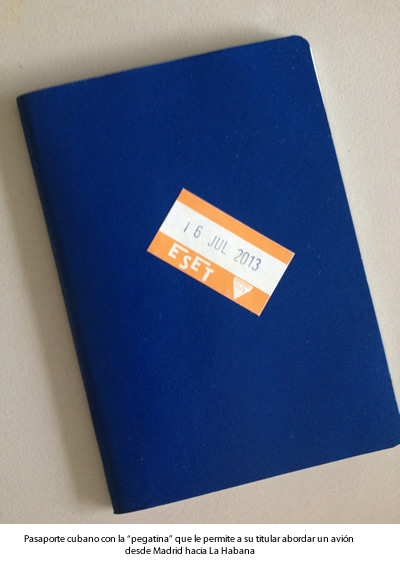
    Cuban passport with the « sticker » that allows its holder to board a plane from Madrid to Havana

    Of all the check-in lines at the Barajas Airport there is one that is longer and slower. This is the Air Europe flight that leaves from Madrid for Havana. After Iberia cancelled its service to the Island, Cubans living in Spain have been left with only one direct option for their travel home. Here they are, carts loaded with suitcases, filled with presents they have accumulated over months for their families waiting on their native soil.

    Two airline employees intercept the line at one point. They have a trained eye to detect tourists going on vacation. If you weren’t born in Cuba you can continue to the ticket counter to hand over your luggage.

    But if you have the blue passport with the lone palm shield, then the treatment is different. For natives of the largest of the Antilles, airports are never easy expeditious sites through which they pass and continue on their way. Rather, each border is a heartache; each migratory process is twice as complicated as for other nationalities. The inspection of documents is slow, meticulous.

    The Air Europe workers must guarantee that no Cuban boards the plane without permission to enter his own country. If they make a mistake, the airline itself will have to bear the cost of expatriating the passengers. So they take their time to make sure that the customer completes all the requirements before being letting him board the plane.

    Most likely they have passed a special training, because they immediately look for the pages of the passport called « enabled »: authorization to enter for exiled Cubans. If everything is in order, they place a small sticker on the cover of the document. Without this scrap of paper you will never pass through the departure gate.

    With the new Immigration Reform, which came into effect on January 14, the pre-flight inspection has become more complex. Now airlines flying to Cuba have to check if the passenger is within the range of a 24-month stay abroad allowed by the current law. For those who emigrated in previous years, everything is even more difficult.

    The person could belong to the large group of those who are prohibited from entering the Island. Almost always for ideological reasons. Having made critical statements about the government, being a member of an opposition party, engaging in independent journalism, making a complaint to some international organization, deserting from an official mission, or being a target of the whims of power, are some of the causes that block the entry of thousands of our compatriots.

    A few days ago, the case of Blanca Reyes, a member of the Ladies in White who lives in Spain, jumped into the headlines when she was denied the possibility of visiting her own country. With a 93-year-old father and a family she hasn’t seen in more than five years, Blanca requested an entry permit for the country where she was born. At the Cuban Consulate in Madrid the reply was terse: « denied. » So her passport was left without that other sticker of shame known as « enabled. » On the corresponding page there is no stamp on the watermarked paper that would allow her to return to Guayos, her little village in the central province of Santci Spíritus.

    Without an « enabled » document, Blanca will not pass the scrutiny of those Air Europe employees, nor of any other airline flying to Cuba. For her, the longer and slower line at the Barajas Airport is an unattainable dream. As long as this absurd migratory restriction remains in force, she will have to stay — in the distance — accumulating presents and hugs to take to her family.


    My blog, GENERATION Y, has moved: READ IT HERE.

    Read me and other Cuban bloggers on TRANSLATING CUBA.

    And here is a link to my blog IN OTHER LANGUAGES.

    More here:
    Cuban Exiles on the ‘Unwanted’ List Can Never Go Home Again


  • Photo: Silvia Corbelle

    My grandmother made a living washing and ironing for others. When she died, in her mid-eighties, she only knew how to write the three letters of her name: Ana. For her whole life, she worked as a maid for a family, even after 1959 when official propaganda boasted of having emancipated all servants. Instead, many women like her continued to work in domestic service but without any legal security. For my sister and me, Ana spent part of her days in « the house on Ayestarán Street, » and we never said out loud that she was paid to clean the floors, wash the dishes and prepare the food there. I never saw her complain, nor did I hear of her being mistreated.

    A couple of days ago I heard a conversation that contrasted with the story of my grandmother. A plump lady dressed in expensive clothes was telling her friend — between glasses of white wine — how she behaved with her young domestic. I transcribe here — without adding even a word — a dialog that left me feeling a mixture of revulsion and sadness:


    – From what you tell me, you’re lucky.

    – Yes, I really can’t complain. Suzy started with us when she was 17 and she just turned 21.

    – Now we’ll see if she gets pregnant and you have to throw her out.

    – No, she’s very clear on that. I told her that if she gets pregnant she’ll lose her job.

    – Yes, but you know, « the fox always returns to its den. » So maybe she’ll run after some man from the village where she was born.

    – No way! She won’t even go to that « den » on vacation. Imagine you didn’t have any electricity, the floor of her parents’ house is dirt, and the latrine is shared by four families. It’s like the heavens opened up for her since she’s been with us. All she has to do is what I tell her, that’s all I ask.

    – That’s how they start, but later they start thinking things and ask for more.

    – So far we’re doing fine. She has Sunday afternoons off to do what she wants, but she has to come home by midnight. Most of the time she doesn’t even go out because she doesn’t know anyone in Havana. It’s better that way, because I don’t like the bad influences.

    – Yes, it’s really bad out there. These country girls do better not to even go out because if they do they learn a few things.

    – They learn more than a few things. Because of that I even monitor her phone calls. I don’t want her to learn what she doesn’t need to know.

    – And that boyfriend you told me she had?

    – No, that didn’t continue. We made it clear that we didn’t want men visiting our house. And she, really, has no time to be falling in love, my children take a lot of time. Taking them to the park, their homework after school, they like to paint before going to bed, she has to read them a story, they don’t like to watch movies alone. Poor thing, when it’s time to fall into bed she must be dead on her feet.

    – Woooow… you’re sitting in the catbird seat. I haven’t had any luck. Every time I hire one, they don’t last even a month.

    – If you like I can introduce you to Susy’s younger sister, she seems very serious.

    – How old is she?

    – Fifteen, so you can train her like you want.

    – Yes, give her my phone number and have her call me. Oh, and make it clear, I’ll buy everything: clothes, shoes. But if she leaves one day, she’s not taking even a pin from my house. Make that clear! Because they get a big head and it’s hard as hell to deflate it!

    The two women continue talking as the wine bottle passes the half-way mark. I overhear a rant about her husband’s more than 60 pairs of shoes. They laugh and I feel my stomach knotting up in a familiar way, with the accumulated anger abusers provoke in me. I go outside for a little air and see the « matron’s » car. It has green Army-issue license plates that stands out against the shiny metallic gray body. It’s the new aristocracy class, the olive-green royalty, lacking scruples and modesty. I spit on the windshield, for Susy, for Ana, for me.


    My blog, GENERATION Y, has moved: READ IT HERE.

    Read me and other Cuban bloggers on TRANSLATING CUBA.

    And here is a link to my blog IN OTHER LANGUAGES.

    Continue Reading:
    The Rise of the Cuban Aristocracy… And the Lingering Servant Class


  • Recently I have been reading an excellent book by Carlos Salas, currently the director of the site lainformacion.com. One of those texts essential for any newsroom and for the library of every reporter. With the title, « Manual para escribir como un periodista » (Manual on How to Write Like a Journalist), in its pages he dissects the art of writing headlines, the skills of a good interviewer and the need for research as a prelude at any article. This professional who has devoted decades to narrating reality gives us an agile volume where he shares the knowledge others keep only for themselves.

    Wearing my « Salas glasses, » I began a meticulous analysis of the accuracy with which the official media reports the news. I did not have long to wait for the first inconsistency and deficiencies to spring into view.

    Throughout the week, the news media reported on the unfortunate story of a group of people poisoned by methyl alcohol. A party in a proletarian neighborhood in Havana that ended in tragedy. Eleven dead and dozens of people affected by ingesting this dangerous substance, it was a sad sequence of lack of control, contraband, the black market, economic precariousness and irresponsibility.

    Drama is an inseparable companion of journalism, as those of us who exercise this profession know well. But in the midst of tragedy, we must maintain the ability to discern why the national media treats certain events as so significant, while other news is simply completely silenced.

    Almost on a par with the drama of those poisoned by methyl alcohol, was an accident during a Children’s Carnival in Guantanamo. The bleachers gave way and several children were injured, one of them with head trauma. The confusion, chaos and terror that must have resulted from the collapse of this structure in the middle of a celebration are obvious. Why wasn’t such an incident reported both on television and in newspapers across the country? Because in the case of a product stolen from a warehouse and consumed in secret it was citizens who acted illegally? Who bears the responsibility for a badly constructed grandstand at a public event? The State, that omni-proprietor, that judge of everyone… judged by few.

    The news of those who died from methyl alcohol is meant to hold the victims up as examples of people who had fallen into such circumstances by violating established norms or because they suffered from an uncontrollable addiction. They always try to put responsibility on the people. The fact that, in a country with a tradition of producing rum, many prefer to buy their beverages on the black market, says more about our national penury than it does about vice. Nevertheless, the official moral was summed up as: This is what happens to the unscrupulous and to drinkers. The victims are doubly victimized.

    But in the incident of the bleachers collapse, where children and adults were injured, the official journalists could not assign guilt to the injured. Inevitably, they would have to relate the shoddy work of the state enterprise that built the structure, without any consideration for safety. Or instead, confess that a good part of the materials for the job were embezzled, which presumably caused its weakening and subsequent collapse.

    Both episodes, unfortunate and avoidable, point to a widespread and chronic problem in our reality: the need to steal and divert resources to survive. Thus, poverty wages and economic insecurity are the direct cause of these two tragedies. The culprits are not only sellers of illegal alcohol and the workers who take home some screws or pieces of wood, but also the order of things that turns us into criminals to survive.

    Follow this link:
    Two News Stories, One Focus: If You Can’t Blame the Victim Say Nothing

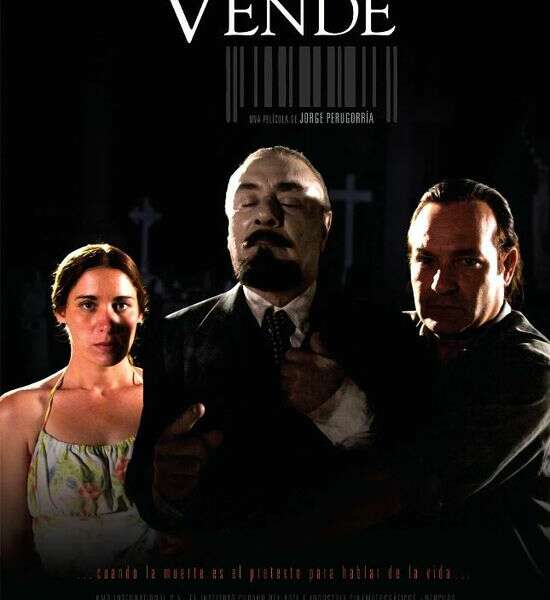
  • se vende6a00d8341bfb1653ef01910496c10e970c-550wi

    People laugh in the darkened room, the seats creak, and from the bathroom a reek invades everything. It’s nighttime at a Havana movie theater and the audience is enjoying the most recent Cuban comedy. Titled For Sale, it was directed by the well-known actor Jorge Perugorría and has already been shown in an extended series of openings. A controversial film that provokes laughter on the one hand, and fierce criticism on the other, it has its favor that it doesn’t leave its viewers indifferent. Either they laugh with pleasure, or get up in the middle of the screening and leave. Such reactions are also symptomatic of how we Cubans respond to certain issues, work and people. We tend to love or repudiate; to applaud or reject, with no intermediate points.

    This is a humorously macabre story, with dead people who must be disinterred at the cemetery in the middle of the night. The script takes us by the hand through the absurdity of a reality where the sale of a tomb and the bones sheltered within it is the only path to financial relief for a young professional. For Sale unwinds in an also cadaverous Havana, a city of faded houses with balconies on the point of collapse. It presents us with a society where scruples and urges give way before the imperatives of survival. A wake-up call about the ferocious pragmatism that invades us, leaving nothing safe. A metaphor, perhaps, of a time in which the past is viewed with irreverence and a desire to liquidate it, by we who live in the present.

    In its favor, the movie also makes several references to the classics of Cuban filmography. The well-known game of mirrors — the film within the film — amplified and referenced. An explicit tribute to Tomás Gutiérrez Alea (Titón) and Juan Carlos Tabío. The Death of a Bureacrat, For Trade, Strawberry and Chocolate, are some of the films referred to throughout the movie. However, some of these references pass unnoticed by a large audience, one that younger or less versed in national cinema doesn’t know its antecedents. Rather than a difficulty, this lack of reference points allows another way to understand the story being told. If the script wanted to turn these hints into evocations, they’re left for many as events at the same level as others. The trick of the lens looking into the lens needs an aware viewer, otherwise it’s seen as one more point in the story.

    And then came the actor…

    The figure of the director also cast as one of the protagonists is something new in the cinematography of the island.

    Few native directors have alternated between both sides of the camera. In For Sale, the union of these roles doesn’t occur in the cautious manner of Alfred Hitchcock, where we see, for a few seconds and in the shadows, his chubby profile. In this case the spectator senses that the character of Noel recalls, too much, the actor who plays him, perhaps because his designer and interpreter are the same person. It is clear, however, that the entire filming must have been like a huge party for all the participants. To the point that at the end of the filmstrip it rushes to conclude in a great celebration where it seems to offer a solution to all the problems. An abrupt and often repeate, closing in Cuban comedies, that bore more than entertain.

    Although with Nácar, the female protagonist, the script reaches for it, it misses an intimacy, leaving only a timidity that is not credible. Lacking the weight of interior emotion that has nothing to do with the easy laugh, something we have become accustomed to in movies made in Cuba. The excessive sex scenes and erotic allusions, designed to fill theater seats, in hopes of seeing a nipple here, a thigh there… a couple kissing in the shower. « Wankers » all over the country are pleased with a script that offers them many minutes of bedrooms, beds, cunnilingus and even lesbian moments. Another contribution to the hackneyed stereotype of a hyper-eroticized national identity obsessed with the pleasures of the body. The ideological clichés are harmful, but the carnal also echoes banal and enduring perceptions.

    If you have to sacrifice the dead to feed the living…

    Beyond the pitfalls and limitations of For Sale, its main achievement is to convey a message of particular importance for Cubans today. Filled with laughter, the myths of the past are picked apart, yesterday’s buried bodies are liquidated. The dead stay dead and serve only in regards to the imperatives of the living, every minute of the film seems to tell us. The corpse of the protagonist’s father, an ideologically inflexible man, at the end of the reel is a mere mannequin in an exposition. Played by the actor Mario Balmaseda in the manner of a rigid Lenin, index finger raised, this character embodies the political leaders whose old-fashioned speech provokes laughter more than sympathy. Leaders and ideas in liquidation once their time is passed; the stark conclusion of this filmstrip.

    I am among those who stayed until the final minute of Jorge Perugorría’s film. I laughed through several of its scenes and reflected during others. Despite my own objections and criticisms, I preferred to find its nuances and intermediate points. I gave it a chance and I think it was worth it. Because through its 95 minutes, the script reaffirmed an idea I have pondered for years: no one can bear so much past, carrying on their back the weight of all the deceased. A nation is not a cemetery where the living must comply with the designs of those who are gone. The same thing ends up happening to political last wills and testaments as happens to the bones in the film For Sale: they are auctioned off for the imperatives and pragmatism of now.

    Read More:
    ‘For Sale’ — Perugorría’s Macabre Comedy Elucidates Cuba’s Dilemma


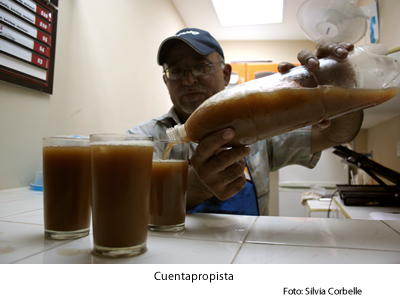
  • Self-employed. Photo by Silvia Corbelle.

    The National Tax Administration (ONAT) office is open and dozens of people have been waiting from very early. An employee shouts directions for what line to get into for each procedure, although a few minutes later confusion will reign once again. At a desk without a computer another official writes the details of each case attended to, by hand. The wall behind her back is damp with humidity, the heat is unbearable and people constantly interrupt to ask for forms. An institution that takes in millions of pesos in taxes every year carries on with feet of clay, suffering from material precariousness and poor organization. Congested offices, interminable paperwork and lack of information are only some of the problems that hinder its management.

    However, the setbacks don’t stop there. The lack of stable wholesale markets with diversified products also slow down the private sector. The inspectors fall on the cafes, restaurants and other autonomous businesses. Strikes or any public demonstrations to reduce taxes are strictly forbidden. It is expected that the self-employed will contribute to the national budget, but not that we will behave like citizens willing to make demands. The only union permitted, the Central Workers Union of Cuba (CTC), tries to absorb us in their straitjacketed structures. Paying monthly dues, participating in congresses where little is accomplished, and parading in support of the same government that lays off thousands of workers: it is to this that they want to reduce our collective action. Why not create and legalize our own organization, one not managed by the government? An entity that is not a transmission line from the powers-that-be to the workers, but the reverse?

    Unfortunately, most of the self-employed don’t consider that salary independence and productivity must be tied to union sovereignty. Many fear that at the slightest hint of a demand their licenses will be cancelled and other measures taken against them. So they remain silent and accept the inefficiencies of ONAT, the inability to import raw materials from abroad, the excesses of the inspectors and other obstacles. Nor have emerging civil society organizations managed to capitalize on the needs of this sector to help them achieve representation. The necessary alliance between social groups that share nonconformity and demands doesn’t materialize. So our labor demands continue to be postponed, caught between the fear of some and the lack of attention from others.

    Read the article:
    Independent Labor Unions Outlawed in Cuba, for the ‘Proletariat’ and the Self-Employed Alike

  • Noel repairs the blades of the fan. He has a little workshop in a doorway in Cerro neighborhood. He repairs electric irons, blenders, every kind of obsolete motor, and does good things with rice cookers and water heaters. It’s not a job that generates a lot of dividends. Some of the customers ask for his reliable services and then he doesn’t see them again; others want to pay in installments and end up not paying it off. However, in addition to diminished returns, this labor offers Noel a unique experience. Every day, he is in contact with people, many people. Speaking, opining, telling him what came over the illegal satellite dish and especially listening, opening his ears to what they have to say. So he has become, in his little cubicle full of grease and cables, an actor of opinion, a born leader appreciated for his abilities and respected for his words.

    Cuba is full of people like Noel, anonymous, simple, who know reality at a level no minister can reach, even with the most competent advisors. People who don’t show up on TV screens, who aren’t at the front of any parade, but who have natural charisma and contact with the people to lead changes. For now, we only know those with whom we’ve managed to interact or meet personally, but there are thousands. They will never draft a political platform, but they know by heart the most acute problems that afflict our society. They would not sign an action demanding improvements in human rights, nor will they open a blog, practice independent journalism, or autonomous law. The word « activist » scares them and to call them opponents would put an end to the life they have now. They are — without saying so — all that and much more. They are citizens of conscience, to those who damage the situation in our country.

    The future of our nation will be influenced by Cubans like this. So many who, today, are behind a desk in some office, at the front of a classroom, filling out forms in some State agency, we will see reach the public sphere. As they feel there’s a mark of respect in stating their opinions publicly, they will emerge from all sides. It’s important that at the point when they decide to take that step we do not react with our suspicions nor with confrontation, but with our embrace. Because while Noel fixes a broken fan blade, I feel that one day he will also have the ability to join together the broken and separated pieces of our reality. The same care with which he glues plastic and fixes the motor, he will put into the social leadership he will show tomorrow.

    28 July 2013

    Continue reading here:
    Leadership, for Today… and Tomorrow’s Cuba

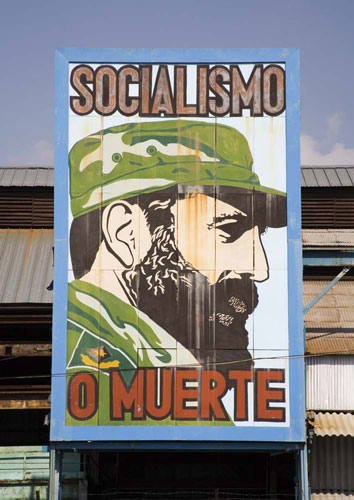
  • Socialism or Death

    Socialism or Death

    The language of diplomacy, although distant and calculated, gives us a glimpse of changing times. I remember that for years I could predict every word foreign presidents would utter once they arrived in Cuba. Never lacking, in the script of their speeches, was the phrase « the unbreakable friendship between our peoples… » Nor was a commitment to total harmony between the political projects of the visiting leader and his counterpart on the Island. There was one path and fellow travelers could not deviate an inch from it, and so they made it clear in their statements. Those were times, seemingly, of complete agreement, no nuances, no differences.

    In recent years, however, the expressions of the official guests who arrive have been transformed. We hear them say, « although there are points that divide us, it’s best to look for those that unite us. » The new expressions also include the declaration that « we represent a diversity, » and that « we come together in working together, maintaining our plurality. » Clearly, bilateral relations in the 21st century are no longer conceived with a monochromatic and unanimous discourse. They exhibit the variety that has become fashionable, although in practice there is a strategy of exclusion and denial of diversity.

    José Mujica, president of Uruguay, has added a new twist to the discourse of presidents received at the Palace of the Revolution. He stressed that « before, we had to recite the same catechism to come together, and now despite our differences, we manage to be united. » Incredulous spectators on national television, we immediately asked ourselves if the doctrine to which the Uruguayan dignitary referred to was Marxism or Communism. According to today’s evidence, two presidents can shake hands, cooperate, pose together for a smiling photo, even though they have dissimilar or opposing ideologies. A lesson in maturity, no doubt. The problem — the serious problem — is that these words are said and published in a nation where we, the citizens, can have no other « catechism » than that of the party in power. A country that systematically divides its population between the « revolutionaries » and the « unpatriotic, » based purely on ideological considerations. An Island whose leaders stoke political hatreds among people without taking responsibility for these seeds of intolerance they consciously sow, water and fertilize.

    This is Cuban diplomacy. Accept hearing from a foreign visitor what you would never allow someone born on this island to say.

    See the original article here:
    Freedom of Speech Continues to be Outlawed in Cuba for Cubans… Not for Others