Catégorie : libertés

Les libertés et la répression à Cuba

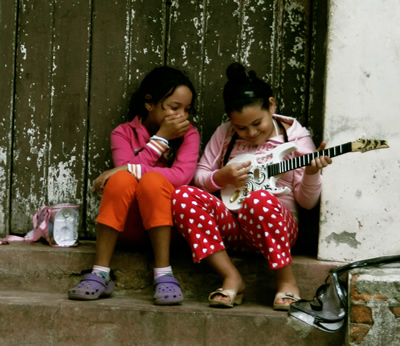
  • On the couch there’s a stuffed dog missing an eye and losing an ear. Thirty years ago he was the plaything of a little girl who now has two children. Neither of them is old enough to have experienced the ration market when it offered manufactured products. So when their mother explains that the dog was a « basic category » toy, they look at her as if she’s speaking Chinese.

    For them, everything is different. Since they were small they’ve known that toys are only sold in hard currency. Sometimes when they go to the big market in Carlos III Street, they press their noses to the glass in front of a pink pony and a plastic house with a fireplace.

    The two distinct generations are united by a similar unease. In her thirties she experienced the era of Soviet subsides and regulated distribution of everything… or almost everything. Her children, for their part, have lived in times of a dual currency system and scarcities. For her, Three Kings Day isn’t celebrated on 6 January, rather it was officially moved to July and given another name, but her children have seen the frantic rebirth of many traditions.

    In the eighties the grandmother of that little girl with the stuffed dog whispered to her the story of Balthasar, Melchior and Gaspar. Once she grew up she taught her own offspring — openly — the ritual of the letter with requests and the water ready for the thirsty camels.

    Today that girl of days past greets the dawn outside a toy store very different from those of her childhood. No employee will demand a ration book with coupons to tear out and checkboxes where the number assigned to each product is entered

    Now there are convertible pesos — that hard currency she doesn’t receive her salary in — the only money that will give her children access to the dolls, the toy cars, or simply to some marbles.

    She manages to buy a plastic flute and the tiniest stuffed dog. He has big floppy eats and blue eyes.

    Yoani’s English Language blog is here, and her posts also appear in TranslatingCuba.com here, along with those of over 100 independent voices writing from the Island. You can help translate Cuban bloggers at HemosOido.com here.

    Read the original:
    Cuban Parents Need Hard Currency to Buy Their Children Toys

  • 2013-12-31-colchonero450x292.jpg

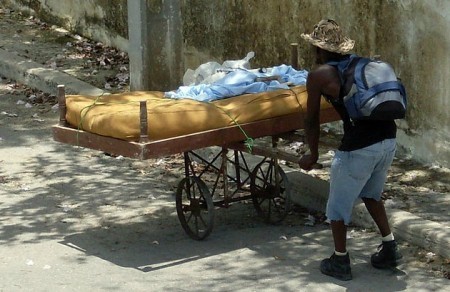
    A woman shouts from the balcony and they stop, along with the cart they are pushing. On the sidewalk itself they set up a workshop. On some boards and in sight of everyone. The broken springs are replaced, enormous needles sew up the edges and the old lining, stained here and there, is replaced with another made from the cloth of a flour sack. Their hands move quickly. In less than an hour they’re done and continuing down the street looking for new customers. A mixture of dust, lint and the accumulated odor of years of intimacy floats on the air.

    Mattress repairers always have work, a lot of work. In a country where many still sleep on the same bed their grandparents slept on, this work is vital. These days experts in padding and bedframes are everywhere. With their spools of thread, they loudly shout out their promises of thirty-day guarantees after the renovation. They repair that which passed its expiration date decades ago, returning a comfortable sleep to those who find some out of place spring poking into their backs every night.

    Also abundant are the scammers. Creators of an illusion that barely lasts and leaves the buyers with pains all over their bodies and in their wallets. They stuff in successive layers of dry banana leaves, plastic fibers or sawdust. Then they cover them with brightly printed fabric, taking special care to tightly stitch the edges. They situate themselves near commercial centers and assure people that their merchandise is « just like in the store. » In a country where a professional needs a year’s salary to purchase a marital mattress, the offerings — outside the state stores — are cheaper, and always very tempting. However, much of the time the advantage turns to frustration in a very short time.

    The scenario repeats itself when the repairers come to a neighborhood. A mother is annoyed by the urine stains that her youngest child has left on the bed. Others are embarrassed because the neighbors will see the successive patches that have been made to their mattress over the years. Phrases such as, « It’s not mine, it belongs to a relative, but I’m doing them the favor of fixing it, » are common. Some appear with an amorphous structure, lacking defined corners and sunken in the middle, that needs more than magic to restore it. « Let me make it like new, » says the repairer, and he starts to move his hands, sink the blade in a few points, and finally name a price.

    More than a restorer of mattresses, he is a restorer of dreams.

    See the original post:
    The Cuban Mattress: A New One Costs a Year’s Wages

  • Le journal télévisé d’hier a laissé Raidel bouche bée. Lui qui était sur le point d’acheter une voiture subventionnée, un système de privilèges qui va prendre fin. Il venait à peine de se procurer la lettre d’autorisation d’achat, avec les signatures et les tampons nécessaires qu’il avait mis des mois à obtenir, baladé d’un bureau à un autre, d’un bureaucrate à un autre. Le plus dur avait été de prouver que ses revenus provenaient bien d’un travail public, prouver l’origine de chaque centime obtenu en décorant des offices de tourisme. Avec l’autorisation en poche, il avait dû patienter pendant quatre ans sur une liste d’attente qui affichait déjà à l’époque 7000 acheteurs potentiels. Jusqu’à cette journée d’hier, où son rêve d’aller à la fourrière et de choisir une Peugeot ou une Hyundai à bas prix s’est évanoui en quelques secondes, juste le temps pour le présentateur de lire le communiqué officiel à la télévision.

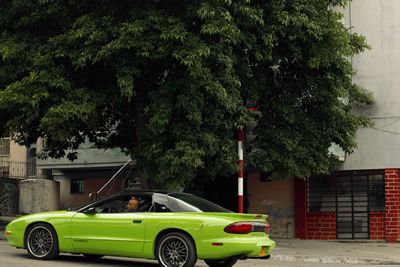
    Il y a peu, le Conseil des Ministres a autorisé la mise en place graduelle de la vente de voitures modernes (neuves ou d’occasion) à toute personne, qu’elle soit cubaine ou étrangère. Deux années après l’application du Décret 292, la réalité s’est imposée et a obligé l’État à élargir les limites de cette régulation. À cette légalisation de l’achat et de la vente de véhicules entre particuliers, s’ajoute l’acquisition auprès des concessionnaires de voitures avec zéro kilomètre au compteur ou fabriquées il y a moins d’un an. Nous passerons donc d’une simple autorisation de commercialisation d’un produit de seconde main à l’obtention d’un produit neuf qui est vendu avec certaines garanties techniques… Oui, mais pour les réseaux de détaillants travaillant pour l’État, au prix que le Gouvernement déterminera, et probablement en payant comptant.

    Une mesure de ce type bénéficie à la classe moyenne émergente, désireuse de posséder plus, plus de symboles modernes dignes de son statut. Comme effet immédiat, les différences sociales s’accentueront, ce qui a déjà été dramatiquement le cas ces cinq dernières années. Même si le discours politique continue à parler d’égalité et d’opportunités pour tous, cet assouplissement ne concerne que ceux qui ont de grosses entrées d’argent en pesos convertibles. Ce sont eux les grands gagnants d’hier, alors que les perdants sont les Cubains comme Raidel, dont la lettre d’autorisation pour acheter une voiture a désormais plus de place dans un musée. Après des années à applaudir, simuler et travailler dur, les gens comprennent à présent que le marché a été imposé en dépit de leurs mérites professionnels et politiques.

    Traduit par Aïda

    More:
    Voitures à Cuba: des lettres sont des lettres…

  • Foto de Silvia Corbeille

    Le journal du matin a laissé Raidel sans voix. Juste au moment où il allait acheter une voiture à prix subventionné, on annonçait la fin de ce mécanisme d’exception.

    Rien que l’obtention de la lettre d’autorisation avec les tampons et les signatures lui avait pris de longs mois passés à naviguer d’un bureau à l’autre, d’un bureaucrate à l’autre. Le plus difficile avait été de démontrer que ses revenus provenaient du secteur public, de prouver l’origine de chaque centime gagné à décorer les  centres touristiques. Une fois le permis autorisé, il avait attendu pendant quatre ans sur une liste d’attente qui dépassait les sept mille acheteurs possibles. Jusqu’à ce matin, où son rêve d’aller au dépôt choisir entre une Peugeot et une Hyundai à bas prix est parti en fumée, le temps de lire une annonce à la télévision.

    Récemment le Conseil des Ministres a autorisé l’implémentation progressive de la vente de voitures modernes –neuves ou d’occasion- à toute personne qu’elle soit cubaine ou étrangère. Deux ans après l’implémentation du Décret 292, la réalité s’est imposée et a contraint à élargir les conditions restreintes de cette régulation. A la légalisation de l’achat/vente de véhicules entre personnes privées, s’ajoute maintenant la possibilité d’acheter dans les agences d’autres véhicules avec zéro de kilométrage ou de fabrication plus récente. Après avoir eu seulement la possibilité  de commercialiser des véhicules de seconde main, nous allons disposer d’un « nouveau package »  avec certaines garanties techniques…mais ceci dans les magasins d’Etat, au prix que le gouvernement déterminera, et probablement avec l’obligation de payer comptant.

    Une mesure de ce type bénéficie à la classe moyenne émergente, de plus en plus désireuse de symboles modernes de statut social. L’effet immédiat sera une augmentation des écarts sociaux qui se sont dramatiquement accrus au cours des cinq dernières années. Bien que le discours politique continue à parler d’égalité et d’opportunités pour tous, cet assouplissement est destiné à ceux qui ont le plus de rentrées en pesos convertibles. Ce sont eux les grands gagnants du jour, alors que les perdants sont les cubains comme Raidel, dont la lettre d’autorisation pour acheter une voiture, n’a plus aujourd’hui qu’une valeur de pièce de musée. Des gens qui après des années d’applaudissements, de simulation et de dur labeur, comprennent aujourd’hui que le marché a pris le dessus sur leurs mérites professionnels et politiques.

    Traduction Jean-Claude Marouby

    Read the original post:
    Une lettre n’est qu’une lettre

  • http://www.cubantrip.com/wp-content/uploads/2014/02/3116image.jpg

    A l’entrée de l’immeuble, se trouve la statue d’un homme, de taille réelle, avec une barbe et des béquilles. Tout le monde se signe devant lui. On a également sculpté à son côté deux chiens, également en bois : des chiens errants, maigres et soumis. La statue de Saint Lazare jouit d’un intérêt particulier lorsqu’on se rapproche du jour de sa fête. C’est un des saints les plus vénérés du pays, et qui fait l’objet des plus grandes démonstrations de dévotion populaire. Son sanctuaire dans le village d’El Rincon, grouille tous les 17 décembre de pèlerins, diseuses de bonne aventure, marchands de fleurs et policiers. Tout autour se réunissent les souffreteux, les nécessiteux, tous ceux qui ont tout essayé et pour qui rien n’a réussi… les abandonnés du sort, de la science et de l’amour.

    Lorsque j’arrive à El Rincon, je ressens cette énergie qui vient de la douleur et de la foi. La léproserie et ses histoires tristes, les campements illégaux qui se sont développés de chaque côté de la voie de chemin de fer et l’odeur des cierges qui brûlent en permanence. Ce n’est pas un lieu de sourires. Il m’est parfois arrivé d’accompagner un ami pour déposer l’offrande promise après la réalisation d’un vœu. J’y suis allée d’autres fois, poussée par cette curiosité que provoque en nous tout ce que nous ne pouvons comprendre ou expliquer. En au moins deux occasions, je suis arrivée au milieu de la nuit du seize sous le toit du temple, et j’ai vécu là des moments difficiles à oublier. Il y a quelqu’un qui pleure et beaucoup de personnes prient ; il fait une chaleur torride et tout le monde transpire ; on sent les plaies ouvertes et la pauvreté. L’Eglise est pleine à craquer.

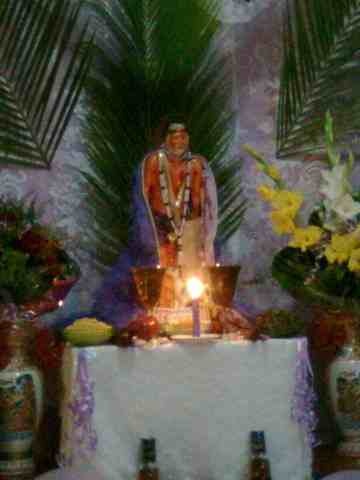
    Aujourd’hui je suis sortie de chez moi et tout à côté on avait mis un manteau violet sur la statue du vieux Lazare. Un vieil homme qui passait devant s’est incliné pour lui murmurer quelque chose à l’oreille. Lui aussi avait une barbe flétrie et des vêtements qui datent de l’époque des subventions soviétiques, où existait un marché rationné des produits industriels. Je l’ai vu approcher son visage desséché de celui du saint et j’ai fait attention à son apparence. Les deux appartiennent au troisième âge, ils ne peuvent compter que sur ce qu’ils ont sur eux, et n’ont pas beaucoup de raisons de sourire. Les deux si proches, mais l’un sur un autel et l’autre dans la rue. L’un entouré de promesses à accomplir, et l’autre sachant que toutes celles qu’on lui a faites sont déjà brisées.

    Traduction Jean-Claude Marouby

    More:
    Le vieux Lazare

  • 6a00d8341bfb1653ef019b02cf1d16970d-550wi

    There were no great crowds of long lines outside the movie theaters and it didn’t feel like December because of the high temperatures and strong sun. These are the days of the New Latin American Film Festival, but the whole context is very different from 35 years ago when it was founded. The loss of importance of this cultural event is obvious, as is people’s reduced expectations round the Coral awards for the best films. But.. what has changed more? The Festival or us?

    The competition faced in Cuba for any movie is much greater now. Despite our material and technical limitations, our society has seen its access to films, documentaries and TV programs other than those broadcast by the official media skyrocket. Movie theaters have ceded space before home projections or private salons with flat screens and plastic chairs.

    Despite recent prohibitions on the film circuit operated by the self-employed, the phenomenon of « non-institutional programming » is unstoppable. So the Festival of New Latin American Cinema is not a film oasis in the wasteland of Soviet films we experienced in the 80s. Now it must compete with more commercial and dynamic offerings that address a broad spectrum of tastes.

    In the illegal market « combos » or « packages » proliferate, selections of series, reality shows and audience participation films. There are also abundant scientific and historic documentaries and big screen releases. We Cubans are true « Pirates of the Caribbean » when it comes time to copy and distribute recently released movies from other countries. One week after the film Avatar took New York by storm, the savvy marketers in our own backyard were offering a lesser quality — but similar impact — copy on local networks.

    « The Festival » (period… as we call it), had a clear ideological focus from the beginning to promote creations filled with social criticism, a reflection of regional problems or the historic memory of the dictatorships that plagued Latin America. Hence, its current problems in competing for an audience that increasingly wants lighter entertainment — humorous or simply frivolous. From a mass phenomenon, the Festival has become an elite event that tries to compensate for the excess of Hollywood movies, today available everywhere.

    Another element that marks the decline of this film event is the death of its creator and inspiration. Along with all that might have been controversial in the life of Alfredo Guevara, the Festival director, his drive and his personal relations shaped this film festival each December. Like every creature made in the image and likeness of man, the Festival received a very hard blow with the death of its principal author. However, in Cuba we’re already used to the survival of the most inert phenomena, so it shouldn’t come as a surprise in this case that there is another ad infinitum extension, another living-dead.

    For the filmmakers as well, the Havana event has declined in importance. It has become more of a get-together, mojitos in the gardens of the Hotel Nacional, or simply a walk though this theme park of the past that we have become. But to get a Coral award feels more like a remembrance than a present honor. Other places, other festivals, have gained in prestige and media reach in recent decades, to the detriment of an event that hasn’t known how to keep up with the times.

    Its political filter remains an impediment to the rejuvenation of the Festival. Although criticism has gained a space in its offerings, and its directors are not part of the institutional framework, it remains far from being a space without censorship. Another point on which it can’t compete — not even close — is with the underground movie networks, packed with controversial materials. But 35 years on, the International Festival of New Latin American Cinema continues.

    However, it is worth asking whether this is evidence of its good health or the stubbornness of its organizers. Unable to compete with the illegal — and international — networks of film distribution, rocked by the passing of its creator, and given its apparent loss of popularity, this event needs to be renewed. Otherwise, it could end up like that moment of the year when we dust off our nostalgia, going to theaters with broken seats and noisy projectors, to evoke that time when we could only see good movies in December. Two weeks for longing and remembrance.

    Yoani’s English Language blog is here, and her posts also appear in TranslatingCuba.com here, along with those of over 100 independent voices writing from the Island. You can help translate Cuban bloggers at HemosOido.com here.

    View article:
    Cuba’s Outdated Film Festival Carries On

  • yoatree11298559784_8187f16d02_z
    The tree of rights, hard to grow, easy to cut down #DDHHCuba

    « Repetition is the mother of learning, » an old professor of Military Preparation in my high school used to say. He wasn’t, however, referring to the repetition of a phrase in order to learn it, or of a particular mathematical operation to memorize it. In fact, he was referring to punishment, the correction which, according to him, should be insistent to generate respect. So he overwhelmed us with shouts, unnecessary reports and even insults of « slackers » when we didn’t know how to handle a rifle or crawl through the grass. But instead of cementing in us the knowledge he imparted, we all feared and detested him.

    This same logic of applying repression over and over again is used by the State Security apparatus every December 10. On World Human Rights Day we live through 24 hours of clubs and threats. Every year it’s the same thing and a little more, because like all correctives it seeks to paralyze its victims. Arrests, besieged homes and threats delivered ahead of time to the members of the different civic movements are all part of this « ritual of terror. » They’ve also added cutting off cellphone service — with the complicity of the Cubacel company — and sending apocryphal messages to sow confusion among activists.

    But the repeated penance isn’t working. The numbers of those who engage in some demonstration for Human Rights are increasing, not declining. The old pedagogy of beatings no longer serves as an example, but rather fans the reasons to speak out. On the other hand, there are people who don’t belong to any critical organization or to any dissident group who are witnessing and taking note of these repressive waves. Witnesses of the moment when some Ladies in White are forced into cars or when an independent journalist’s camera is taken from her. After seeing something like this, you can no longer say you didn’t know, you will no longer be the same.

    The repetition of repression only stirs up nonconformity, it doesn’t dampen it. Insistent beatings don’t teach us… because the lesson of meekness is not one we want to learn.

    Yoani’s English Language blog is here, and her posts also appear in TranslatingCuba.com here, along with those of over 100 independent voices writing from the Island. You can help translate Cuban bloggers at HemosOido.com here.

    Read More:
    Human Rights Day in Cuba: A Day of Threats, Arrests and Beatings

  • Screen Shot 2013-12-07 at 11.16.07 PM

    The article that I published in Issue 19 of the journal Voices

    « Every frustration is the daughter of an excess of expectations, » a friend repeated to me when the forecasts of beautiful tints that I invent every now and then fell short. The last decades of my life — like that of so many Cubans — have been a kind of unfulfilled forecasts, scenarios that never materialize, and archived hopes. A sequence of cabals, rites of divination and staring at the moon, that collide head-on with the stubborn reality. We are a people of frustrated Nostradamuses, of soothsayers who won’t win at life, of prophets who weave predictions together, without getting any of them right.

    In our national history the nineties held the greatest concentration of failed prognostications. I remember imagining people in the street, the shouts of freedom, the pressures of need and social misery exploding in a peaceful revolt that would change everything. I was a teenager and we were a beardless society… we still are. So the mirage of before and after, of an event that would again split the calendar of the nation, of our going to bed one night thinking of political change and before the sun set again it would be done. Like all immature people, we believed in magicians. In those who will come with a wand or banner or dais, to resolve everything.

    And then it happened. Although it didn’t seem anything like what I had imagined. We had the Maleconazo in August of 1994, but what brought people to the streets wasn’t an attempt to transform the country from within, but rather to bypass the insularity and escape to another place. There was no flag waving, no shouts of « Viva Free Cuba! » Rather doors were torn off to make rafts with a long delayed goodbye on our north coast. My wise friend repeated it… « I told you, you’re disappointed because you always expect too much. »

    Two decades have passed, our society never matured but some stubborn gray hairs started to appear on my head. I now know that between desire and events most of the time there is a divorce, an uncomprehending widow. I became pragmatic, but not cynical. Everything I learned about reality — paraphrasing a good poet — was not everything there was in reality. When I woke up thinking « this system already died, » then its capacity to be the « living dead » for 54 years bit me.

    So now I’ve stopped believing in the solutions accompanied by smiles and hugs in the street. Hard times are coming. The transition will be difficult and there won’t even be a day to celebrate it. Most likely there will be joy and singing. We have been late to everything, even change. The images of the Berlin Wall falling to pieces were only possible once. For us, and here I venture another prophecy, there will be a gray transformation, without snapshots to record it.

    A day after the Castros… if after the Castros there is a day.

    One day we will look back and realize that the Castro regime fell or simply ceased to exist, taking with it the best years of my mother, my best years, the best years of my son. But perhaps it’s just as well, not having another January first, no photos of Greek-profiled gentlemen with pigeons perched on their shoulders. Perhaps a change that goes through the waters of apathy is better than another carnivorous revolution that devours us all.

    Afterwards, afterwards there won’t be much time for festivities. The bubble of false statistics will pop and we’ll be struck by the country we actually have. We’ll realize that the infant mortality rate isn’t what we’ve been told all these years, that we aren’t the « most cultured people in the world » and that the nation’s coffers are empty… empty… empty. We will hear a chorus of « with Raul Castro everything was better. » We will have to start to change the name of the Stockholm Syndrome and relocate it to this tropical geography.

    Responsibility will come, a concept few are prepared for. Taking over our own lives and putting « Daddy State » in its rightful place, without protectionism but also without authoritarianism. Democracy is profoundly boring, so we’ll get bored. That permanent fear that we listen to, that panic that a neighbor or friend could be an informer for State Security, will no longer exist. Then we will see if we dare to say out loud what we are thinking, or if we prefer that the politicians of tomorrow can comfortably manage our silence.

    The first free elections will find us arriving early at the polling stations, talking and smiling. But by the third or fourth time the turnout at the polls will be around half the population. Being a citizen is a full-time job and, as you already know, we are not used to efficient and constant work, nor to tenacity. So eventually we’ll again delegate our responsibility to some « sweet talking » populist who promises us paradise on earth and assures us that in the dilemma between « security and freedom » he will be charged with enforcing the first. We will fall into his trap, because we are an immature people, a beardless people.

    The scars will take a long time to fade, but the new wounds are rapidly appearing. This combination between high level professional and low level ethics will be a bitter pill for us to swallow. It wouldn’t surprise me if we become an emporium of drug manufacturing and trafficking. This would be another of the many legacies left to us by the Castro regime: a predatory people, where the word « values » is uncomfortable… and unnecessary.

    Lurching to the fiercest consumption also seems inevitable. Years of rationing, shortages and pitiful goods with outdated labels, will make people hungrily throw themselves at the market. Time will pass before we see environmental movements, natural food movements, or we are called to moderation and to not be wasteful. The appetites to have, to buy, to show off, will skyrocket and will also be a part of the sequels left to us by a system that preaches austerity while the higher ups exercise hedonism.

    We will see them mutate, like chameleons swearing « I never said such thing. » We will watch them exchange ideology for economics, their Manual of Marxism for a Guide to Business, their olive-green uniforms for suits and ties. They will speak of necessary reconciliation, of forgetting, and remind us that « we are all one people. » They will go from acts of repudiation to amnesia, from spying to continuing to spy because once an informer, always an informer.

    Every person who was once critical of the government will be, for these « converts » of tomorrow, deeply uncomfortable. Because to look at them will be a reminder that they did nothing to change things, that, from cowardice and opportunism, they kept their mouths shut. So among their objectives will be to bury what was once the Cuban dissidence. They will use it and set it aside. We will hear stories of people beaten and incarcerated being told by the forgotten old men of social security; like today we see Olympic boxers begging on the street. The medals of the past will be offensive to the cynics of the future… there will be no space for heroism, because it’s uncomfortable.

    The dates celebrated in the textbooks will change. Many statues will be removed and in their place they will erect some whose names we will have to learn and at whose bases we will have to leave flowers on their anniversaries. One epoch will be replaced, another will be established. With all those who will then say they were opponents and helped « to overturn the Castro regime » we could, right now, establish a civic force of millions of individuals. There will be a competition to see who is more responsible for the change and has more medals to hang on their lapels.

    Bad predictions, good preparation

    Tired of throwing flowers at the future and imagining its luminosity, I have come to believe that the more we paint it in dark tones the more energy we can put into changing it. The time to think about tomorrow is now because the Castro regime has died but still walks, breathes, tightens its fist. The Castro regime has died because its life cycle expired some time ago, its cycle of illusion was brief, its cycle of participation never existed. The Castro regime has died and we must begin to plan for the day after its funeral.

    I look forward to reading proposals and platforms that address the dilemmas that will confront us one hour after the coffin of this so-called revolution rests under the earth. Where are the programs for that moment? Are we prepared for this gray change, without heroes or falling walls, but that will inevitably come to pass? Do we know how we are going to face the new problems that will arise, the problems that will appear on all sides which are here now, but muted and distorted?

    If we prepare ourselves for the worst case scenario, it will be a sign of maturity that will help us overcome it. The civic network will play a key role in any case. Only by strengthening this civic structure can we stop ourselves from falling into the arms of the next political hypnotist or into networks of chaos and violence. We are not looking for presidents — they are already here — we are looking for citizens.

    Let’s forget the river of people celebrating in the streets and the Ministry of the Interior opening its archive to find out who was and wasn’t an informant. Most likely, it won’t be like that. The enthusiasm for public demonstrations is exhausted and the most revealing documents will no longer exist, they will have burnt them or taken them. We have come late to the transition. But that doesn’t mean it will go badly for us, that we will regret taking it on.

    We can, this at least we can, start from scratch in so many things. Drinking in the experiences and disasters of others; realizing that we have the chance to sow the seeds of democracy in world where so many try to straighten a trunk that was born crooked. If our change turns out badly, we will have half the planet pointing at us and asking, « Is that what they wanted for Cuba? Is that the change they yearned for? » With no apologies, we have a responsibility not only to our nation, but to the better part of humanity that believes it can still transition successfully from an authoritarian to a participative system.

    Realization is the daughter of a difficult challenge

    I know what my skeptical friend will say when reading this article. He will chuckle and say, « Even when you’re pessimistic you’re still a dreamer. » But he will also recognize that I am no longer that teenager who hoped to one day wake up to cries of joy in the street, to join the crowd and head to the statue of José Martí in Central Park. I know it won’t be like that. But it can be much better.

    Yoani’s English Language blog is here, and her posts also appear in TranslatingCuba.com here, along with those of over 100 independent voices writing from the Island. You can help translate Cuban bloggers at HemosOido.com here.

    Read More:
    Cuba the Day After: Chimeras, Transitions and Stages