Catégorie : libertés

Les libertés et la répression à Cuba

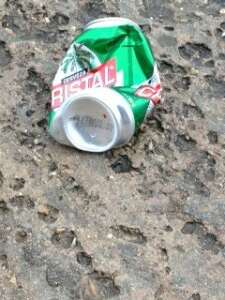
  • Empty can, dumped in an area of the Havana coastline

    A man dressed like a mechanic pours liquid from a tank into the sewer. A few yards away, two boys are scrubbing a motorcycle and the soapy water runs off onto the ground, watering the roots of some nearby trees. Several neighbors have set fire to a pile of trash: dry leaves, branches, but also a couple of batteries, a portable radio and even a laser printer cartridge. After re-using it a dozen times, the restaurant cook pours the burned oil down the sink, that is if he doesn’t take it home for his family to eat. The hairdresser upstairs does the same thing, when she tosses the used hair dye down the toilet. This irresponsibility in the treatment of waste products extends across the entire Island. Few are aware of the ecological damage caused by ordinary daily activities.

    Separating trash such as cardboard and glass, which is natural to others, seems like a chimera in a country that hasn’t even solved the problem of efficient trash collection. Even today the containers on the corners overflow, bringing the flies, health hazards and stink that now make up an inseparable part of cities like Havana. Thus, it’s hard work to awaken awareness in a population whose priorities still center on the so-called community services working at all. However, much of the damage that we are causing to the environment is irreversible, and requires urgent measures to slow it down as quickly as possible.

    The State sector is the greatest predator of our ecosystem, with its enormous factories that spew chemicals into rivers and the oceans, its many sugar plants without oxidation ponds, and its thousands of vehicles that don’t meet environmental standards. In addition, all this is hidden by the absence of transparency, the falsification of statistics and the prohibition on independent organizations that could address such behaviors. Nevertheless, we as citizens also have to share a good part of the blame.

    The lack of an environmental mindset is felt in every detail of our lives. It’s notable, for example, the self-confidence with which so many Cubans cut down a tree, cement over their backyard where plants used to grow, throw chemical products into the water, mistreat and kill animals, or simply toss out recyclable materials. It’s not enough to ask children in elementary school to plant a bean seed to foster in them a love of nature. It’s also not enough to show ads on prime time TV calling on us to preserve the planet on which we live. Caring for the environment has to become a part of educational programs, strictly addressed in the law, and promoted in all areas.

    The emerging civil society should also adopt this banner. Without lowering the torch of human rights and democratic changes, it’s time for civic movements to create environmental defense strategies for this Island we will bequeath to our children. Groups that report incidents against the ecosystem, organize recycling training programs, and try to protect natural resources should all take on a leading role. It’s great that we want the coming generations to be free, but we must start by guaranteeing we have a country to bequeath to them.

    The clock is ticking. Nature does not wait. Tomorrow there will be no turning back.

    Yoani’s English Language blog is here, and her posts also appear in TranslatingCuba.com here, along with those of over 100 independent voices writing from the Island. You can help translate Cuban bloggers at HemosOido.com here.

    View article:
    An Island to Bequeath to Our Children, Free, Democratic, and Environmentally Healthy
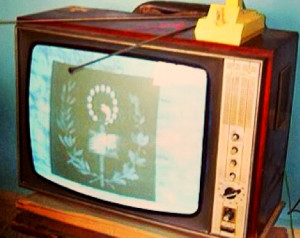
  • I got home from school and there was a man sitting on the floor in front of the TV. His fingers were stained with paint and some oil-paint tubes were scattered around him. It was the latest fad in the neighborhood: painting a colorful pattern on those boring black-and-white screens. The first one to do so was the downstairs neighbor, always up-to-date with the latest trends, which included posters of lightly-clad women taped to the walls, and an enormous porcelain tiger at the entrance to her home. She dictated fashion throughout the whole tenement, so when she transformed her « boob tube » with a rainbow in reds and blues, everyone imitated her. In my house at 218 Krim, they painted some stripes and even a central circle in various tones. Most significant is that years later, I remembered the programs and cartoons I saw on that « invention » as if they’d come to me in their original polychrome. My brain had joined the shades and constructed the illusion of color.

    This personal anecdote comes to me when I read the latest 2012 Statistics from the Census of Population and Housing. On learning that there are still more than 700,000 black-and-white TVs in Cuba, I can’t help but evoke the excited neighbors of my tenement using their fingertips to paint their cathode ray tubes. But in the current figures, there is not only evidence that they are still watching TV programming in black, white and gray… but also that they are economically worse off in our country. They are the ones who have failed to get together the convertible pesos for a modern Sony or LG. Those who probably have no family abroad, who haven’t found a way to divert State resources, or whose privileges ended with the end of the USSR. The poorest who, in a society of such avid TV watchers, don’t have the resources to enjoy the tonalities.

    I wonder if any of those old TVs touched up with stripes in green, purple and cyan still survive… If some child on this island still watches like my sister and me did, mentally joining a piece of color here and another there to imagine Huckleberry Hound was a blue dog, or Cheburashka with his fur brown.

    Now I no longer know, I can no longer distinguish in my memory, between what came to me thanks to the ingenuity of painted screens, or what I enjoyed years later thanks to Technicolor.

    Yoani’s English Language blog is here, and her posts also appear in TranslatingCuba.com here, along with those of over 100 independent voices writing from the Island. You can help translate Cuban bloggers at HemosOido.com here.

    View article:
    The Illusion of Color


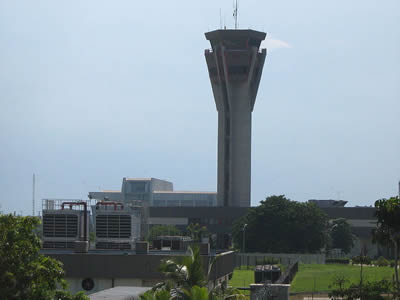
  • José Martí International Airport tower

    People crowd together in the suffocating heat, some are holding signs with names printed on them. The flight from Madrid just landed at José Martí International Airport, bringing tourists and many nationals now living in Spain. Each person must wait forty minutes to an hour — at least — before finally passing through the exit door. Havana is one of the world’s slowest airports, the worst lit, and with the fewest services for the traveler.

    In a country that receives almost three million tourists a year, updating its airport facilities is vital for the economy. If these places don’t meet international standards, it’s unlikely that the island — in the short or medium term — can play host to more visitors.

    Aware of its major shortcomings, ECASA (Cuban Airports and Aeronautical Services S.A.) has begun a process of remodeling some of its arrival and departure lounges, but the problem requires more than adjustments and redesign. Its principal limitations are not only material, but also its excessive controls, the lack of comfort, and the attitudes of its employees.

    Departure lounges, restrictions and inadequacies

    Alina has arrived at the Havana airport three hours early, but it may not be enough. She can check in only at the airline counter, as there are no machines to perform the procedures independently. This limitation lengthens the lines, slows the whole process of obtaining a boarding pass, and feeds the image of an always crowded lounge that characterizes José Martí Airport.

    A frequent traveler to Spain, thanks to her new EU passport, Alina has come prepared for a cramped and awkward process. She flies through Terminal 2 because Terminal 3 — larger and more modern — is being remodeled and recently experienced a fire. In her bag she carries a snack made at home, because she knows the prices there are stratospheric and the offerings are very limited.

    Poor signage completes the picture. For ten minutes the frustrated customer looks for a bathroom but the directional signs are scarce and not very visible. Few of the ceiling lights are on, which makes the various areas of the lounge dark. Still, every passenger must pay the airport tax. In the line to hand over 25 convertible pesos ($28 US), one hears the tourists complaining about the tenuous relationship between the price and the quality of the facilities. Cuban passengers, however, remain silent, not wanting to cause problems for themselves just when they’re about to leave the island.

    Without a Wi-Fi network to access the Internet, any modern airport falls several points on the scale of quality. With regards to communication, no embarkation point in Cuba is competitive, not even Varadero. The few public phones and the lack of a wireless network diminish the chances to communicate. To this is added the TVs buzzing away with their tired tourist announcements or overly ideological programs like Cubavision’s Roundtable. Nor is there a stand selling magazines or newspapers, just some souvenir kiosks where they sell the works of Ernesto Guevara and the speeches of Fidel Castro.

    Alina is also prepared to avoid boredom while waiting, and has brought some headphones to listen to music on her phone. She waits at the exit doors — there are only two: A and B — until an employee shouts out that her flight is already checking in.

    Arrivals and the collision with reality

    Humberto arrives after a trip to the United States. This was his first trip abroad, so he’s still stunned by the size of the Miami airport. On the plane back to Cuba he’s filled out the Customs form and in his pocket he has a copy of the boarding pass he got at the exit. He joins the long line for immigration and next will have to answer a brief medical questionnaire which he will also have to sign. A few steps away the luggage waits, the slowest point in the entry to Cuban territory. Every suitcase will be put through a scanner to investigate its contents.

    After analyzing each bag or suitcase, they will attach « markers » to those that need to be inspected. A small red strip tied to the handle may mean it contains some home appliance or computer. If instead, it contains an external hard disk, then they write some initials on the paper strip that identifies the flight. There is no way to avoid this process. The customs officers are trained to keep out a long list of objects.

    Humberto’s granddaughters, born in Coral Gables, have given him a laptop and a smartphone. So he must go to the table where they open his suitcase and minutely search everything. They take the computer to an office, where they probably inspect its files or make a copy of them. He’s already waited an hour and a half since the plane touched down and will probably wait a little longer.

    While they search his belonging they tell him he can’t make calls on his cellphone. « Welcome to Cuba, » he tells himself when an officer asks what those « bullet-shaped » pressed cotton things are. « Tampons for my daughter, » he responds grumpily.

    Two hours after arriving in his own country, Humberto passes through the gate in Terminal 2. At the same time, Alina is already seated on her flight to cross the Atlantic. Looking out the window she whispers, « Goodbye Havana airport, I hope I don’t see you for a long time! »

    Yoani’s English Language blog is here, and her posts also appear in TranslatingCuba.com here, along with those of over 100 independent voices writing from the Island. You can help translate Cuban bloggers at HemosOido.com here.

    Read the original:
    Cuban Airports: The Chokepoint

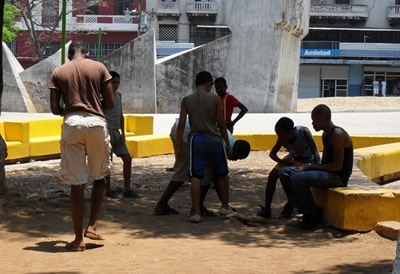
  • Children and teens playing in the street. Photo: Luz Escobar

    Children and teens playing in the street. Photo: Luz Escobar

    « When the teachers aren’t listening, what do the students in your classroom talk about? » I asked my son a few months ago. He barely paused before answering. « The boys talk about football and the women about telenovelas, » he replied, sure of himself. I confess, I expected more. I had imagined slightly risqué topics like sexuality, or problems such as drug use or, in some cases, political controversies. But no, the long minutes of the breaks between one class and another are dominated by Messi, Cristiano Ronaldo, and the latest wickedness of the Brazilian soap and its heartthrob who shows his face on the small screen every week.

    My first reaction was dismay. « If, at the most rebellious age, this is what they talk about… we’re in bad shape. » But then I stopped myself. I was not going to fall into what older people had warned me of when I was a teenager. « Your generation is lost, » they told me, followed by an enumeration of everything they themselves had accomplished. So, before answering Teo, I tried to understand why the reality of the country, its serious problems and possible solutions, occupy so little time — or none — in our young people’s conversations. Apathy, escapism, indifference… were some explanations. After the initial moment of disappointment, I felt relief. Comforted knowing that even this inertia is a way of bringing the current system to an end.

    The Cuban model needs people who applaud wildly, committed soldiers, ideologically convinced individuals. Indolence will never be the soil where rebellion grows, nor will it foster partisan fervor. As I’ve said many times, « I prefer apathy over fanaticism. » From apathy, one can wake up, from fanaticism, I have my doubts. Frivolity is also corrosive to a sober and outdated totalitarianism.

    These young people of today, they still have plenty of time for their civic consciousness to awaken.

    Yoani’s English Language blog is here, and her posts also appear in TranslatingCuba.com here, along with those of over 100 independent voices writing from the Island. You can help translate Cuban bloggers at HemosOido.com here.

    Read the original post:
    For Cuban Youth… It’s All About Soccer and Soap Operas… And That’s a Good Thing

  • Good evening:

    More than a decade ago Vaclav Havel’s book « The Power of the Powerless » fell into my hands for the first time. It came wrapped in a page of my country’s official newspaper, the Cuban Communist Party’s daily. Covering books was one of the many ways of hiding inconvenient texts forbidden by the government from the eyes of informants and the political police. In this way we had been reading, clandestinely, stories of what happened with the fall of the Berlin wall, the end of the Soviet Union, the Czech transformation, and all the other events in Eastern Europe. We knew about all these transitions, some more traumatic, others more successful and many of us dreamed that the transformation would soon come to our Island in the Caribbean, subjected to more than five decades of totalitarianism. But the transition most yearned for remains to be built. The processes of change don’t come alone, citizens have to spark them.

    Today I am here, in the very city where Vaclav Havel was born, this man who summed up as few others have the spirit of the transition. I am also facing many people who have encouraged, pushed and personified the desire for change in their respective societies. Because the search for horizons of greater freedom is an essential part of human nature. Thus, it is twisted and unnatural for regimes to try to perpetuate themselves over the people, to immobilize them, to take from them the desire to dream that the future will be better.

    In Vaclav Havel’s era, for Lech Walesa, and for so many other dissidents of the communist regimes, methods of peaceful struggle were effective: labor unions, even artistic creation was put to use for change. Now technology has also come to our aid. Every time I use a cellphone to denounce an arrest or write in my blog about the difficult situation of so many Cuban families, I think about how these gadgets with keyboards and screens would have helped the activists of previous decades. How far they could have cast their voices and projects had they had the social networks and all of cyberspace that opens today before our eyes. The Web 2.0 has been, without a doubt, a boost for the spirit of transition that dwells within us all.

    Today, for the first time in Forum 2000, there is a small representation of Cuban activists. After decades of island confinement in which our country’s regime blocked many dissidents, independent journalists and alternative bloggers from traveling abroad, we have achieved the small victory of their opening to us the national frontiers. It is a limited victory, incomplete, because many others are still missing. Freedom of expression, respect for free opinion, the ability to choose for ourselves who represents us, the end of those acts of hate called « repudiation rallies » that still persist on the streets of Cuba against those who think differently from the ideology in power. However, many of us feel that Cuba is in transition. A transition that is happening in a more irreversible and instructive manner: from within the individual, in the conscience of a people.

    In this transition we see the influence of many of you. Many of you who have arrived first to freedom and who have found that it is not the end of the road, rather freedom brings new problems, new responsibilities, new challenges. You who, in your respective countries, kept alive the breath of change, even risking your names and your lives.

    Like the spirit of transition contained in that book by Vaclav Havel, wrapped — to disguise it — with the pages of the most stagnant and reactionary official newspaper you can possibly imagine. Like that book, the transition can be prohibited, censored, decreed to be almost a dirty word, postponed and demonized… but it will always arrive.

    The post Mis palabras en el Forum 2000 appeared first on Generación Y by


    My blog, GENERATION Y, has moved: READ IT HERE.

    Read me and other Cuban bloggers on TRANSLATING CUBA.

    And here is a link to my blog IN OTHER LANGUAGES.

    Continue reading here:
    My Words at Forum 2000: A Transition Is Happening in Cuba


  • Beto was one of those who handed out beatings in August of 1994. With his helmet, his mortar-splattered pants and an iron bar in his hand, he lashed out at some of the protestors during the Maleconazo. At that time he was working on a construction team and felt like part of an elite. He had milk at breakfast, a room he shared with other colleagues, and a salary higher than any doctor’s. He spent the years of his youth building hotels, but a decade ago, when his brigade was demobilized, he became unemployed. He didn’t want to return to the village of Banes where he was born, not him, nor many others of that troop ready to build a wall or break heads.

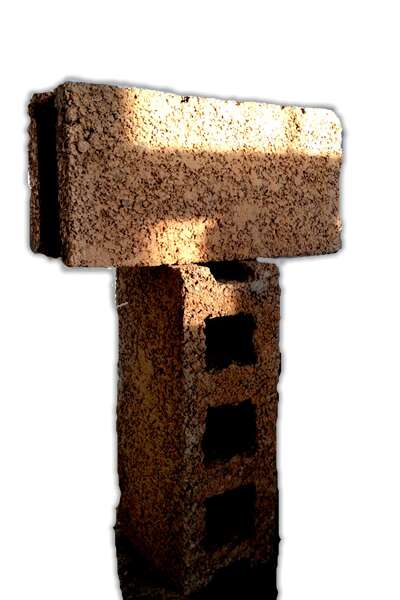
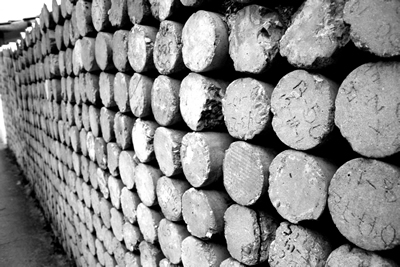
    Several of these construction workers were allowed to settle in a makeshift neighborhood in the Havana suburbs. The received the benefit of permission to build a « llega y pon* » — a shantytown — near Calle 100 and Avenida Rancho Boyeros. A crumb, after so much ideological loyalty. Without the perks and high wages, many of these bricklayers had to survive on what they could find. Beto set up a workshop for fabricating « creole bricks. » Other neighbors in his makeshift neighborhood also dedicate themselves to building materials: sand, stone powder… bricks. With the new relaxations giving permission for the repair and building by one’s own efforts, the business of « aggregates » prospers, involving more people every day. The producers, transporters, brigade leaders, and finally the men who load the sacks on the trucks. A chain of work — parallel to the State’s — more efficient, but also at higher prices.

    Beto doesn’t like talking about the past. In his shirt full of holes he walks between the stacks of Creole blocks coming out of his little factory. When he sees one that has cracked or that has a broken corner, he shouts at one of his employees who mixes the mortar for casting the molds. He carries an iron rod in his hand, as he did on 5 August 1994, but this time it’s for knocking against the blocks, checking the strength of his product. He frequently glances over to the little house he is building at the end of this unpaved street with no drains. For the first time he has something of his own, something no one has given him. He is a man with neither privilege nor obedience.

    *Translator’s note: « llega y pon » is literally « arrive and put. »


    My blog, GENERATION Y, has moved: READ IT HERE.

    Read me and other Cuban bloggers on TRANSLATING CUBA.

    And here is a link to my blog IN OTHER LANGUAGES.

    Visit site:
    Cuba: A Man With Neither Privilege Nor Obedience

  • La nouvelle page en Français est ici :

    Cliquez sur l'image pour accéder au site

    Cliquez sur l’image pour accéder au site

    Merci pour votre patience . Pour des raisons d’ergonomie et de sécurité nous avons déplacé les traductions de Génération Y sur de nouvelles pages. Vous pouvez accéder aux nouveaux sites de chaque langue en cliquant sur cette icône :

    globe_flagspluscuba

    See the original article here:
    Chers lecteurs…le blog change d’adresse …


  • Photo: Silvia Corbelle

    She gets up and has a little coffee. The concrete of the counter is still fresh. Magaly, her two sons and her husband live in a house under construction. They’ve spent seven years like this. Little by little raising the walls and installing some pipes. Every day that goes by they get closer to the end of the job, but they also live through another day of anxiety and risks to get the materials. Today they need stone dust and washed sand. They get their money together before heading out to the state supply center, inviting me to accompany them. We arrive at the central warehouse, but at the door an employee delivers the bad news. They haven’t stocked up, we’ll have to wait until next week.

    We then dive into the world of resellers of cement fillers. Finding them is easy; haggling, impossible. The area around the Cristina railway workshop is the best supplied hardware black market in the whole country. You just have to walk through the doorways and gates for voices to call out asking, « What are you looking for? » We’re cautious, it’s not recommended to go with the first offer. Swindles are everywhere. One man, with a little table where he’s fixing lighters, looks at us and whispers, « I have everything for construction. » In a conjurer’s gesture he passes us a much-handled sheet that contains a list of prices: gravel and sand, 1.50 convertible pesos (CUC)* per sack; Jaimanita exterior stone, 7.00 CUC per square meter; and granite tiles, 10.00 CUC, also per square meter. « If you buy a large quantity transport is included, » he points out, while dismantling a lighter with an Italian flag drawn on the plastic.

    My friends do the accounting. Acquiring surfacing for the entire floor would cost their combined wages for 20 months. The costs of the bathroom fixtures are enough to elicit a little scream from Magaly, but it’s barely audible, covered by the noise of the road. They decide to prioritize. Today they’ll take only some blocks, several sacks of sand, and two wooden doors. The vendor adds it up and rounds it off to everything Magaly and her husband earn for half a year’s work. « It will always be a cheaper option than the legal stores, » she says out loud to console herself.

    Night falls and everyone’s fingers are covered with a gray layer of cement and dust. The children go to bed in the only room that has a roof. The counter has hardened and the dirty dishes are left on its rough surface because there are still no pipes to deliver the water to wash them. Tomorrow they’ll have to go out and get steel and some electrical switches. One construction day less. Twenty-four hours closer to having their house finished.

    *Translator’s note: One Cuban convertible peso (known as a CUC and convertible only in Cuba), is worth roughly one US dollar (before exchange fees). The average monthly wage in Cuba is less than $20 US, and is generally paid in Cuban pesos (CUP); 24 CUP = 1 CUC. Many everyday items, and most « specialty » items are only sold for CUCs, including in State stores.

    My English language blog has moved to a new site: PLEASE CLICK HERE.
    My blog in other languages can be accessed HERE.

    Read More:
    Building a Home in Cuba, Without Bank Loans, Without Legal Supply Markets