Catégorie : libertés

Les libertés et la répression à Cuba


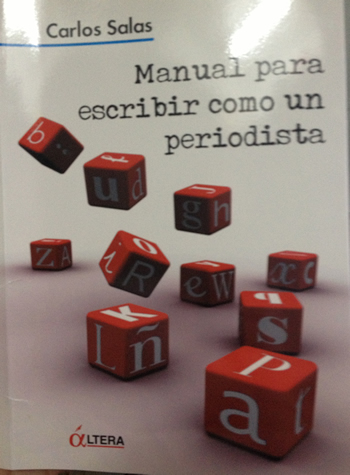
  • Recently I have been reading an excellent book by Carlos Salas, currently the director of the site lainformacion.com. One of those texts essential for any newsroom and for the library of every reporter. With the title, « Manual para escribir como un periodista » (Manual on How to Write Like a Journalist), in its pages he dissects the art of writing headlines, the skills of a good interviewer and the need for research as a prelude at any article. This professional who has devoted decades to narrating reality gives us an agile volume where he shares the knowledge others keep only for themselves.

    Wearing my « Salas glasses, » I began a meticulous analysis of the accuracy with which the official media reports the news. I did not have long to wait for the first inconsistency and deficiencies to spring into view.

    Throughout the week, the news media reported on the unfortunate story of a group of people poisoned by methyl alcohol. A party in a proletarian neighborhood in Havana that ended in tragedy. Eleven dead and dozens of people affected by ingesting this dangerous substance, it was a sad sequence of lack of control, contraband, the black market, economic precariousness and irresponsibility.

    Drama is an inseparable companion of journalism, as those of us who exercise this profession know well. But in the midst of tragedy, we must maintain the ability to discern why the national media treats certain events as so significant, while other news is simply completely silenced.

    Almost on a par with the drama of those poisoned by methyl alcohol, was an accident during a Children’s Carnival in Guantanamo. The bleachers gave way and several children were injured, one of them with head trauma. The confusion, chaos and terror that must have resulted from the collapse of this structure in the middle of a celebration are obvious. Why wasn’t such an incident reported both on television and in newspapers across the country? Because in the case of a product stolen from a warehouse and consumed in secret it was citizens who acted illegally? Who bears the responsibility for a badly constructed grandstand at a public event? The State, that omni-proprietor, that judge of everyone… judged by few.

    The news of those who died from methyl alcohol is meant to hold the victims up as examples of people who had fallen into such circumstances by violating established norms or because they suffered from an uncontrollable addiction. They always try to put responsibility on the people. The fact that, in a country with a tradition of producing rum, many prefer to buy their beverages on the black market, says more about our national penury than it does about vice. Nevertheless, the official moral was summed up as: This is what happens to the unscrupulous and to drinkers. The victims are doubly victimized.

    But in the incident of the bleachers collapse, where children and adults were injured, the official journalists could not assign guilt to the injured. Inevitably, they would have to relate the shoddy work of the state enterprise that built the structure, without any consideration for safety. Or instead, confess that a good part of the materials for the job were embezzled, which presumably caused its weakening and subsequent collapse.

    Both episodes, unfortunate and avoidable, point to a widespread and chronic problem in our reality: the need to steal and divert resources to survive. Thus, poverty wages and economic insecurity are the direct cause of these two tragedies. The culprits are not only sellers of illegal alcohol and the workers who take home some screws or pieces of wood, but also the order of things that turns us into criminals to survive.

    Follow this link:
    Two News Stories, One Focus: If You Can’t Blame the Victim Say Nothing
  • se vende6a00d8341bfb1653ef01910496c10e970c-550wi

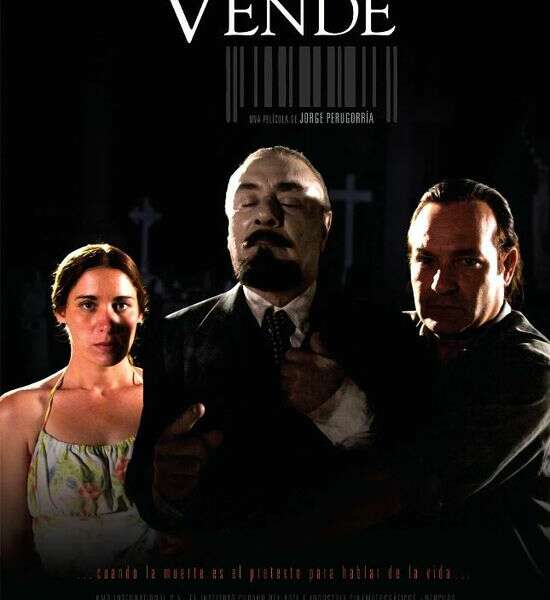
    People laugh in the darkened room, the seats creak, and from the bathroom a reek invades everything. It’s nighttime at a Havana movie theater and the audience is enjoying the most recent Cuban comedy. Titled For Sale, it was directed by the well-known actor Jorge Perugorría and has already been shown in an extended series of openings. A controversial film that provokes laughter on the one hand, and fierce criticism on the other, it has its favor that it doesn’t leave its viewers indifferent. Either they laugh with pleasure, or get up in the middle of the screening and leave. Such reactions are also symptomatic of how we Cubans respond to certain issues, work and people. We tend to love or repudiate; to applaud or reject, with no intermediate points.

    This is a humorously macabre story, with dead people who must be disinterred at the cemetery in the middle of the night. The script takes us by the hand through the absurdity of a reality where the sale of a tomb and the bones sheltered within it is the only path to financial relief for a young professional. For Sale unwinds in an also cadaverous Havana, a city of faded houses with balconies on the point of collapse. It presents us with a society where scruples and urges give way before the imperatives of survival. A wake-up call about the ferocious pragmatism that invades us, leaving nothing safe. A metaphor, perhaps, of a time in which the past is viewed with irreverence and a desire to liquidate it, by we who live in the present.

    In its favor, the movie also makes several references to the classics of Cuban filmography. The well-known game of mirrors — the film within the film — amplified and referenced. An explicit tribute to Tomás Gutiérrez Alea (Titón) and Juan Carlos Tabío. The Death of a Bureacrat, For Trade, Strawberry and Chocolate, are some of the films referred to throughout the movie. However, some of these references pass unnoticed by a large audience, one that younger or less versed in national cinema doesn’t know its antecedents. Rather than a difficulty, this lack of reference points allows another way to understand the story being told. If the script wanted to turn these hints into evocations, they’re left for many as events at the same level as others. The trick of the lens looking into the lens needs an aware viewer, otherwise it’s seen as one more point in the story.

    And then came the actor…

    The figure of the director also cast as one of the protagonists is something new in the cinematography of the island.

    Few native directors have alternated between both sides of the camera. In For Sale, the union of these roles doesn’t occur in the cautious manner of Alfred Hitchcock, where we see, for a few seconds and in the shadows, his chubby profile. In this case the spectator senses that the character of Noel recalls, too much, the actor who plays him, perhaps because his designer and interpreter are the same person. It is clear, however, that the entire filming must have been like a huge party for all the participants. To the point that at the end of the filmstrip it rushes to conclude in a great celebration where it seems to offer a solution to all the problems. An abrupt and often repeate, closing in Cuban comedies, that bore more than entertain.

    Although with Nácar, the female protagonist, the script reaches for it, it misses an intimacy, leaving only a timidity that is not credible. Lacking the weight of interior emotion that has nothing to do with the easy laugh, something we have become accustomed to in movies made in Cuba. The excessive sex scenes and erotic allusions, designed to fill theater seats, in hopes of seeing a nipple here, a thigh there… a couple kissing in the shower. « Wankers » all over the country are pleased with a script that offers them many minutes of bedrooms, beds, cunnilingus and even lesbian moments. Another contribution to the hackneyed stereotype of a hyper-eroticized national identity obsessed with the pleasures of the body. The ideological clichés are harmful, but the carnal also echoes banal and enduring perceptions.

    If you have to sacrifice the dead to feed the living…

    Beyond the pitfalls and limitations of For Sale, its main achievement is to convey a message of particular importance for Cubans today. Filled with laughter, the myths of the past are picked apart, yesterday’s buried bodies are liquidated. The dead stay dead and serve only in regards to the imperatives of the living, every minute of the film seems to tell us. The corpse of the protagonist’s father, an ideologically inflexible man, at the end of the reel is a mere mannequin in an exposition. Played by the actor Mario Balmaseda in the manner of a rigid Lenin, index finger raised, this character embodies the political leaders whose old-fashioned speech provokes laughter more than sympathy. Leaders and ideas in liquidation once their time is passed; the stark conclusion of this filmstrip.

    I am among those who stayed until the final minute of Jorge Perugorría’s film. I laughed through several of its scenes and reflected during others. Despite my own objections and criticisms, I preferred to find its nuances and intermediate points. I gave it a chance and I think it was worth it. Because through its 95 minutes, the script reaffirmed an idea I have pondered for years: no one can bear so much past, carrying on their back the weight of all the deceased. A nation is not a cemetery where the living must comply with the designs of those who are gone. The same thing ends up happening to political last wills and testaments as happens to the bones in the film For Sale: they are auctioned off for the imperatives and pragmatism of now.

    Read More:
    ‘For Sale’ — Perugorría’s Macabre Comedy Elucidates Cuba’s Dilemma


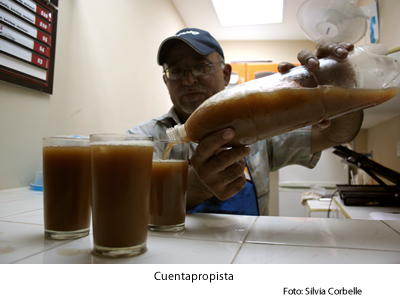
  • Self-employed. Photo by Silvia Corbelle.

    The National Tax Administration (ONAT) office is open and dozens of people have been waiting from very early. An employee shouts directions for what line to get into for each procedure, although a few minutes later confusion will reign once again. At a desk without a computer another official writes the details of each case attended to, by hand. The wall behind her back is damp with humidity, the heat is unbearable and people constantly interrupt to ask for forms. An institution that takes in millions of pesos in taxes every year carries on with feet of clay, suffering from material precariousness and poor organization. Congested offices, interminable paperwork and lack of information are only some of the problems that hinder its management.

    However, the setbacks don’t stop there. The lack of stable wholesale markets with diversified products also slow down the private sector. The inspectors fall on the cafes, restaurants and other autonomous businesses. Strikes or any public demonstrations to reduce taxes are strictly forbidden. It is expected that the self-employed will contribute to the national budget, but not that we will behave like citizens willing to make demands. The only union permitted, the Central Workers Union of Cuba (CTC), tries to absorb us in their straitjacketed structures. Paying monthly dues, participating in congresses where little is accomplished, and parading in support of the same government that lays off thousands of workers: it is to this that they want to reduce our collective action. Why not create and legalize our own organization, one not managed by the government? An entity that is not a transmission line from the powers-that-be to the workers, but the reverse?

    Unfortunately, most of the self-employed don’t consider that salary independence and productivity must be tied to union sovereignty. Many fear that at the slightest hint of a demand their licenses will be cancelled and other measures taken against them. So they remain silent and accept the inefficiencies of ONAT, the inability to import raw materials from abroad, the excesses of the inspectors and other obstacles. Nor have emerging civil society organizations managed to capitalize on the needs of this sector to help them achieve representation. The necessary alliance between social groups that share nonconformity and demands doesn’t materialize. So our labor demands continue to be postponed, caught between the fear of some and the lack of attention from others.

    Read the article:
    Independent Labor Unions Outlawed in Cuba, for the ‘Proletariat’ and the Self-Employed Alike

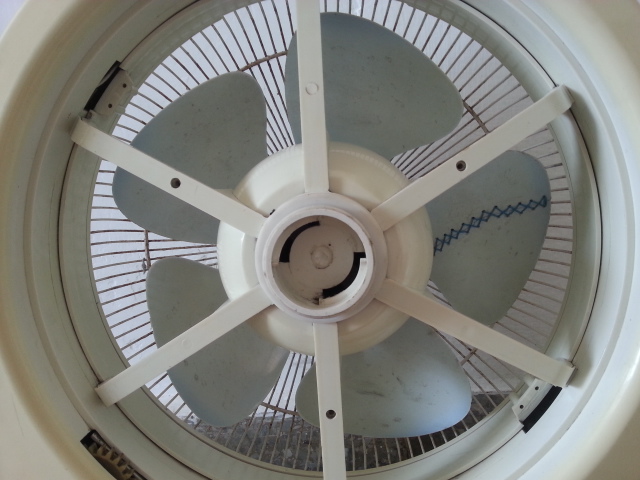
  • Noel repairs the blades of the fan. He has a little workshop in a doorway in Cerro neighborhood. He repairs electric irons, blenders, every kind of obsolete motor, and does good things with rice cookers and water heaters. It’s not a job that generates a lot of dividends. Some of the customers ask for his reliable services and then he doesn’t see them again; others want to pay in installments and end up not paying it off. However, in addition to diminished returns, this labor offers Noel a unique experience. Every day, he is in contact with people, many people. Speaking, opining, telling him what came over the illegal satellite dish and especially listening, opening his ears to what they have to say. So he has become, in his little cubicle full of grease and cables, an actor of opinion, a born leader appreciated for his abilities and respected for his words.

    Cuba is full of people like Noel, anonymous, simple, who know reality at a level no minister can reach, even with the most competent advisors. People who don’t show up on TV screens, who aren’t at the front of any parade, but who have natural charisma and contact with the people to lead changes. For now, we only know those with whom we’ve managed to interact or meet personally, but there are thousands. They will never draft a political platform, but they know by heart the most acute problems that afflict our society. They would not sign an action demanding improvements in human rights, nor will they open a blog, practice independent journalism, or autonomous law. The word « activist » scares them and to call them opponents would put an end to the life they have now. They are — without saying so — all that and much more. They are citizens of conscience, to those who damage the situation in our country.

    The future of our nation will be influenced by Cubans like this. So many who, today, are behind a desk in some office, at the front of a classroom, filling out forms in some State agency, we will see reach the public sphere. As they feel there’s a mark of respect in stating their opinions publicly, they will emerge from all sides. It’s important that at the point when they decide to take that step we do not react with our suspicions nor with confrontation, but with our embrace. Because while Noel fixes a broken fan blade, I feel that one day he will also have the ability to join together the broken and separated pieces of our reality. The same care with which he glues plastic and fixes the motor, he will put into the social leadership he will show tomorrow.

    28 July 2013

    Continue reading here:
    Leadership, for Today… and Tomorrow’s Cuba

  • The unforeseen, situations that nobody predicted, are for politics like pepper on food. When it appears that all the possible variables of a scenario are on the table, an event sneaks in among them that changes everything. Such is the case with the diplomatic crisis generated by the arms transported from Cuba in a North Korean ship, discovered in the Panama Canal.

    After years of trying to clean up its act before international bodies, this incident sets Raul Castro’s government back decades, returning it to the era of the Cold War. There is no time left for the octogenarian politician to reverse the effect of such a a misguided operation. Between now and his announced retirement in 2018, there are not enough days to make people forget the bungling of those missiles hidden under a cargo of sugar. Someone else, in his position, would renounce or remove the Minister of the Armed Forces, but a play like that has no precedent in the Castro regime.

    On hearing about the trafficking in this arsenal of war, the question that immediately jumps to mind is how many times have operations like this been carried out without being discovered. The testimony and speculations about Cuba’s sending troops and arms to countries in conflict abound. It is symptomatic that on this occasion the contraband has been intercepted mid-journey, which raises a new question. Why in this case has it come to light? Clumsiness or intention? Bungling or being out of touch with the workings of the real world? The questions will be asked, but the answers are known only to a few.

    The truth is that these events confirm the denunciations of those who, for years, have documented the support of the Plaza of the Revolution for guerrillas, insurgents, destabilization groups, and governments sanctioned by international organizations. Wrapped in the halo of « proletarian internationalism, » the help offered in most cases was hidden with subterfuges, such as merchant ships transporting soldiers or military equipment on the sly. It was the era when the sharp eyes of the satellites didn’t track the planet with such precision, and the Soviet bear was there to pull the chestnuts out of the fire for its outstanding disciple in the Caribbean. A bygone and remote era.

    If Cuban political leaders believed they could still hide planes and missiles on a ship, send it through the Panama Canal and successfully arrive at a North Korean port, it is proof of their great disconnect from the reality of the world they live in. The statement issued by the Ministry of Foreign Affairs is also a part of this anachronism, attempting to explain the cargo as a shipment of « obsolete » military equipment off to be repaired in the country of the Kim dynasty.

    The justifications or falsehoods that were once effective, fall on the ears of the citizens of this third millennium like bedtime stories for unsuspecting children. Their naiveté was left behind in the 20th Century and it’s a good thing, because the leaders can’t fool us as easily as before. In fact, the performance of the Cuban authorities has displayed such stupidity that it suggests it was an operation prepared by the Castro regime itself, in order to be caught red-handed.

    Every time that relations between Havana and Washington seem headed for a rapprochement, some event generates an abyss between the two governments. The most famous example was the shooting down of the Brothers to the Rescue planes in February 1996.

    Could it be, on this occasion, that the orthodox within the power structure are dynamiting what they perceive to be Raul Castro’s weakness in trying to talk to the neighbor from the north? Or is it the General-President himself who has built this scandal to try to avoid getting to the negotiating table? The « conspiranoia » is infinite.

    However, there could be a simpler answer behind all this, as incredible as it seems: the Cuban leadership really believed that it could still continue playing with toy soldiers and ignoring the provisions of the United Nations, without being discovered. Holding power for too long makes those who exercise it into a species of autistics, disconnected from reality. So this could be one of the most chronic cases of political autism we now have in our global village.

    In the midst of the complex situation in Cuba, why would the government dare to undertake such a ridiculous operation? After so many efforts to appear before the international community as a country transitioning through a process of openings, where does this « sugar missile » piece fit? Well, it doesn’t fit!

    Evidently the relations between old ideological allies are still placed above pragmatic diplomatic strategies. Old comrades are still prioritized, although to the eyes of the world they are seen as a family dynasty, a recalcitrant violator of the human rights of their citizens, constantly threatening the rest of the planet with nuclear conflict. The fellow travelers support each other, so they have to violate the same UN resolutions to achieve it.

    Now that the boxes of missiles are discovered — the MIG-21 airplanes and the rocket batteries — it remains to be known how Raul Castro will get out of such a delicate situation. An apology would not be enough, because the government would still have to comply with some diplomatic sanction resulting from its actions. Acting the fool and reaffirming their « sovereign right » to send arms to be « repaired » in North Korea, will further isolate the island’s authorities at a time when economic support from abroad is urgently needed.

    The insolence will also conspire against a possible loosening of the European Common Position, and against the easing of the American embargo. To reply with a barrage of government attacks against the president of Panama won’t accomplish much, because this problem involves other nations who don’t appear willing to forget so easily.

    So, then, how does the Castro regime turn the page, minimize what happened, and present the world with a real posture of mea culpa and peaceful engagement? The only solution that remains is to announce political change, the opening so often demanded by its citizens and by international agencies and governments.

    The only thing they can do to overcome this huge mistake is to focus all attention on the total decriminalization of dissent in Cuba, the legalization of other political forces and the final dismantling of totalitarianism.

    See more here:
    Cuban Missiles to North Korea: Did Raul Castro Want to Get Caught?

  • The Congress of the Journalists Union of Cuba (UPEC) has just been contradicted. Barely a few days after that meeting of official reporters, reality has put them to the test… and they failed. Yesterday, the news that a freighter flying under the North Korean flag, coming from Havana and found with missiles and other military equipment in its hold, jumped to the first page of much of the world’s press. In Panama, where the arms were detected, the president of the country himself sent out a report via Twitter about what happened. Knowing that in this day and age it’s almost impossible to censor — from the national public — an event of such scope, we awoke this morning to a brief note from the Ministry of Foreign Relations. In an authoritarian tone it explained that the « obsolete » — but functional — armaments were being sent to the Korean peninsula for repairs. It did not clarify, however, why it was necessary to hide them in a cargo of sugar.

    At a time when newspapers are offering lessons that governments can’t get away with secrecy, the conformist role of the official Cuban press is, at the very least, painful. Meanwhile, in Spain several newspapers have challenged the governing party by publishing the declarations of its former treasurer; in the United States, the Snowden case fills the headlines, which demand explanations from the White House about the invasion of privacy of so many citizens. It is inconceivable that, this morning, Cuba’s Ministry of the Armed Forces and its colleagues in Foreign Relations are not being questioned by reporters calling them to account. Where are the journalists? Where are these professionals of the news and of words who should force governments to declare themselves, force politicians not to deceive us, force the military not to behave toward citizens as if we were children who can be constantly lied to?

    Where are the resolutions of the UPEC Congress, with their calls to remove obstacles, abolish silence, and engage in an informative labor more tied to reality? A brief note, clearly plagued with falsehoods, is not sufficient to explain the act of sending — secretly — arms to a country that the United Nations itself has warned others not to support with the technology of war. They will not convince us of their innocence by appealing to the antiquity of the armaments; things that produce horror never entirely expire. But, as journalists, the most important lesson to come out of this « crisis of the sugar missiles » is that we cannot settle for institutions that explain themselves in brief press releases, that cannot be questioned. They have to speak, they have to explain… a lot.

    Follow this link:
    The ‘Crisis of the Sugar Missiles’

  •  osvaldo_doimeadios

    Je m’accoudai à la vitre avec précaution. Il y avait une fissure sur toute la longueur du verre et à chaque secousse on avait l’impression qu’il allait partir en morceaux. L’espace de quelques minutes, dans une rue sur laquelle roulait le taxi collectif, un exercice d’arithmétique : compter toutes les personnes souriantes sur le trajet. Sur le premier tronçon entre l’avenue Rancho Boyeros et le cinéma Maravillas, personne. Une femme découvrait ses dents, non en signe de joie mais à cause du soleil qui lui provoquait une grimace, les yeux mi-clos et la bouche ouverte. Un adolescent en uniforme de classe terminale criait après un autre. Je ne pouvais pas tout entendre à cause du bruit du moteur, mais il n’y avait aucune drôlerie dans ses paroles. A la hauteur de la Place des Quatre Chemins un couple de jeunes s’embrassait avec ardeur, sans rien de ludique non plus. C’était plutôt un baiser carnivore, dévorant, rapace. On remarquait un bébé dans son landau  prêt à éclater de rire… mais non c’était seulement un bayement. Arrivés au Parc de la Fraternité, c’est à peine si j’avais pu compter trois sourires, y compris celui d’un policier qui se moquait du jeune  qu’il venait de menotter  et de traîner dans sa voiture.

    L’expérience, je l’ai faite en diverses occasions, pour vérifier si nous sommes réellement ce peuple souriant dont parlent tant les stéréotypes. Dans la majorité des cas le nombre de ceux qui expriment un certain niveau d’allégresse n’a jamais dépassé cinq personnes sur un trajet variant entre 4 et 10 kilomètres. Il est clair que ceci ne prouve rien, non plus que les éclats de rire dans les circonstances quotidiennes ne sont pas aussi fréquents qu’on veut nous le faire croire. Cela étant, nous sommes toujours un peuple doté de beaucoup d’humour. Mais les plaisanteries ressemblent plus à la planche de salut qui nous sauve du naufrage de la dépression qu’à une preuve de notre bonheur. Nous rions pour ne pas pleurer, pour ne pas cogner, pour ne pas tuer. Nous rions pour oublier, pour nous échapper, pour garder le silence. C’est pourquoi, face à un spectacle humoristique qui touche l’ensemble des ressorts douloureux de notre rire, c’est comme si les soupapes s’ouvraient et la Rue du10 Octobre au complet se mettait à rire, y compris les immeubles, les lampadaires et les feux de signalisation.

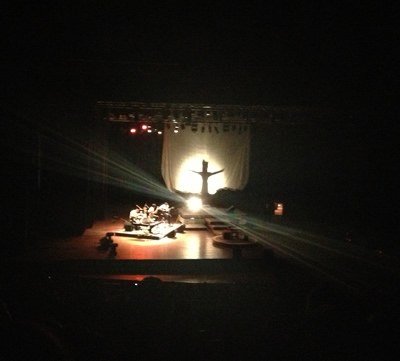
    Il s’est passé quelque chose de la sorte vendredi dernier lors du spectacle « De Doime son los cantantes » que nous a offert l’acteur Osvaldo Doimeadios dans la salle du Karl Marx. Hommage également au meilleur de notre théâtre vernaculaire, l’humoriste a été magistral dans ses interprétations et ses monologues. Les pénuries économiques, la réforme migratoire, les contrôles excessifs du « travail à compte propre », les scandales de corruption liés au câble de fibre optique, furent parmi les thèmes qui déclenchèrent les plus grands éclats de rire. Nous avons ri de nos problèmes et de nos misères, nous avons ri de nous-mêmes. Après le spectacle le public s’est entassé pour sortir dans les couloirs étouffants. A l’extérieur la rue Primera grouillait de monde en pleine nuit. J’ai pris un bus pour rentrer chez moi et je me suis penchée à la vitre…Personne ne souriait. L’humour était resté sur les fauteuils et sur la scène, nous étions revenus à la sombre réalité.

    Traduction, Jean-Claude Marouby

    View the original here:
    L’humour comme exorcisme

  • 6a00d8341bfb1653ef0192ab983bd6970d

    She has broken a nail in her agitation. Tomorrow she will have to go back to the manicurist to restore the nail polish and the miniature English flag painted there. His shirt is falling apart in the effort and his whole body is covered in sweat as if someone had thrown a bucket of water over him. No, it’s not an erotic scene, it’s not love, but lawlessness. A couple under the June sun carrying sand to finish remodeling their kitchen. They’ve stolen it from a theater that is being remodeled. Lurking until the custodian fell asleep after lunch. Then they filled two bags, which are enough to build a little counter. The little house has been built this way, taking a bit from here and there, hoping for someone to look the other way to carry off some bricks or floor tiles. Their little home has been the result of depredation, of this rapacity that so many Cubans assume towards the resources of the State. Take everything you can, grab anything from this powerful owner… and get it done.

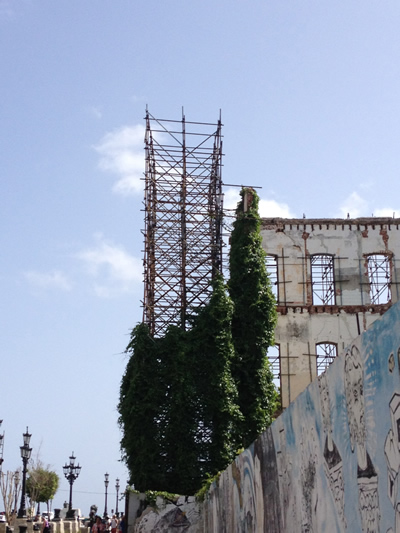
    Among the reasons some buildings take so long to build or repair are not only apathy and lack of efficiency. The theft of cement, steel and other construction materials also slows down many public works. Some are already memorable, where the amount of resources stolen increases the initial costs of the building or restoration by a factor of three. The sinks disappear even before they come off the truck, the paint cans are filled with water to resell the paint on the black market, and there is even a hotel where 36 air conditioners were stolen a few days before its opening. Faced with so many thefts, each object and resource must be closely watched and the watchers watched in turn.

    Many eyes are waiting for a slip-up. In one uncontrolled early morning a mound of gravel was reduced by a third. On some summer vacations, a school without a custodian could lose several windows and the occasional toilet. The light fixtures disappear, the electrical switches are ripped out and the looting extends also to the door handles, the stair railings, and even the ceiling tiles. With no pangs of conscience or guilt complexes on the part of the perpetrators. It’s more like the exploited poor taking a piece of the boss’s delicious snack when he’s distracted looking out the window. It is symptomatic that almost all those who take building materials from State construction projects feel no remorse for doing so. They call it « recovering, » « inventing, » « struggling, » « surviving, » When standing in a shower built with stolen tiles, under the running water they think, « you take what they give you and what they don’t give you… too. »

    Follow this link:
    No Pangs of Conscience for Cubans Who ‘Recover’ ‘Invent’ ‘Struggle’ ‘Survive’