Catégorie : Politique

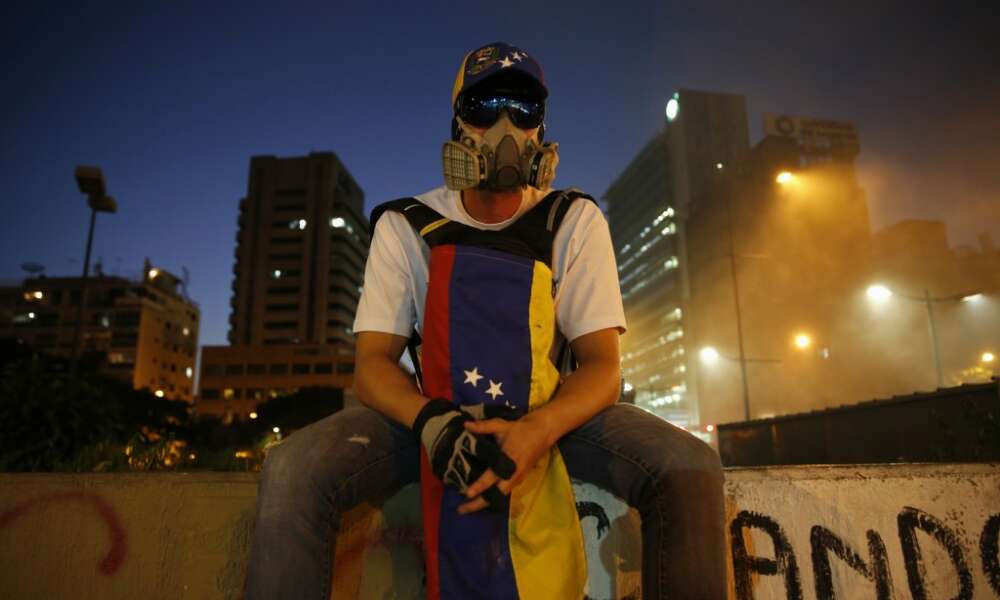
  • Manifestant anti-gouvernemental, jeudi 20 février à Caracas.Photo : Carlos Garcia Rawlins/Reuters Les Vénézuéliens descendent dans les rues, à Caracas et en province, pour exprimer leur ras-le-bol, malgré la brutalité de la répression. Pourquoi maintenant ? Il y au moins trois motifs d’insatisfaction.

    Read the original post:
    Pourquoi le Venezuela explose maintenant ?


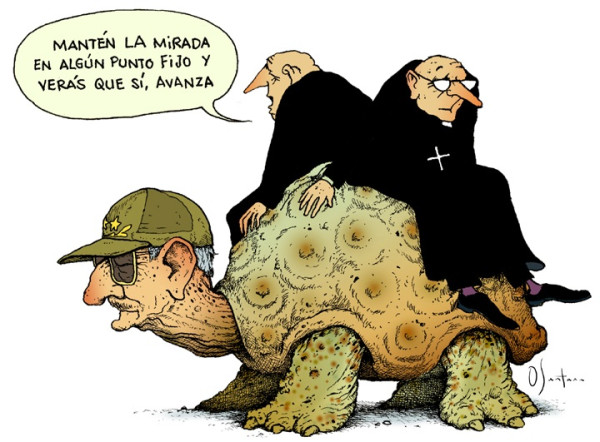
  • Focus on a fixed point and you’ll see that we are, in fact, advancing. Graphic humor from Santana

    Everything moves clumsily, heavily. Even the sun seems to take longer than normal up there. The clock knows nothing of precision and the minute hand is stuck. Making an appointment with the exactitude of three-fifteen or twenty-to-eleven is the pure pedantry of those in a hurry. Time is dense, like guava jam with too much sugar.

    « If you hurry, your problems double, » the clerk warns the customer anxious to get home early. The man sweats, drums his fingers, while she cuts her really long fingernails before even hitting a key on the cash register. The line behind him also looks at him with scorn, « Another one who thinks he’s in a big hurry, » says an annoyed lady.

    We live in a country where diligence has come to be interpreted as rudeness and being on time as a petulant quirk. An Island in slow motion, where you have to ask permission from one arm to move the other. A long crocodile that yawns and yawns as it lolls in the Caribbean waters.

    Someone who manages to complete two activities in one day might feel fortunate. It’s common not to be able to find ways to do even one. There’s a hitch at every step, a sign that says, « Today we’re closed for fumigation, » « We don’t serve the public on Friday, » or Raul’s phrase, « Without hurry but without pause. » Delay, postpone, suspend, cancel… the verbs most conjugated when you face any procedure or paperwork.

    The turtle’s pace is everywhere. From the bureaucratic offices and the bus stops to the recreation and service centers. But the big winner of the award for having « the blood of a turnip » is the government itself: Three years after the fiber optic cable was connected between Cuba and Venezuela it is still impossible to contract for a home Internet connection.

    Two decades of the dual monetary system and they still haven’t published a schedule for the elimination of this economic schizophrenia. Fifty-four years of single-party government and there is no sign of a day when we will have the right to free association. Half a century of government blunders and mistakes and they haven’t even begun to hint at an apology.

    At this rate, one day they’ll re-baptize the Island « Never Never Land, » a place where clocks and calendars are banned.


    My blog, GENERATION Y, has moved: READ IT HERE.

    Read me and other Cuban bloggers on TRANSLATING CUBA.

    And here is a link to my blog IN OTHER LANGUAGES.

    View the original here:
    Am I Living in Cuba, or Never Never Land?


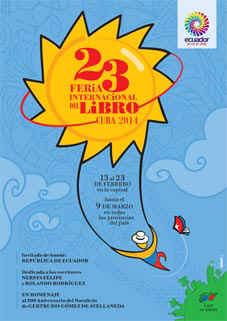
  • Behind the shelves there is another International Book Fair. One barely perceived among the partitions and walls of the exhibition areas. The national newspapers will never report on it, but these parallel and hidden events sustain the other one. A network of hardship, endless workdays and poverty-level wages, support the main publishing showcase on the island. For each page printed, there is a long list of irregularities, improvisations and exploitations.

    The Cuban Book Institute (ICL) is the principal organizer of this celebration of reading that is held every February. However, the state entity that controls literary production is overwhelmed by the lack of resources and corruption scandals. Its director, Zuleica Romay, asked to step down weeks before the start of the book fair. However, it’s still unknown if she will be granted « liberation » from her responsibilities, or will « follow her duty » to maintain her position.

    Many of the people who worked on this twenty-third edition of the Fair played the role of the ants who prevent the collapse of the anthill. The « credits » chalked on the Cuban government’s account are the fruit of personal sacrifices and violations that no union would demand: lunches delayed or missed completely, editorial decisions that can’t be taken because first « you have to consult the comrade from State Security, » workers who bring resources from their own homes to decorate the place, books that travel in the trunk of a private car — or in the basket of a bike — a lack of institutional gasoline and water supply that never makes it to the mouths of the thirsty employees…


    My blog, GENERATION Y, has moved: READ IT HERE.

    Read me and other Cuban bloggers on TRANSLATING CUBA.

    And here is a link to my blog IN OTHER LANGUAGES.

    Excerpt from:
    The Havana Book Fair Behind the Scenes

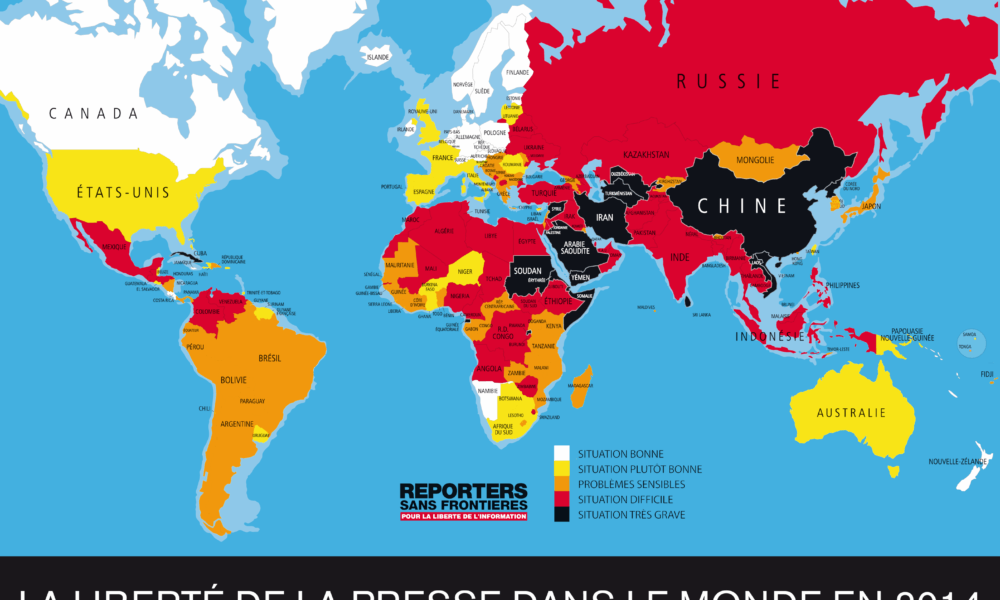
  • Le rapport sur la liberté de la presse 2014 de Reporters sans frontières (RSF), diffusé le mercredi 12 février, tire la sonnette d’alarme : l’exercice du journalisme est devenu extrêmement dangereux dans plusieurs pays d’Amérique latine, la liberté de la presse est menacée.

    Continued here:
    Les journalistes et la liberté de la presse en danger en Amérique latine

  • Infanta and Vapor Streets, eight at night. The scaffolding creaks under the weight of its occupants. The area is dark, but there are still two painters passing their brushes over the dirty balconies, the facades, the tall columns facing the avenue. Time is short, the 2nd Summit of the Community of Latin American and Caribbean States (CELAC) will start in just a few hours and everything should be ready for the guests. The streets where the presidential caravans will pass will be touched up, the asphalt addressed, the potholes and poverty hidden. The real Havana is disguised under another stage-set city, as if the dirt — accumulated for decades — was covered by a colorful and ephemeral tapestry.

    Then came the « human cleansing. » The first signs of one more stage set being erected comes via our cellphones. Calls are lost into nothingness, text messages don’t reach their destinations, nervous busy signals respond to attempts to communicate with an activist. Then comes the second phase, the physical. The corners of certain streets teem with supposed couples who don’t talk, men in checked shirts nervously touching their concealed earphones, neighbors set to guard the doors of those from whom, yesterday, they asked to borrow a little salt. The whole society is full of whispers, watchful and fear-filled eyes, a huge dose of fear. The city is tense, trembling, on alert: the CELAC Summit has started.

    The last phase brings detentions, threats and home arrests. Meanwhile, on TV the official announcers smile, comment on the press conferences and carry their cameras to the stairs of dozens of airplanes. There are red carpets, polished floors, tree ferns in the Palace of the Revolution, toasts, family photos, traffic diversions, police every ten yards, bodyguards, accredited press, talk of openings, people threatened, dungeons filled, friends whose whereabouts are unknown. Not even the Ñico López refinery is allowed to let its dirty smoke leave the chimney. The retouched postcard is ready… but it lacks life.

    Then, then everything happens. Every president and every foreign minister returns to their country. The humidity and grime push through the fine layer of paint on the facades. The neighbors who participated in the operation return to their boredom, and the officials of #OperaciónLimpieza — Operation Cleansing — are rewarded with all-inclusive hotels. The plants installed for the openings dry up for lack of water. Everything returns to normal or to the absolute lack of normality that characterizes Cuban life.

    The fake moment has ended. Goodby to the Second CELAC Summit.


    My blog, GENERATION Y, has moved: READ IT HERE.

    Read me and other Cuban bloggers on TRANSLATING CUBA.

    And here is a link to my blog IN OTHER LANGUAGES.

    Visit link:
    Cuban Regime "Cleans up" Opposition for CELAC Summit
  • Angle des rues Infanta et Vapor, 20h. Un échafaudage grince sous le poids de ses occupants. La zone est sombre, mais malgré cela, deux peintres passent leurs rouleaux sur les balcons sales, les façades, les hautes colonnes qui donnent sur l’avenue. Le temps presse, le IIème Sommet de la CELAC s’ouvrira dans à peine quelques heures et tout doit être prêt pour les invités. Les rues par lesquelles passeront les caravanes présidentielles seront retouchées, le revêtement sera réparé, les trous bouchés et la pauvreté camouflée. La véritable Havane se cachera sous une ville de carton-pâte, comme si l’on posait par-dessus la crasse –accumulée durant des décennies- un tapis luxueux et éphémère.

    Le “nettoyage humain” viendra dans un second temps. Les premières preuves du montage d’une autre scénographie viennent des téléphones portables. Les appels se perdent dans le néant, les SMS n’arrivent pas à destination, lorsqu’on tente de joindre un activiste, ça sonne occupé. Vient ensuite la deuxième phase, physique. Au coin de certaines rues prolifèrent de soi-disant couples qui ne se parlent pas, des hommes aux chemises à carreaux qui touchent nerveusement l’écouteur dissimulé dans leur oreille, des voisins qui montent la garde devant les portes de ceux à qui, la veille, ils demandaient un peu de sel. Toute la société s’emplit de murmures, de regards attentifs et de peur, d’une forte dose de peur. La ville est tendue, en alerte, elle tremble : le Sommet de la CELAC a commencé.

    La dernière phase consiste en des arrestations, des menaces et des assignations à domicile. Pendant ce temps, sur les chaînes officielles, les invités sourient, commentent les conférences de presse et dirigent leurs objectifs vers les escaliers de dizaines d’avions. On voit des tapis rouges, des parquets cirés, de gigantesques plantes dans le Palais de la Révolution, des toasts, des photos de famille, des déviations sur les routes, des policiers tous les cent mètres, des gardes du corps, de la presse accréditée, des discours d’inauguration, des experts, des prisons remplies, des amies introuvables. Même la raffinerie Ñico López n’a pas le droit de montrer la fumée sale qui sort de sa cheminée. La carte postale retouchée est prête … mais il lui manque le souffle de vie.

    Ensuite, ensuite on passe à autre chose. Chaque président, chaque chancelier retourne dans son pays. L’humidité et la saleté ressortent sous la fine couche de peinture des façades. Les voisins qui ont participé à l’opération retrouvent leur ennui et les officiels de l’Opération Nettoyage sont récompensés par des nuits dans des hôtels all included. Les plantes installées pour les inaugurations se fanent par manque d’eau. Tout revient à la normale ou plutôt à l’absolu manque de normalité qui caractérise la vie cubaine.

    C’est la fin de la photo truquée. Adieu IIème sommet CELAC.

    Traduction M. Kabous

    Read this article:
    Opération nettoyage

  • A crowd was waiting outside the mansion in Vedado with a statue of Abraham Lincoln in the garden. The language school opened its doors to new registrations and in the days that followed tested the attitudes of those interested. Everyone waited nervously, thinking that they would be evaluated on a pronunciation here… a mastery of vocabulary there. To our surprise, the main questions weren’t about language, but rather alluded to politics. By mid-morning a young woman who had been rejected warned us, « They’re asking the name of the first secretary of the Cuban Communist Party (PCC) in Havana. » We stood there mouths agape, who would know that?

    A few decades ago the leaders of the so-called « political and mass organizations » were figures known throughout the country. Whether through their excessive presence in the official media, long tenure in their jobs, or simply because of personality, their faces were easily identifiable, even to kids in elementary school. We relentlessly heard talk of the secretary of the Young Communist Union, saw on every newscast who was leading the PCC in a province, or overdosed on declarations from some president of the Federation of University Students. There they were, clearly recognizable. Some even came to have nicknames, along with numerous jokes about their quirks and inefficiencies.

    This morning on national television they mentioned Carlos Rafael Miranda, national coordinator for the Committees for the Defense of the Revolution (CDR). And it started me thinking about how blurred these positions have come to be, posts that before seemed to have so much power to decide the fate of so many. People now unknown leading institutions that every day fall deeper into indifference, are more forgotten. Leaders whose led can no longer remember their exact names and surnames. Figures who came too late to stand in the flashes of the camera, to be included in the analyses of the Cubanologists, or — at least — to be the targets of some joke. Mere shadows of a system where charisma is increasingly scarce.


    My blog, GENERATION Y, has moved: READ IT HERE.

    Read me and other Cuban bloggers on TRANSLATING CUBA.

    And here is a link to my blog IN OTHER LANGUAGES.

    View the original here:
    The Nobodies of the Cuban Nomenklatura

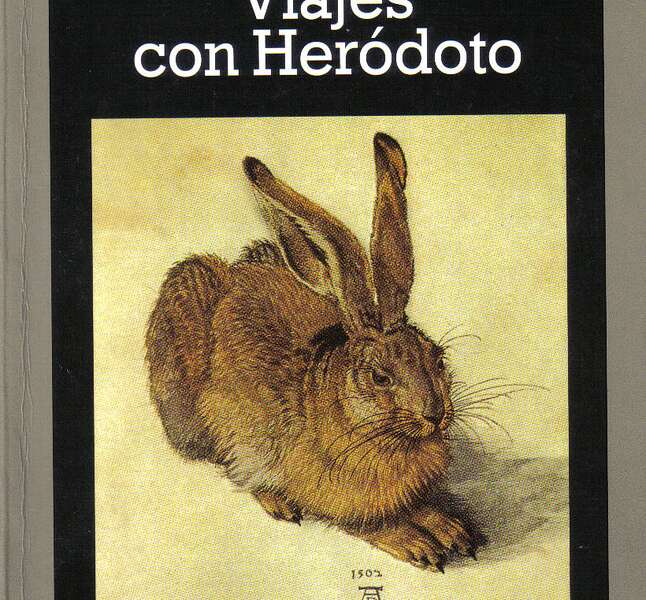
  • http://www.cubantrip.com/wp-content/uploads/2014/01/0032viajes_con_herodoto.jpg

    Cette maison a une clôture métallique aux pointes acérées, celle d’à côté une énorme grille avec une serrure double. Sur la porte de certains immeubles de bureaux une affiche nous avertit « réservé au personnel autorisé », et aux alentours du conseil d’Etat les gardes armés se succèdent tous les cent mètres. Se protéger de l’autre, éviter le contact, éloigner l’étranger, sont les objectifs de ces barrières physiques et légales. Ceux-là même que le maître Ryszard Kapuschinski décrivait dans son article « Les cent fleurs du dirigeant Mao » pendant son voyage en Chine.

    Dans ce texte vif et subtil, le journaliste polonais nous révèle la manie des hommes de construire des obstacles pour nous séparer de ce qui est différent de nous. L’exemple parfait en est ce serpent de briques, de pierres et de matériaux divers qui traverse le grand géant asiatique. Tout pour se défendre –ou s’isoler- de ceux qui sont restés de l’autre côté de la muraille. Pour Cuba, les choses ont été plus simples car c’est la mer qui nous a éloignés du reste de la planète. Une frange d’eau salée qui a merveilleusement servi le discours politique sur la « place assiégée » et « l’ennemi » de l’autre rive. Tout cela par peur, par simple peur de la diversité.

    Kapuscinski s’interrogeait sur les coûts humains et matériels de la construction –réelle ou dans les discours- des murailles. Nous pourrions faire le même exercice concernant notre pays. Combien nous a coûté notre isolement ? Quelles ressources avons-nous gaspillées en tranchées et tunnels  pour la guerre, en campagnes diplomatiques agressives, en endoctrinement scolaire pour fomenter l’idée de l’ennemi étranger ? Combien de vies a-t-on détruites, réduites ou achevées à cause de ces murs élevés au bénéfice de quelques-uns ? « La muraille ne sert pas seulement pour se défendre… elle permet de contrôler ce qui se passe à l’intérieur »  -peut-on lire dans les Voyages avec Hérodote- et il est triste que soixante ans après, cela reste une réalité dans beaucoup d’endroits.

    Traduction Jean-Claude Marouby

    More:
    Kapuscinski et les murailles