Mois : mai 2012

  • En 2004 Eric Rohmer il effectue celui qui sera son avant-dernier largometraje, triple Agent. Il choisit une trame compliquée, qui concentre quelques détails fondamentaux : la disparition mystérieuse de deux général russes exilées à Paris, au milieu de soupçons de double et triple espionnage et une atmosphère familiale modeste et plaisante, même par des moments bucólico. Tout cela dans un fond national et international où on approche la catastrophe. L’Avant Populaire a gagné les élections en France et en Espagne commence la guerre civile. Fiodor Voronin, un général tsariste éloigné, a été établi à Paris et sa vie feint la tranquillité quotidienne d’un fonctionnaire public, ou du plus proche à à cela pour exilé russe dans la troisième décennie du siècle passé : une charge dans une organisation d’aide à à d’autres exilés, qui est maintenue grâce au fait que ses fondateurs ont obtenu sortir de la Russie une partie du trésor réel. Seulement parfois paraît le perturber par quelqu’un qui autre préoccupation, comme la nécessité de payer le loyer tous les mois. Dans l’appartement calmé des Voronin les émotions sont définies par la relation matrimoniale. Le militaire russe est mariée avec Arsinoé, une beauté grecque qui en figure et geste anticipe la placidité de la maturité, sans laisser de côté transmettre au spectateur la sensation qu’elle vit son amour à plénitude. Il est précisément cet amour, familial mais j’intensifie, le lien qui définit une paire tellement singulière. La passion affectueuse est latente à tout moment, et bien que bonne partie du temps ne soit pas dispersée, se toujours. Au principe tout signale que la tâche de Voronin dans l’Union les Militaires Russes Blancs se divise entre étirer au maximum les fonds réduits et chercher d’autres sources de recette,…

    Read the article:
    L’espion et la chanteur

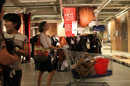
  • Le contrat polémique pour utiliser main d’oeuvre pénitentiaire cubaine pour faire des meubles pour IKEA a fait partie d’un accord plus vaste entre des signatures contrôlées par les services de sécurité le Cuba et de l’Allemagne Orientale, qui incluait en outre des antiquités, tabacs et armes cubaines, selon un chercheur à Berlin.

    See the article here:
    Policier politique le Cuba et de l’Allemagne Orientale ont travaillé accord qui a inclus celui d’IKEA

  • LA HAVANE, Cuba, le 8 mai (Paul Mendez, www.cubanet.org ) – Avec la mise en scène de l’œuvre théâtre pour enfants basé sur une légende Mapuche « Trouver Kay Kay et Xeng Xeng Vilu » par le groupe chilien Tryo Banda Théâtre, a ouvert le 4 mai dernier Raquel Revuelta chambre dans le quartier de La Havane du Vedado.

    ouverture

    officieuse du théâtre, situé sur la ligne de rue et B, fait partie de l’Amérique latine et des Caraïbes saison scénique connue sous le nom « Peut jouer », organisé par le Casa de las Americas.

    Il a expliqué un employé qui a requis l’anonymat, la phase de construction du théâtre n’est pas terminée. Il reste à installer une partie de l’équipement de scène, entre autres détails, mais le début du groupe chilien formé de l’expérience afin que les techniciens d’analyser l’acoustique. « Lorsque vous êtes prêt sera l’hôte du Groupe Deux D’Theater», a dit la source.

    Raquel Revuelta installation de cinéma

    occupe le film ancien champion olympique, qui est restée fermée pendant près de vingt ans qui a été utilisé par le ministère de la Culture comme un entrepôt. Cette chambre n’a pas subi le même sort que les autres cinémas de la capitale employées dans la plupart du temps aux victimes des glissements de terrain maison.

    Le théâtre récemment ouvert est nommé d’après le célèbre actrice et ancien directeur du groupe phare Studio Theatre. Adjacent à la Mella théâtre, Trianon, Hubert de Blanck, le manoir et le complexe de Bertold Brecht (ex-Communauté juive), la quasi-totalité situé le long de la ligne de rue d’El Vedado.

    Cubanet

  • Images de paysage cuba

    Cuba se présente comme un pays socialiste, et se veut être une république unitaire des ouvriers et paysans et une république parlementaire – où le Parti communiste est le seul parti politique reconnu par la Constitution, qui le désigne comme « la force dirigeante supérieure de la société et de l’État ».

    More Cuba, Dec 2011 – 160
    cuba
    Image by Ed Yourdon
    The day after the boxing match, we ventured into a neighborhood on the outskirts of Havana, where we had been told there was an unofficla/unapproved cock-fight that we could watch. This was at the second such place, where we were indeed allowed to watch. There were about a dozen birds, all groomed for their upcoming fight, and all weighed carefully to see what "class" they belonged in…

    This is a second set of a couple hundred photos taken in Havana, Cuba in December 2011. The first set, which included what I felt were the best 100 photos of the 3500+ images, was uploaded earlier. You can find it here on Flickr.

    ***********************

    As I suggested in my first set of Cuba photos on Flickr, the notion of traveling to Cuba is — at least for many Americans today — probably like that of traveling to North Korea. It’s off-limits, forbidden by the government — and frankly, why would anyone bother? But for someone like me, who spent his childhood in the Cold War era of the 1950s, and who went off to college just after Castro took power, and just before the Bay of Pigs and the Cuban missile crisis, the notion of traveling to Cuba has entirely different overtones.

    And yet Cuba is only 90 miles away from Key West (as we were reminded so often in the 1960s), and its climate is presumably no different than a dozen of Caribbean islands I’ve visited over the years. Numerous friends have made quasi-legal trips to Cuba over the years, flying in from Canada or Mexico, and they’ve all returned with fabulous pictures and great stories of a vibrant, colorful country. So, when the folks at the Santa Fe Photographic Workshops sent out a notice in November 2011, announcing a series of photo workshops in Havana, we couldn’t resist the temptation to sign up.

    Getting into Cuba turned out to be trivial: an overnight stay in Miami, a 45-minute chartered flight operated by American Airlines, and customs/immigration formalities that turned out to be cursory or non-existent. By mid-afternoon, our group was checked into the Parque Central Hotel in downtown Havana — where the rooms were spacious, the service was friendly, the food was reasonably tasty, the rum was delicious, and the Internet was … well, slow and expensive.

    We had been warned that that some of our American conveniences — like credit cards — would not be available, and we were prepared for a fairly spartan week. But no matter how prepared we might have been intellectually, it takes a while to adjust to a land with no Skype, no Blackberry service, no iPhone service, no phone-based Twitter, Facebook, or Google+. I was perfectly happy that there were no Burger Kings, no Pizza Huts, no Wendys, no Starbuck’s, and MacDonalds. There was Coke (classic), but no Diet Coke (or Coke Light). There were also no police sirens, no ambulance sirens, and no church bells. There were no iPods, and consequently no evidence of people plugged into their music via the thin white earplugs that Apple supplies with their devices. No iPads, no Kindles, no Nooks, no … well, you get the picture. (It’s also worth noting that, with U.S. tourists now beginning to enter the country in larger numbers, Cuba seems to be on the cusp of a "modern" invasion; if I come back here in a couple years, I fully expect to see Kentucky Fried Chicken outlets on every corner.)

    But there were lots of friendly people in Havana, crowding the streets, peering out of windows and doorways, laughing and shouting and waving at friends and strangers alike. Everyone was well-dressed in clean clothes (the evidence of which could be seen in the endless lines of clothing hanging from laundry lines strung from wall to wall, everywhere); but there were no designer jeans, no fancy shoes, no heavy jewelry, and no sign of ostentatious clothing of any kind. Like some other developing countries, the people were sometimes a little too friendly — constantly offering a taxi ride, a pedicab ride, a small exchange of the "official" currency (convertible pesos, or "cuqs") for the "local" currency (pesos), a great meal or a great drink at a nearby restaurant or bar, a haircut, a manicure, or just a little … umm, well, friendship (offers for which ran the gamut of "señor" to "amigo" to "my friend"). On the street, you often felt you were in the land of the hustle; but if you smiled, shook your head, and politely said, "no," people generally smiled and back off.

    As for the photography: well, I was in one of three different workshop groups, each of which had roughly a dozen participants. The three dozen individual photographers were well equipped with all of the latest Nikon and Canon gear, and they generally focused on a handful of subjects: buildings and architecture, ballet practice sessions, cockfights, boxing matches, rodeos, fishing villages, old cars, interiors of people’s homes, street scenes, and people. Lots of people. As in every other part of the world I’ve visited, the people were the most interesting. We saw young and old, men and women, boisterous children, grizzled elders, police officers, bus drivers, and people of almost every conceivable race.

    The streets were clean, though not spotless; and the streets were jammed, with bicycles and motorbikes and pedi-cabs, taxis, buses, horse-and-carriages, pedestrians, dogs (lots of dogs, many sleeping peacefully in the middle of a sidewalk), and even a few people on roller skates. And, as anyone who has seen photos of Havana knows, there were lots and lots and LOTS of old cars. Plymouths, Pontiacs, Dodges, Buicks, and Chevys, along with the occasional Cadillac. A few were old and rusted, but most had been renovated, repaired, and repainted — often in garishly bright colors from every spectrum of the rainbow. Cherry pink, fire-engine red, Sunkist orange, lime green, turquoise and every shade of blue, orange, brown, and a lot more that I’ve probably forgotten. All of us in the photo workshop succumbed to the temptation to photograph the cars when we first arrived … but they were everywhere, every day, wherever we went, and eventually we all suffered from sensory overload. (For what it’s worth, one of our workshop colleagues had visited Cuba eight years ago, and told us that at the time, there were only old cars in sight; now roughly half of the cars are more-or-less modern Kia’s, Audis, Russian Ladas, and other "generic" compact cars.)

    The one thing I wasn’t prepared for in Havana was the sense of decay: almost no modern buildings, no skyscrapers, and very little evidence of renovation. There were several monstrous, ugly, vintage-1950s buildings that oozed "Russia" from every pore. But the rest of the buildings date back to the 40s, the 30s, the 20s, or even the turn of the last century. Some were crumbling, some were just facades; some showed evidence of the kind of salt-water erosion that one sees near the ocean. But many simply looked old and decrepit, with peeling paint and broken stones, like the run-down buildings in whatever slum you’re familiar with in North America. One has a very strong sense of a city that was vibrant and beautiful all during the last half of the 19th century, and the first half of the 20th century — and then time stopped dead in its tracks.

    Why that happened, and what’s being done about it, is something I didn’t have a chance to explore; there was a general reluctance to discuss politics in great detail. Some of Havana looks like the less-prosperous regions of other Caribbean towns; and some of it is presumably the direct and/or indirect result of a half-century of U.S. embargo. But some of it seems to be the result of the collapse of the Soviet Union in the early 1990s, and the subsequent collapse of foreign aid that Cuba depended upon.

    As for my own photos: I did not attend the ballet practice sessions, nor did I see the rodeo. I did see some interesting graffiti on a few walls, which I photographed; but for some reason, I missed almost all of the numerous political billboards and stylized paintings of Che Guevera on buildings and walls. What I focused on instead was the "street scenes" of people and buildings and cars, which will hopefully give you a sense of what the place is like.

    Enjoy!

    havana, cuba – nacional hotel
    cuba
    Image by scaturchio
    The Hotel Nacional de Cuba has more than sixty years of history and still keeps its prestige among those belonging to GRAN CARIBE group. Considered as a CLASSIC FOR DISTINCTION, it was opened on December 30th, 1930. In 1992 it went through a general restoration preserving all the splendor of its eclectic architecture as a result of a mixture of Art Deco features with modern influences of that time.

    With its privileged location in the middle of Vedado, the center of Havana, it stands on a hill just a few meters from the sea, and offers a great view of the Havana Harbor; the seawall and the city.

    The Hotel stands out due to its refined elegance and its ancient splendor, which since 1930 has attracted a large number of personalities from the arts, science and politcs, such as British Prime Minister Winston Churchill, artists Frank Sinatra, Ava Gardner, Johnny Weismuller, Maria Félix, Jorge Negrete, and scientist Alexander Flemming.

    · Construction: 1930
    · Renovation: 1992
    · Class: 5 star
    · Location: Cuban capital city
    · Number of floors: 8
    · Number of elevators: 6 for guests (2 to pool); 2 service
    · Architecture: Art Deco with eclectic elements

    www.hotelnacionaldecuba.com/en/home.asp

    Cuba Libre con Ron Centenario
    cuba
    Image by .m for matthijs
    After Joost and I returned home from our official graduation ceremony, we decided THIS was the time to open the bottle of Ron Centenario.

    In my third year of study, me and Joost (his photos will com online soon) did an internship in Costa Rica, where we discovered the Costa Rican rum Centenario. We enjoyed the particular taste of this rum quite a bit. Whenever we ordered a rum ‘n coke, id had to be a ‘Cuba Libre con Centenario’ .. Joost brought back one of the bottles and it waited to be opened for a special occasion; our official graduation ..

    Cuba sans Fidel Castro ? Depuis un certain temps toutes les interrogations et les prévisions semblent se concentrer autour d’un seul événement : la disparition de celui qui a personnalisé la révolution cubaine pendant près d’un demi siècle. La mort de Castro serait la clé de l’évolution, ou de la disparition, d’un système collectiviste et autoritaire qui régente l’île depuis 1959.
  • La bipolarité est une des tragédies de l’exile cubain. Il n’y a ici pas de termes moyens. Les chemins sont deux : ou tu te définis anticastrista déclaré ⎯y alors extractions banderitas, tu salues aux congressistes et aux flammes à la radio local⎯ ou ils te cataloguent de castrista dissimulé ; et toi ils mesurent chaque mot que tu prononces, pour déchiffrer des signaux tu dissimules depuis La Havane, gestes destinés à diviser à la Communauté et aux intentions tordues. À Miami ont toujours été affaiblies les attitudes « confrontation » et « rapprochement », puisque le développement d’un groupe n’a pas été possible qui postule non la confrontation depuis une attitude qui est en même temps anticastrista et antireaccionaria. Cet anticastrismo n’est pas assumé dans le sens traditionnel de la belligérance contre les centres de de pouvoir affirmés dans la Place de la Révolution, mais dans un plus vaste, de désaccord fondamental avec le style de gouvernement régnant dans l’île. Non par manque d’un fort rejet au régime régnant au Cuba, mais par la nécessité de marquer distance avec une agressivité vocinglera qui peut avoir divers objectifs, mais il est limité au rôle d’offrir la pire image d’un exile cavernícola et fanatique. Le rapprochement à la réalité cubaine, d’autre part, a été affaibli à travers les années, dans beaucoup de cas réduit à la catégorie de complicité ⎯o pire, de colaboracionismo⎯ et enfermé dans une place où le gouvernement cubain dicte les règles et seulement écoute ce qu’il a laissé précédemment dans il est évident que veut écouter. Donc, parfois, il ajoute un toast avec des mojitos. Par des décennies, le maniqueísmo de La Havane a défini la dichotomie à Miami. Le simple fait être sympathisant ou le membre du Parti Démocrate résulte soupçonne ; si en outre un est contre le…

    Taken from:
    Entre le cri et l’écho

  • Les forts critiques aux déclarations récentes aux Etats-Unis du cardinal Jaime Ortega Alamino, archevêque de La Havane, on a intensifié avec l’apparition de d’un éditoriale signé par le directeur du Bureau de Transmissions au Cuba (OCB), que qualifie de “ lacaya ” l’attitude d’Ortega envers le gouvernement cubain.

    More:
    Tildan de « lacaya » l’attitude du cardinal Ortega

  • Jaime Ortega embrassé le trafiquant de drogue Ernesto Milanes. Elise Ackerman journaliste a déclaré en 1995 que Milanes Milanes fils du colonel Conrad (DGI), les services de renseignement cubains, a été reconnue à la moissonneuse-batteuse de l’Est à début des années nonante pour organiser des réseaux de distribution allant de centre de La Havane à Varadero.

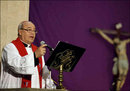
    MIAMI, Floride, mai, www.cubanet.org – « Je suis désolé de le dire » offert comme un prélude entre pétulance, le sarcasme et la condescendance. Répondit le chef cubain Jaime Ortega d’un étudiant question: Pensez-vous prendre au sérieux le rôle église cubaine de donner une voix aux opprimés? Il faisait allusion à l’expulsion violente des dissidents qui occupaient treize l’Eglise de la Charité à La Havane et l’emprisonnement d’un jeune homme au cours de la messe papale à Santiago de Cuba. «Il y avait tout un peuple là-bas [tournant linguistique Islander typique post-Castro] … avec des troubles psychologiques ont été tous les ex-délinquants, manquait un niveau de culture. » Surpris avec un nouveau détail: Avis de dire que les dissidents avaient des téléphones derniers modèles de mobiles, « a été un mouvement organisé par un groupe de Miami. » Il a dit que parmi les anciens occupants ont été reconnus coupables d’exhibitionnisme. Jusqu’à présent, Ortega n’a pas révélé ses sources d’information si spécifique sur l’intrigue et le casier judiciaire. La paranoïa est votre moitié et les régimes de demi concoction de classification hégémoniques subjugués aux « incultes, des fous et des criminels. » Le cou avait une croix en or massif incrusté en relief prélat d’un pays pauvre mais en utilisant des mots comme «excluable. » A côté de Sean O’Malley, de Boston frère le cardinal capucin, humble, calme. Résigné cubaine écouté patauger dans la boue de la fierté.

    revendications précédentes

    , sans possibilité de réponse ou de check-up un témoignage contre son frère dans l’épiscopat, le Román récemment décédé Agustin. Était le thème de la réconciliation à Cuba. De la même manière pourrait faire en sorte que Roman était un étudiant de l’herméneutique de Gadamer secret. Comment pouvez-vous tester quand le précité ne peut pas réfuter l’allégation?

    Charité et

    discrétion disparu quand le diplômé UMAP a le chapeau rouge de San Cristobal. « Rappelez-vous que vous mesurez avec la tige, sera mesuré. »

    dire que je suis désolé, Ortega, mais vous n’étiez pas excluable, inconduite par des contrevenants, gay ou la désaffection, les péchés à la fois sans absolution dans le système judiciaire cubain? Je ne comprends pas comment saisir maintenant de ces catégories. Un détenu de l’UMAP pas une personne de haute moralité pour juger le dossier de pairs d’autres.

    Le deuxième commandement de l’Eglise est la confession ou la réconciliation. Prenez ce que vous avez rencontré ces gens de leur dette à la société révolutionnaire cubain et sont gratuits. Qu’est-ce vous avez la garantie de ne pas recourir au sacrement du pardon? Si vous avez reçu le pardon par la confession qui êtes-vous vous souvenir de votre passé, disqualifiant et en supprimant la validité de leurs revendications? Je suis désolé de le dire, mais ce qui les rend différent de href= »http://secretoscuba.cultureforum.net/t21542-ernesto-milanes-y-socitos « > son ami Ernesto Milanes, trafiquant de drogue reconnu , qui non seulement est représenté dans l’étreinte chaleureuse, mais il a écrit «avec affection et ma bénédiction. » Je trouve cela difficile à comprendre, Ortega, la différence, et son amitié avec le beau jeune homme.

    Puissance

    a la capacité de transformer. Une soutane blanche avec liseré rouge qui vous fait oublier la marginalité. Gay, ou la désaffection, dans un camp de concentration (sans lire L’Histoire de la folie de Michel Foucault), Jaime Ortega, séminaires d’études supérieures quatrième catégorie suppose désormais les fonctions de «normaliser» des psychiatres et marque les dissidents « les gens souffrant de troubles mentaux … ».

    la Kennedy School Forum, Ortega donne en détail les procédures dans les négociations avec les dissidents. Étiez-vous présent? Quelle est la base de leur témoignage? N’était-ce pas Porco-Ramon Suarez Porcari en charge de porter ses conceptions et d’expulser le outragée? Comment fonctionne le expulsé à distance de parler bien à Miami? Il le fait, Ortega, une visite à son confesseur par l’orgueil et le mensonge. Je suis désolé de le dire, mais parce que Harvard (pas abordable par Saladrigas lieu graves) de correction. Voici les détails: Parmi les dissidents est un expert en informatique, un entraîneur, un architecte, un comptable, un expert en médecine légale, six au moins pas de casier judiciaire (qui ne peut prétendre le cardinal lui-même). Le «excluable», doit son statut à un erreur d’identité par les autorités américaines. La personne présentant la psychopathologie est directement attribuable à la non-concordance dans les situations créées par les structures gouvernementales.

    déclarations

    , dit que vous, Ortega, « personne n’a été traîné» et que les dissidents eux-mêmes demandé l’intervention des autorités. Je suis désolé de le dire mais je crains que c’est incompatible avec le témoignage d’un témoin, le pasteur de l’Eglise elle-même de la Charité. Dans son hésitation à la fiction, il s’est contredit à l’égard des autorités et le rapport de police. Enfin on ne sait pas si oui ou non un rapport de suivi, si traîné ou non de la colère ou si elles «la prit par le bras » juste l’un dans la salle de bains. Étiez-vous dans la salle de bain? Idéalement quelque chose prélat que la presse de Miami a dit non, pas répondre à la deuxième partie de la question sur le détenu Andrés Carrión, attaqué « camillazos » pour un agent présumé de la Croix-Rouge quand ils ont crié « A bas le communisme! » En Santiago de Cuba.

    prélat semblait irrité

    avec la «fabrique» des nouvelles des médias à Miami. Il est vrai que El Nuevo Herald de couper une partie des nouvelles. Les «experts» Oscar Axe sont au même niveau que « table ronde » cubaine. Alcibiades Hidalgo, chef de cabinet de Raul Castro, travaille sur cet ordinateur. Mega TV a trois côtés d’une même pièce, quelque chose qui n’existe que dans les pouvoirs sous-développés de Miguel Ferro, responsable de la programmation. « Maria Elvira Live, le numéro un d’information et d’analyse pour tous les Hispaniques aux États-Unis et dans les Caraïbes » n’a pas été diffusé. En Jamaïque, Trinité-et-Tobago et la Guadeloupe exigent une amélioration des pratiques journalistiques. A l’observateur des médias en chef cubain, ne semble pas déranger l’éditorial inexacte publications révolutionnaires sur l’île. Plutôt que de «l’espace» (tag, mot qui hante) recherche score (« notes ») comme l’étoile de l’Institut cubain de radio et de télévision? Son incompatibilité n’est pas expliqué.

    Il ya un conflit entre le sentiment d’échec et de la fierté en tant que mécanisme de compensation. Est évident dans la présentation de Ortega à Harvard. Les premiers mots qu’il parvient à balbutier des excuses poser pour le texte et la traduction. Le Cubain a fait ses débuts dans un forum élevée. Sa vie se passe comme Cendrillon dans le pays de l’impolitesse. Ortega a mis en contexte. Le théologien respecté le cardinal Walter Kasper est étudié à Tübingen puis devenir un professeur à son alma mater et à l’Université Catholique. Le cardinal Christoph Schönborn, de naissance noble (le comte), après avoir obtenu en Allemagne, est diplômé de l’Ecole des Hautes Etudes Pratique, la Sorbonne et de Paris Institut Catholique. Angelo Scola, le cardinal de Milan, a deux doctorats, a été professeur à Fribourg et rédacteur en chef du journal avec Communio de Lubac, Hans Urs von Balthasar et Ratzinger, même le pape. Quand ils se rencontrent dans les consistoires, Jaime Ortega, qui parle français avec cubano-canadienne intonation et articule seulement deux mots en anglais, se feront sentir dans l’UMAP Vatican ou des manches de vadrouilles plats Meissen. Le prélat cubain, dans le moment plein de gloire, ne permettrait pas la question impertinente d’un étudiant ou l’incident pourrait ternir quelque harvardiana refuse de donner son apothéose.

    * Juste

    J. Sanchez , journaliste primé, est diplômé de l’Université de Harvard et a travaillé pendant un an dans le Doyen de la Kennedy School of Science politique. Kennedy a obtenu une bourse qui lui a permis de procéder à la législation de la recherche au sein du Congrès pour le légendaire Claude Pepper .


    Cubanet

  • Images de paysage cuba

    Cuba se présente comme un pays socialiste, et se veut être une république unitaire des ouvriers et paysans et une république parlementaire – où le Parti communiste est le seul parti politique reconnu par la Constitution, qui le désigne comme « la force dirigeante supérieure de la société et de l’État ».

    More Cuba, Dec 2011 – 053
    cuba
    Image by Ed Yourdon
    At the corner of Plaza de San Francisco. One of the restaurants at this location had the interesting practice of leaning their chairs against the tables, in the fashion that you see here …

    This is a second set of a couple hundred photos taken in Havana, Cuba in December 2011. The first set, which included what I felt were the best 100 photos of the 3500+ images, was uploaded earlier. You can find it here on Flickr.

    Note: I chose this photo, among the five that I uploaded to Flickr on the morning of Jan 6, 2012, as my "photo of the day." I thought the placement of the table and chairs was sufficiently unusual that it would make people stop and take a second look. I also liked the contrast between the table/chairs and the man walking on the left. I wish I could have eliminated the people behind him on the left. (Similarly, I wish I had gotten more of the details of the young girl who appears to be jumping into the air, on the right.)

    ***********************

    As I suggested in my first set of Cuba photos on Flickr, the notion of traveling to Cuba is — at least for many Americans today — probably like that of traveling to North Korea. It’s off-limits, forbidden by the government — and frankly, why would anyone bother? But for someone like me, who spent his childhood in the Cold War era of the 1950s, and who went off to college just after Castro took power, and just before the Bay of Pigs and the Cuban missile crisis, the notion of traveling to Cuba has entirely different overtones.

    And yet Cuba is only 90 miles away from Key West (as we were reminded so often in the 1960s), and its climate is presumably no different than a dozen of Caribbean islands I’ve visited over the years. Numerous friends have made quasi-legal trips to Cuba over the years, flying in from Canada or Mexico, and they’ve all returned with fabulous pictures and great stories of a vibrant, colorful country. So, when the folks at the Santa Fe Photographic Workshops sent out a notice in November 2011, announcing a series of photo workshops in Havana, we couldn’t resist the temptation to sign up.

    Getting into Cuba turned out to be trivial: an overnight stay in Miami, a 45-minute chartered flight operated by American Airlines, and customs/immigration formalities that turned out to be cursory or non-existent. By mid-afternoon, our group was checked into the Parque Central Hotel in downtown Havana — where the rooms were spacious, the service was friendly, the food was reasonably tasty, the rum was delicious, and the Internet was … well, slow and expensive.

    We had been warned that that some of our American conveniences — like credit cards — would not be available, and we were prepared for a fairly spartan week. But no matter how prepared we might have been intellectually, it takes a while to adjust to a land with no Skype, no Blackberry service, no iPhone service, no phone-based Twitter, Facebook, or Google+. I was perfectly happy that there were no Burger Kings, no Pizza Huts, no Wendys, no Starbuck’s, and MacDonalds. There was Coke (classic), but no Diet Coke (or Coke Light). There were also no police sirens, no ambulance sirens, and no church bells. There were no iPods, and consequently no evidence of people plugged into their music via the thin white earplugs that Apple supplies with their devices. No iPads, no Kindles, no Nooks, no … well, you get the picture. (It’s also worth noting that, with U.S. tourists now beginning to enter the country in larger numbers, Cuba seems to be on the cusp of a "modern" invasion; if I come back here in a couple years, I fully expect to see Kentucky Fried Chicken outlets on every corner.)

    But there were lots of friendly people in Havana, crowding the streets, peering out of windows and doorways, laughing and shouting and waving at friends and strangers alike. Everyone was well-dressed in clean clothes (the evidence of which could be seen in the endless lines of clothing hanging from laundry lines strung from wall to wall, everywhere); but there were no designer jeans, no fancy shoes, no heavy jewelry, and no sign of ostentatious clothing of any kind. Like some other developing countries, the people were sometimes a little too friendly — constantly offering a taxi ride, a pedicab ride, a small exchange of the "official" currency (convertible pesos, or "cuqs") for the "local" currency (pesos), a great meal or a great drink at a nearby restaurant or bar, a haircut, a manicure, or just a little … umm, well, friendship (offers for which ran the gamut of "señor" to "amigo" to "my friend"). On the street, you often felt you were in the land of the hustle; but if you smiled, shook your head, and politely said, "no," people generally smiled and back off.

    As for the photography: well, I was in one of three different workshop groups, each of which had roughly a dozen participants. The three dozen individual photographers were well equipped with all of the latest Nikon and Canon gear, and they generally focused on a handful of subjects: buildings and architecture, ballet practice sessions, cockfights, boxing matches, rodeos, fishing villages, old cars, interiors of people’s homes, street scenes, and people. Lots of people. As in every other part of the world I’ve visited, the people were the most interesting. We saw young and old, men and women, boisterous children, grizzled elders, police officers, bus drivers, and people of almost every conceivable race.

    The streets were clean, though not spotless; and the streets were jammed, with bicycles and motorbikes and pedi-cabs, taxis, buses, horse-and-carriages, pedestrians, dogs (lots of dogs, many sleeping peacefully in the middle of a sidewalk), and even a few people on roller skates. And, as anyone who has seen photos of Havana knows, there were lots and lots and LOTS of old cars. Plymouths, Pontiacs, Dodges, Buicks, and Chevys, along with the occasional Cadillac. A few were old and rusted, but most had been renovated, repaired, and repainted — often in garishly bright colors from every spectrum of the rainbow. Cherry pink, fire-engine red, Sunkist orange, lime green, turquoise and every shade of blue, orange, brown, and a lot more that I’ve probably forgotten. All of us in the photo workshop succumbed to the temptation to photograph the cars when we first arrived … but they were everywhere, every day, wherever we went, and eventually we all suffered from sensory overload. (For what it’s worth, one of our workshop colleagues had visited Cuba eight years ago, and told us that at the time, there were only old cars in sight; now roughly half of the cars are more-or-less modern Kia’s, Audis, Russian Ladas, and other "generic" compact cars.)

    The one thing I wasn’t prepared for in Havana was the sense of decay: almost no modern buildings, no skyscrapers, and very little evidence of renovation. There were several monstrous, ugly, vintage-1950s buildings that oozed "Russia" from every pore. But the rest of the buildings date back to the 40s, the 30s, the 20s, or even the turn of the last century. Some were crumbling, some were just facades; some showed evidence of the kind of salt-water erosion that one sees near the ocean. But many simply looked old and decrepit, with peeling paint and broken stones, like the run-down buildings in whatever slum you’re familiar with in North America. One has a very strong sense of a city that was vibrant and beautiful all during the last half of the 19th century, and the first half of the 20th century — and then time stopped dead in its tracks.

    Why that happened, and what’s being done about it, is something I didn’t have a chance to explore; there was a general reluctance to discuss politics in great detail. Some of Havana looks like the less-prosperous regions of other Caribbean towns; and some of it is presumably the direct and/or indirect result of a half-century of U.S. embargo. But some of it seems to be the result of the collapse of the Soviet Union in the early 1990s, and the subsequent collapse of foreign aid that Cuba depended upon.

    As for my own photos: I did not attend the ballet practice sessions, nor did I see the rodeo. I did see some interesting graffiti on a few walls, which I photographed; but for some reason, I missed almost all of the numerous political billboards and stylized paintings of Che Guevera on buildings and walls. What I focused on instead was the "street scenes" of people and buildings and cars, which will hopefully give you a sense of what the place is like.

    Enjoy!

    « Emvee Cuba
    cuba
    Image by ▓▒░ TORLEY ░▒▓
    Explore beautiful Emvee Cuba and stay awhile to enjoy our great boutique shops and priceless photo-ops!

    Pics, shopping, metaversatility, torrid, hybrid, the loft, lemon, kari, women, men, furniture, animations, poses"

    Posted by Second Life Resident Torley Olmstead. Visit Metaversatility.

    Just Cuba
    cuba
    Image by Lilia Efimova

    Cuba sans Fidel Castro ? Depuis un certain temps toutes les interrogations et les prévisions semblent se concentrer autour d’un seul événement : la disparition de celui qui a personnalisé la révolution cubaine pendant près d’un demi siècle. La mort de Castro serait la clé de l’évolution, ou de la disparition, d’un système collectiviste et autoritaire qui régente l’île depuis 1959.