Catégorie : Politique

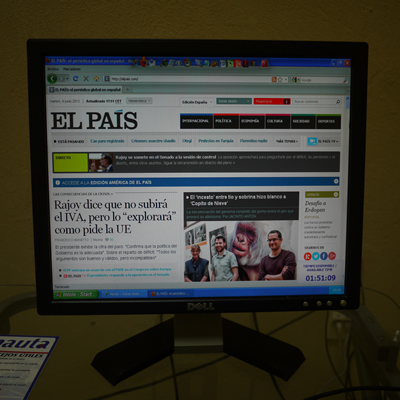
  • El Pais newspaper from a Nauta cybercafé
    Photo: I was able to access El Pais newspaper from a Nauta cybercafé

    In 1993 Fidel Castro found himself on the ropes with the economic crisis and accepted the circulation of the dollar in Cuban territory. Until then, possessing foreign currency could cost you several years in prison. « The enemy’s money » came to stay, although years later it would be replaced by substitute called the « convertible peso » or CUC. Among the most notable details of the decree that authorized the dual currency — the CUC and the Cuban peso — were the motives for doing so. The Official Gazette recognized that this measure « contributes positively to reducing the number of incidents characterized as punishable which will relieve and support the work of the police and the courts. That is, it would save work for prosecutors and judges if people were allowed to carry dollars. However, the key lay in the date chosen for the new law to take effect: August 13, the birthday of the Maximum Leader.

    Two decades have passed since that time and Cuban society is still gripped by monetary schizophrenia. Fidel Castro no longer holds the post of president but it seems that his brother is also given to mixing legal relaxations with the family calendar. On June 3 he commemorated not only the 82 years of his life, but he also put an end to a strategy of excessive control of Internet access. Just a few hours from the end of this day, the 118 cybercafés with public connections to the web opened. A somewhat bitter birthday gift for the General, who had been delaying however possible the conversion of Cubans into internauts. Most likely this small step toward information flexibility will also happen with the legalization of the dollar: it will not be reversed.

    Since this morning, Tuesday, the new public Internet sites began to operate with Internet and Intranet service. At a cost of 4.50 convertible pesos, a little more than $4.50 US, the user can access cyberspace for one hour. You can also choose to surf the national intranet for 0.60 CUC, or access « .cu » email only for 1.50 CUC an hour. In various tests performed — undetected, so far — none of the pages considered political were censored. With a minimum connection speed of 512 KBPS, the interface that welcomes the user as soon as the computer is turned on is called Nauta. Although all the workings and installed programs run on Microsoft Windows.

    On opening day Internet portals accessible from the new locations included those such as El Nuevo Herald, news sites in the style of Diario de Cuba, and several blogs critical of the government written from the Island. The high cost of the service, in a country where the average monthly wage is around 17 dollars, seems to be the key constraint. This contradicts the deputy minister of communications who recently declared that « it will not be the market that regulates access to knowledge in our country. » To date, those who have hard currency — authorized to circulate by the former president — will be able to afford entry to social networks, to classified ad sites, and the tempting employment or scholarship sites where you can register to try to emigrate.

    Curiously both measures — the legalization of the dollar and this timid opening to the Internet — have been the fruit more of pressure than the government’s desire for openness. To allow Cubans to possess convertible currency was a decision taken in the face of evidence that in the informal market the so-called « greens » circulated every day more strongly at the end of the eighties and the beginning of the nineties. A similar situation happens now with the information that flows from the vast World Wide Web. Pirate connections to the web on one side and the advance of the clandestine webs of audiovisual distribution on the other, confirm the futility of stemming the tide of kilobytes.

    The first users who tried the cybercafés this morning were surprised at the speed of the connection, but lamented the excessive costs. Several official reporters hovered around the tables of a local center in the Vedado neighborhood trying to capture snapshots of Havanans throwing themselves en masse on the keyboards. Instead, they found a few cautious clients sizing up the limits of the new service. Each one had to show their ID card and sign a contract before seating themselves in front of a computer screen. A contract that clarified that the service should not be used for « actions that can be considered (…) harmful or detrimental to public security. » A sword of Damocles that could be interpreted also from political and ideological considerations.

    From birthday to birthday, so go changes in Cuba. Twenty years ago it was the dollar… today the Internet.

    View article:
    20 Years Later: From the Dollar to the Internet
  • My suitcase is parked in a corner, the tiny gifts that traveled inside it already in the hands of friends and relatives. The anecdotes — for their part — will need more time, because there are so many I could spend the rest of my life parsing their details. I’m back now. Beginning to feel the peculiarities of a Cuba that in my three-month absence has barely changed. The number of uniforms was the first thing that jumped out at me: soldiers, customs, police… why do you see so many uniforms simply on landing at José Martí Airport? Why is there this feeling of so few civilians and so many soldiers? After the dimmed lights of the halls, the none too friendly question of a supposed doctor interested to know if I had been in Africa. Where are you coming from, honey? She jerked her head around noticing my blue passport with the shield of the republic on its cover.

    Outside, a group of colleagues and family waited for me. The embrace of my son, the most cherished. Then having again entered my own space and the unique pace at which life transpires here. Catching up with the stories, events in the neighborhood, the city and the country. I’m back. With an energy that the daily stumbling blocks try to cut short, but with enough left over to undertake new projects. One stage of my life is ending and another is emerging. I have seen the solidarity, I have felt it and now I also have the duty to tell my compatriots on the Island that we are not alone.

    I have brought so many good memories: the sea in Lima, the Templo Mayor in Mexico City, the Freedom Tower in Miami, the beauty of Rio de Janeiro, the affection of so many friends in Italy, Madrid with its Museo del Prado and its Cibeles Plaza, Amsterdam and the canals running through it, Stockholm and the cyber-activists from the whole world I met there, Berlin and the graffiti that covers what was once a wall dividing Germany, Oslo surrounded by green, New York that never sleeps, Geneva with its diplomats and the United Nations headquarters, Gdansk laden with recent history, and Prague, beautiful, unique. All these places, with their lights and shadows, their grave problems and their moments for leisure and laughter, I have brought with me to Havana.

    I am back and I am not the same person. Something of each place where I was stayed with me, and the hugs and words of encouragement I received are here today, with me.

    Link:
    Back in Cuba With the Gift of Solidarity

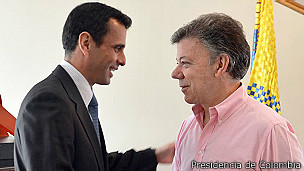
  • Caracas a réagi de manière très virulente à l’accueil réservé par Bogota au chef de l’opposition vénézuélienne, Henrique Capriles Radonski. Ce dernier, qui conteste le résultat de l’élection présidentielle du 14 avril, a été reçu par le président colombien Juan Manuel Santos. Au Venezuela, Diosdado Cabello, président de l’Assemblée nationale et rival du président Nicolas Maduro, a accusé le président colombien de « mettre une bombe sur les bonnes relations » entre les deux pays, qualifiant M

    Taken from:
    Le torchon brûle entre la Colombie et le Venezuela

  • sif2013Someone sitting at the table behind spoke in French, while in chairs at the side two Brazilians exchanged ideas. Two steps further on some activists from Belarus were talking with some Spaniards who had also come to the Stockholm Internet Forum. An event that began on May 21 in the Swedish capital bringing together people interested in digital tools, social networks and cyberspace. A real Tower of Babel where we communicate in the lengua franca of technology. The global and virtual village is now contained in an old factory on the edge of the sea. And in the midst of this back and forth of analysis and anecdotes, are six Cubans, also willing to contribute their labor as cyber activists.

    This is without a doubt the most enjoyable stage of my long journey and not because other places haven’t been filled with beautiful impressions and lots of hugs, but because here I have met up with several colleagues from the Island. Some of the people who, in our country have grabbed hold of new technologies to narrate and to try to change our reality, today are gathered here. The young attorney Laritza Diversent, the director of Estado de SATS, Antonio Rodiles, the keen blogger Miriam Celaya, the information engineer Eliecer Avila, and joining us for one day as well, the independent reporter Roberto Guerra. Here in Stockholm it has felt rather like Cuba, though certainly not because of the weather.

    The Internet Forum has allowed us to feel like citizens of the world, to share experiences with those who live in different situations but, in essence, surprisingly similar ones. It’s enough to chat with another attendee for a little while, or to listen to a talk, to realize that in every word spoken here is the eternal human quest for knowledge, information… freedom. Expressed on this occasion through circuits, screens and kilobytes. This meeting has left us with the sensation that we are universal and that technologies have made us into people capable of transcending our geography and our time.

    like_webb

    Continued here:
    Cubans, Too, Can Transcend Geography and Time With the Internet

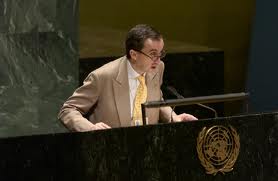
  • Juan Manuel Gomez Robledo, 54 ans, est sous-secrétaire aux affaires multilatérales et aux droits de l’homme au ministère mexicain des relations extérieures.

    See the original post:
    Le Mexique reprend l’initiative sur le désarmement et les droits de l’homme

  • Placing zeros to the right seems to be the preferred sport of those who put a price on the homes they sell in Cuba today. A captive market at the end of the day, the buyer could find a lot of surprises in the wide range of classified ads. From owners who ask astronomical sums for their houses, sums that have nothing to do with the reality of demand, to real bargains that make you feel sorry for the naiveté of the negotiator. Many are pressured to sell, some by those with the smarts to realize that this is the time to buy a house on the Island. It is a bet on the future, if it goes wrong they lose almost everything, but if it goes well they position themselves — in advance — for tomorrow. The slow hurry up and the fast run at the speed of light. These are times to make haste, the end of an era could be close… say the smartest.

    It’s surprising to see, with barely any notion of real estate, how Cubans launch themselves into the marketing of square meters. They talk about their space, usually with an over abundance of adjectives that make you laugh or scare you. So when you read « one bedroom apartment in central Havana with mezzanine bedroom, » you should understand « room in a Central Havana apartment with wooden platform. » If they talk about a garden, it’s best to imagine a bed with soil and plants at the entrance; and even five-bedroom residences, after a visit, are reduced to two bedrooms partitioned with cardboard. The same mistrust with which people view the photos on the social networks where young people look for partners, should be applied to housing ads here. However, you can also find real pearls in the midst of the exaggeration.

    Right now there are at least three parameters that determine the final cost of a home: location, physical state of construction, and pedigree. The neighborhood has a great influence on the final value of the property. In Havana, the most prized areas are Vedado, Miramar, Central Havana, Víbora and Cerro, for their central character. The least wanted are Alamar, Reparto Eléctrico, San Miguel del Padrón and La Lisa. The poor state of public transport significantly influences people’s preference for houses that are near major commercial centers with abundant spaces for entertainment. If there is a farmers market in the vicinity, the asking price goes up; if it is near the Malecon it also goes up. People shy away from the periphery, although among the « new rich, » those who have accumulated a little more capital whether by legal or illegal means, the trend of looking for homes in the outskirts has begun. It is still too early, however, to speak about a trend to locate in greener and less polluted areas. For now, the main premise can be summarized as the more central the better.

    The physical state is one of the other elements that defines what a home will cost. If the ceiling is beam and slab, the numbers fall; meanwhile constructions from the 1940s and ’50s enjoy a very good reputation and appeal. The lowest values are for the so-called « microbrigade works » with their ugly concrete buildings and their little Eastern European style apartments. If the roofing is light — tiles, zinc, wood, ceiling paper — the seller will get less. The state of the bathroom and kitchen are another point that directly influences the marketability of the property. The quality of the floors, if the windows are barred and the door is new — of glass and metal — these are points in its favor. If there are no neighbors overhead, then the seller can rest easy. Also very valuable are houses with two entrances, designed for a large family seeking to split up and live independently. Everything counts, anything goes.

    So far it resembles a real estate market like any other anywhere in the world. However, there is a situation that defines, in a very particular way, the value of homes for sale. This is their pedigree. This refers to whether the house has belonged to the family for forever, or if it was confiscated in one of the waves of expropriations in Cuba. If the previous owner left during the Rafter Crisis of 1994 and the State handed the property over to someone new, the price is lower. The same thing happens if it was taken during the Mariel Boatlift in 1980, a time when property was awarded to others after the emigration of those who had lived there up until that time. But where the prices hit rock bottom is with those homes confiscated between 1959 and 1963, when great numbers left for exile. Few want to take on the problem of acquiring a site that later may go into litigation. Although there are some who are taking advantage of this situation to buy real mansions in the most central neighborhoods at bargain prices.

    In order to check the location, the state of construction, as well as the legal past of the house, potential buyers are aided by their own experience, a good architect and even a lawyer to dig through the details of the property. Each element adds or removes a cipher, one zero or one hundred to the total price people are willing to pay. In a captive market anything is possible; it’s as if knowledge of real estate has only been sleeping, lethargic, and now returns with amazing force.

    See the article here:
    Cuba’s New Real Estate Market, Betting on the Future, Wary of the Past

  • se_vende1.jpg

    Rajouter des zéros à droite paraît être le sport préféré de ceux qui donnent un prix aux maisons qui se vendent aujourd’hui à Cuba. Marché captif au final ; l’acheteur rencontrera beaucoup de surprises dans la large gamme des catégories. Depuis les propriétaires qui demandent pour leur bien des sommes astronomiques sans rapport avec la réalité de la demande, jusqu’à de véritables aubaines pour lesquelles la candeur du vendeur fait peine à voir. Beaucoup de gens pressés de vendre, d’autres suffisamment aux aguets pour se rendre compte que c’est le moment d’acheter un logement sur l’île. C’est un pari sur l’avenir ; si ça se passe mal ils perdront tout ou presque, mais si ça réussit ils seront positionnés d’avance pour les lendemains. Les plus lents se hâtent, et les plus rapides courent à la vitesse de la lumière. C’est le moment de se dépêcher, la fin d’une ère approche…assurent les plus avertis.

    Il est surprenant de voir comment, sans aucune notion de l’immobilier, les Cubains se lancent dans le commerce des mètres carrés. Ils décrivent leurs surfaces, la plupart du temps avec une surabondance de qualificatifs qui font rêver ou qui inquiètent. Ainsi quand on lit « Appartement une pièce dans quartier central de La Havane avec chambre en étage intermédiaire » il faut comprendre « chambre dans immeuble du centre de La Havane avec plancher en mezzanine ». Si l’on parle de jardin il est préférable d’imaginer un parterre et des plantes à l’entrée ; il arrive que des appartements de cinq chambres se réduisent après une visite à deux pièces cloisonnées avec des parois de carton. On doit accorder la même méfiance aux annonces immobilières que celle que l’on réserve à ces photos de personnes fringantes et jeunes, à la recherche de l’âme sœur sur les réseaux sociaux. Pourtant parmi tous ces excès on trouve aussi de véritables perles.

    Actuellement les paramètres qui entrent en jeu dans la détermination du coût final d’un logement sont au nombre de trois : la situation, l’état du bâtiment et le « pedigree ». Le quartier joue beaucoup sur la valeur finale de l’immeuble. A La Havane les zones les plus recherchées sont Le Vedado, Miramar, Le Centre de La Havane, Vibora et Cerro pour leur caractère central. Les moins recherchées sont Alamar, Coroneta, Reparto Electrico, San Miguel del Padron et La Lisa. Le mauvais état des transports publics est tel que les gens préfèrent des maisons proches des zones de plus grand attrait commercial et offrant de larges espaces récréatifs. La proximité d’un marché agricole fait monter les prix, celle du Malecon également. On fuit la périphérie, bien que parmi les « nouveaux riches » qui ont amassé –légalement ou illégalement- un peu plus de capital on voit s’amorcer la tendance à rechercher une propriété en dehors de la ville. Il est pourtant prématuré de parler d’une tendance à s’éloigner vers des zones vertes et moins polluées. Pour le moment la prémisse de base se réduit à « plus près du centre, mieux c’est ».

    L’état de la construction est un autre élément qui définit quel sera le coût d’un logement. Si le toit est en tuiles sur solives la valeur baisse, alors que les constructions des décennies 40 et 50 du siècle dernier jouissent d’une bonne réputation et d’un grand attrait. Les moins valorisées sont les dites réalisations dites « de micro-brigades » avec leurs affreux bâtiments de béton et leurs petits appartements style Europe de l’Est. La couverture si elle est légère –tuiles, zinc, bois, papier de toiture- oblige le vendeur à se contenter de moins. L’état des sanitaires et de la cuisine est l’autre point qui influe directement sur les possibilités de vente de l’immeuble. La qualité des étages, le fait que les fenêtres soient grillagées et la porte neuve –en verre et métal- sont des points positifs. S’il n’y a pas de voisins au-dessus, alors le propriétaire peut se permettre de demander plus. Sont aussi très valorisées les maisons à double entrée, pensées pour une famille nombreuse qui cherche à se diviser et trouver de l’indépendance. Tout est pris en compte, tout a une valeur.

    Jusqu’ici le marché immobilier est semblable à n’importe quel autre dans le monde. Il y a pourtant un élément qui définit de manière très particulière la valeur des logements en vente. Il s’agit de leur « pedigree ». Ce terme fait référence au fait que la maison ait appartenu à une même famille depuis toujours, ou qu’elle ait été confisquée à l’occasion d’une des vagues d’expropriation qu’a connues Cuba. Si le propriétaire est parti pendant la crise des « Balseros » en 1994 et si l’Etat en a transféré la propriété à quelqu’un d’autre, alors le prix baisse. Il peut aussi arriver que ceci se soit passé pendant les départs du Mariel en 1980, période pendant laquelle la propriété en a été donnée à d’autres suite à l’émigration de ceux qui l’habitaient jusque là. Mais là où les prix touchent le fond, c’est sur les immeubles confisqués entre 1959 et 1963, à l’occasion des grands départs en exil. Peu nombreux sont ceux qui veulent se créer des problèmes en acquérant un bien qui pourrait ensuite se trouver en litige. Certains profitent cependant de cette situation pour acheter à des prix  d’adjudication, de véritables hôtels particuliers dans les quartiers les plus centraux.

    Pour pouvoir apprécier tant la situation, l’état de la construction, que le passé légal du logement, les acheteurs potentiels font appel à leur propre expérience, à un bon architecte et même à un avocat qui va fouiller dans les détails de la propriété. Chaque élément ajoutera ou retirera un chiffre, un zéro ou une centaine au prix total qu’ils seront prêts à payer. Dans un marché captif tout est possible, et pourtant tout se passe comme si les connaissances en matière immobilière étaient seulement endormies, tombées en léthargie et ressortaient maintenant en force de façon surprenante.

    Traduit par Jean-Claude Marouby

    Originally posted here:
    Trois paramètres et un logement

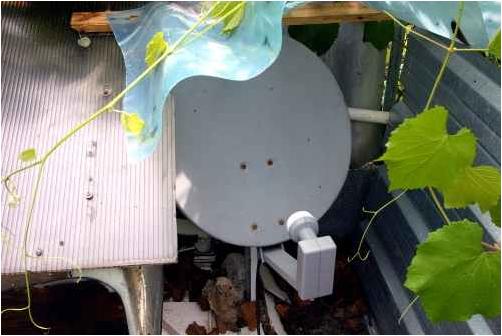
  • Parabolica Cubana

    For World Telecommunication and Information Society Day

    They look the same as everyone else: small, restless, ready to play and joke, like any child. But something distinguishes them beyond the neighborhood where they live or the family they belong to. They are part of a generation that is escaping the indoctrination of the official media because they have taken refuge in illegal television programming. They are « the children of the satellite dish, » the direct consumers of the programming on these satellite dishes, as widespread as they are persecuted. When the teacher asks them, in the classroom, what they saw on the news the day before, they are the ones who look at the ceiling and invent some response. But when they interact among themselves, they all know the name of the trendy host in Florida or who won the latest Nuestra Belleza Latina contest.

    There are no clear studies of how many people on the Island access these banned channels. It is difficult to calculate because it is a topic little spoken of in public, for fear of confiscations and fines; but also because it’s enough for one family to have one of these satellite dishes to pass the signal via cable to a dozen, a score, or 50 neighboring homes. The most daring have installed the cable under the streets, pretending they were making an authorized repair because of some broken pipe. The principle owner of the persecuted artifact is the one who decides the programming that all subscribers then see on their respective screens. The monthly price is around 10 dollars, although some can have the service for free, especially the neighborhood informers, to buy their silence.

    However, beyond these technical details of how such an illegality is committed, the most interesting thing is the sociological phenomenon it is generating. Many Cubans of the younger generations — particularly in the capital — barely watch national television. They have escaped the ideological dose of this portal and have replaced it with a more frivolous but less politicized assortment. Among this TV audience are many children, for whom the effect of the slogans and official campaigns is detrimental. They are the children of the satellite dish, breastfed with the illicit and used to the other side of information or misinformation. They have grown up with the remote control in their hands and, with a simple click, they access the prohibited every day.

    P.S.: « It makes no sense to prohibit » the circulation of news, because it is « an almost impossible chimera, » because people « know it. » « Today the news is everywhere, the good, the bad, the manipulated and the true, the half-truths, circulating on the networks, reaching the people, people know it, and the worse thing is silence, » the official told a conference of educators — according to a television report from a few days ago about the words of Miguel Diaz-Canel, first vice president of Cuba.

    Another post on this topic: Satellite vs. TELEsur

    Visit link:
    The Children of the Satellite Dish, Bypassing Ideology in Cuba