Catégorie : Politique

  • The fear of not being able to leave, of remaining locked on the island, is shared by many of my compatriots. Those who have never traveled fear they will grow old without ever knowing what’s on the other side of the sea. Cubans living abroad are not exempt from this fear. Many of them, when they visit the Island, have a recurring nightmare that they will not be allowed to board the plane when they leave. It is precisely this feeling overwhelms the main character of the novel Eskimo Kiss, by the novelist and journalist Manuel Pereira.

    The book, as yet unpublished, describes the experiences of a man who travels to the land he left twelve years ago. His mother’s advanced age compels him return to the « country of mirages, » as he calls it. His arrival is accompanied by the panic of being trapped and that apprehension is mixed with the constant feeling of being watched. To him, his country is « like a mousetrap » during the four days of the « humanitarian entry permit » the authorities have given him.

    It is not only that perception of confinement that overwhelms the character of Pereira, but the difference between what he remembered from his homeland and what it really was. The distance, years and emotions tend to put a patina of sweetness and harmony on loved ones and everyday life that is often shattered when they are reunited. Nor does a nation fading away, in a moral freefall, do much to help allay the impression of suffocation that runs through the pages of this book. « Will he be able to escape? » we ask ourselves from the moment we start reading. To get to the answer we have to immerse ourselves in the reality — as well known as it is absurd — in which we ourselves are trapped.

    Read the original:
    Cold Kisses Under a Tropical Sun

  • An article has been added to the saga against information technologies maintained by the official press. Last Thursday a report against phone fraud left many Juventude Rebelde (Rebel Youth) readers feeling that cellphones are a source of endless problems. To the barrage of accusations about the destabilizing plans that arrive via text messages, and the collapse of networks caused by titles that travel from one cellphone to another, we can now add the « personal profit » of those who use tricks to pay less for a call or for a text message abroad.

    Every crime of fraud or embezzlement is legally and morally contemptible. However, the context in which these infractions are committed should be taken into account. We live under an absolute state monopoly of telecommunications. The only phone company in the country, ETECSA, has no competitors in its field and thus sets its prices much higher than the tariffs common in the rest of the world. A one minute call overseas costs the average worker about two days wages. With such a large population having emigrated, it’s easy to imagine the Island’s need to communicate with the rest of the world.

    To this must be added the limited and scarce Internet access. Without any new facilities for services such as Skype, many prefer to resort to fraudulent practices rather than to give up calling other parts of the world. Penalizing the offenders who resort to tricks like voice bypass will not resolve the problem. I don’t imagine a lady in her sixties, with a son who emigrated, risks being fined for phone fraud when she can pay barely pennies to call via the Internet. Pushing a population into crime, and then condemning them for engaging in it, seems to me, at the very least, pure cynicism.

    Yoani Sánchez, Havana, 31 May 2014 | 14ymedio

    Read this article:
    The Free Territory of Skype, Forbidden In Cuba

  • Nobody knows how he got it into the country, with so many customs restrictions and government paranoia, but Miguel has a drone. Tiny, like a kid’s toy, and with a camera. In his spare time, this forty-something Havanan dedicates himself to using his new amusement to explore the nearby patios and rooftops of his neighbors. It’s so tiny that it’s barely noticeable when flying over the neighborhood, while it transmits images and videos to a screen in the home of its proud owner.

    Right now it’s a prank, but if one day Miguel is discovered with his diversion, at best he could show up on official TV as a « CIA agent. » Who knows. An uncle of his was arrested on the street in the seventies for carrying a tape recorder that belonged to the government newspaper where he worked. He spent long hours at a police station, until the director of the publication himself had to intercede for him. Time has flown and now the « fearful » objects are other things, but the reprisals are usually the same.

    In any event, beyond the presumed punishment, Miguel has now learned some valuable things. He has seen the pool hidden behind his neighbor the Colonel’s high fence, the satellite antenna a former minister has on the roof of his house, and even the bowl overflowing with meat for the rottweiler belonging to the painter who lives on the corner. He has also observed, with the device’s night vision, the man who, in the early hours of the morning, dives into the dumpster and emerges with his « treasures » under his arm, and the watchman who spends time opening the warehouse containers to steal from them, without leaving any traces on the security seals. Early one morning he even captured the president of his local Committee for the Defense of the Revolution (CDR) trafficking in the alcohol from a nearby hospital.

    Through the eyes of his drone, Miguel has been looking at Cuba from the air, and what he is seeing is a country divided into pieces that don’t fit.

    View article:
    Miguel’s Drone, Cuba From the Air

  • Today, while I publish this text, thousands of students from Havana are sitting in front of their mathematics exam. The schedule for admission to the University has had to incorporate a new test date for this subject, after a scandalous case of fraud. The leaking and selling of the questions ended with the cancellation of the previous test results, three teachers arrested, and an unknown number of students investigated.

    Although fraudulent practices are common in Cuban schools, this case has provoked a profound reflection in our society, including in the official press. We have seen on our small screens dozens of interviews with people who repudiate cheating by copying another, and the lie of procured knowledge you don’t have. Few, if any, reflect on the environment of hypocrisies, double standards and simulations in which these teenager, now between sixteen and seventeen, have come of age.

    This batch of students has been educated under educational experiments such as the so-called « emerging teachers. » Is it a greater fraud to put someone at the front of a classroom and call them a teacher when they possess neither the ethical values nor the knowledge to exercise such a worthy profession? How can we ask them to be honest, if the TV screen from which they receive their tele-classes never managed to transmit adequate moral codes? It is these kids, at this very minute seated in front of the math test, the children of my generation, who are surrounded by artificial academic results and inflated credentials.

    It is worth remembering that for decades the schools and teachers whose classes failed to achieve grades of 90 or almost 100, were scolded, stripped of their credentials, and even administratively and materially penalized. Those were the days when from the dais Fidel Castro read the academic results of the high schools with their elevated promotion rate, knowing — in his heart — that this was a huge lie created for him.

    It turns out that the teachers often dictate the exam questions in advance, walking among the desks of those who take longer, to whisper the answers to them or, simply, leave the room so the students are left alone to copy the answers from each other. Those of us who studied hard were always frustrated by the complicity of so many teachers and education experts with the practice of academic fraud. We are the parents of this generation that is today being evaluated in Havana’s classrooms. How could they have turned out differently? How can we ask them not to do what they have seen done?

    Yoani Sánchez, Havana | 26 May 2014 | 14ymedio

    View post:
    Reaping the Whirlwind: Academic Fraud in Cuba

  • A la suite de la création du nouveau site de la blogueuse Yoani Sanchez à Cuba, il se trouve aujourd’hui bloqué (AFP).

    Hier je discutais avec un ami sur l’importance du journalisme dans l’actuelle situation cubaine. Lui voulait me convaincre de rejoindre son parti d’opposition et moi je lui rappelais qu’une personne qui informe ne doit montrer un militantisme d’aucune sorte. C’était une conversation affectueuse, parsemée de plaisanteries, mais qui exposait clairement les différentes positions que doivent assumer un informateur et un politicien.

    Maintenant je suis ici, me rappelant la conversation que j’ai eu il y a quelques heures et publiant sur mon blog personnel le visage et le nom d’un rêve partagé. Un média qui, nous l’espérons, aide et accompagne la nécessaire transition qui arrivera dans notre pays. Un espace dédié à la narration d’une réalité où il y a des gens comme mon ami, mais aussi d’autres personnes qui applaudissent le système actuel, par conviction, opportunisme ou par peur. Un espace pour raconter Cuba depuis l’intérieur même de Cuba.

    Le chemin sera difficile. Durant les dernières semaines, nous avons vécu un aperçu de comment la propagande officielle tentera de nous diaboliser pour avoir créer ce média. Déjà, plusieurs personnes de notre équipe de travail ont reçu des avertissements de la part de la Sécurité d’État. Cependant, nous n’avons aucune raison d’avoir honte. 14ymedio est né sans rien à cacher. L’information à propos de sa ligne éditoriale, des engagements éthiques et financiers, pourra être lue sur la page du site internet qui sera lancé à partir du 21 mai. Même si nous aurions voulu qu’il soit opérationnel plus tôt, je dois reconnaître que la technologie est parfois très… très capricieuse.

    Pour ceux qui se demandent pourquoi un tel nom, si particulier et différent, la vérité est que nous naissons dans un appartement situé au quatorzième étage et que nous sommes en l’an 2014. De plus y est greffé le « Y » qui m’a accompagné durant toutes ces années et le mot « medio » (média, en français) avec toutes ses connotations journalistiques. Nous avons voulu éviter de nous approprier le nom de « Cuba » pour l’utiliser dans notre bannière et à sa place nous avons choisi le plus universel des codes : les nombres.

    À présent, il ne lui reste plus qu’à vous plaire, qu’il vous fasse réagir et vous apporte de l’information. Merci d’avance !

    2014-05-21-14ymedio_logo.jpg

    Traduit par Aïda

    Read this article:
    14ymedio

  • Le problème avec le « secret défense » appliqué à la vie d’un homme public et à la pensée unique des régimes autoritaires est qu’ils finissent toujours par être ébruités. (suite…)


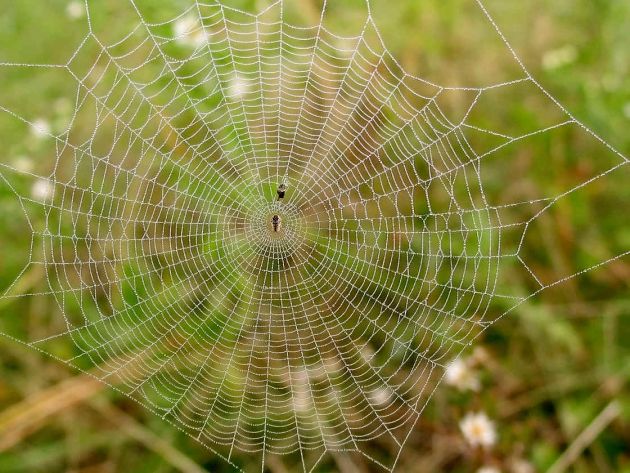
  • Photo from http://www.ojocientifico.com/

    What does the insect caught in the web feel as it watches its predator approach? What are its thoughts in the seconds between the anticipation of the attack and death? It must be a lot like the days in which a repressive trap is built around an individual, a group, a society. Similar to that script that builds the justifications for a blow, molding public opinion, filling in the archive that will later be presented to the press or the courts.

    The current strategy against the Cuban opposition resembles the slow creep of the spider’s legs toward its victim.

    We are living in a soap opera episode-by-episode, an attempt to demonize technologies and the dissidence, who knows if to repeat those dark days of the Black Spring of March 2003. The blow approaches, in the insistence in which the press repeats certain refrains, its obsession with themes like Zunzuneo and trying to link it with the violence of four supposed terrorists recently discovered in the country. Like in a bad TV show, the threads are showing in the tying together of mobile phones, Twitter, death and war. Fortunately these soap operas barely work any more on a Cuban public too focused on their daily needs, overwhelmed by material shortages, saturated with ideology and obsessed more with escapism than with civic consciousness.

    The trap is almost set. Will it be used? Who knows. But there’s not much that can be done to stop it, except to denounce it. At the end of the story the spider is always bigger, stronger, more imposing.


    My blog, GENERATION Y, has moved: READ IT HERE.

    Read me and other Cuban bloggers on TRANSLATING CUBA.

    And here is a link to my blog IN OTHER LANGUAGES.

    Continue Reading:
    Cuba: Repression as Soap Opera


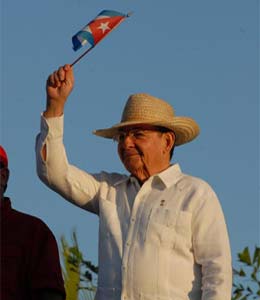
  • Raul Castro during a public event

    The shouts, the posters, the slogans in a million voice chorus, awaken dormant, extinct sensations. Seeing the sea of people passing in front of the platform, his heart skips a beat in his chest. The red face, dilated pupils, goosebumps and tension in the jaw. They are the first symptoms of the excitement crowds provoke in caudillos. A ritual they need to dip their hand into from time to time, to avoid the solitude of power.

    Autocrats invent marches, huge processions, lavish parades — « the biggest in the world » — to rejoice in their own authority. They know that they, and only they, can force a million people out of their beds in the early hours, load them onto buses, write down the names of every attendee, and set them to marching through a great plaza. To make it clear who’s the boss, to send a message by way of a crowd chanting their name, worshiping them and giving thanks. A « mass » that would never dare to stand down, people whom they don’t rub shoulders with, whom they fear and who — deep inside — they despise.

    Today, in the Plaza of the Revolution, an elderly man in sunglasses will preside over the May Day event. Days ahead of time every rooftop near the place has been checked out and guards have been posted at the highest points in the city, calculating how a shot could be fired at the platform. His own grandson will remain close to protect him and a fleet of cars will be waiting « in case something happens » and he has to escape. He doesn’t trust the very crowd that he himself has summoned.

    The autocrat is afraid of his own people. Fear and suspicion. The feeling is mutual. He knows that the hundreds of thousands of heads he looks down upon are there… because they fear him, not because they love him.


    My blog, GENERATION Y, has moved: READ IT HERE.

    Read me and other Cuban bloggers on TRANSLATING CUBA.

    And here is a link to my blog IN OTHER LANGUAGES.

    View article:
    Raul Castro: Man Alone in the Crowd